
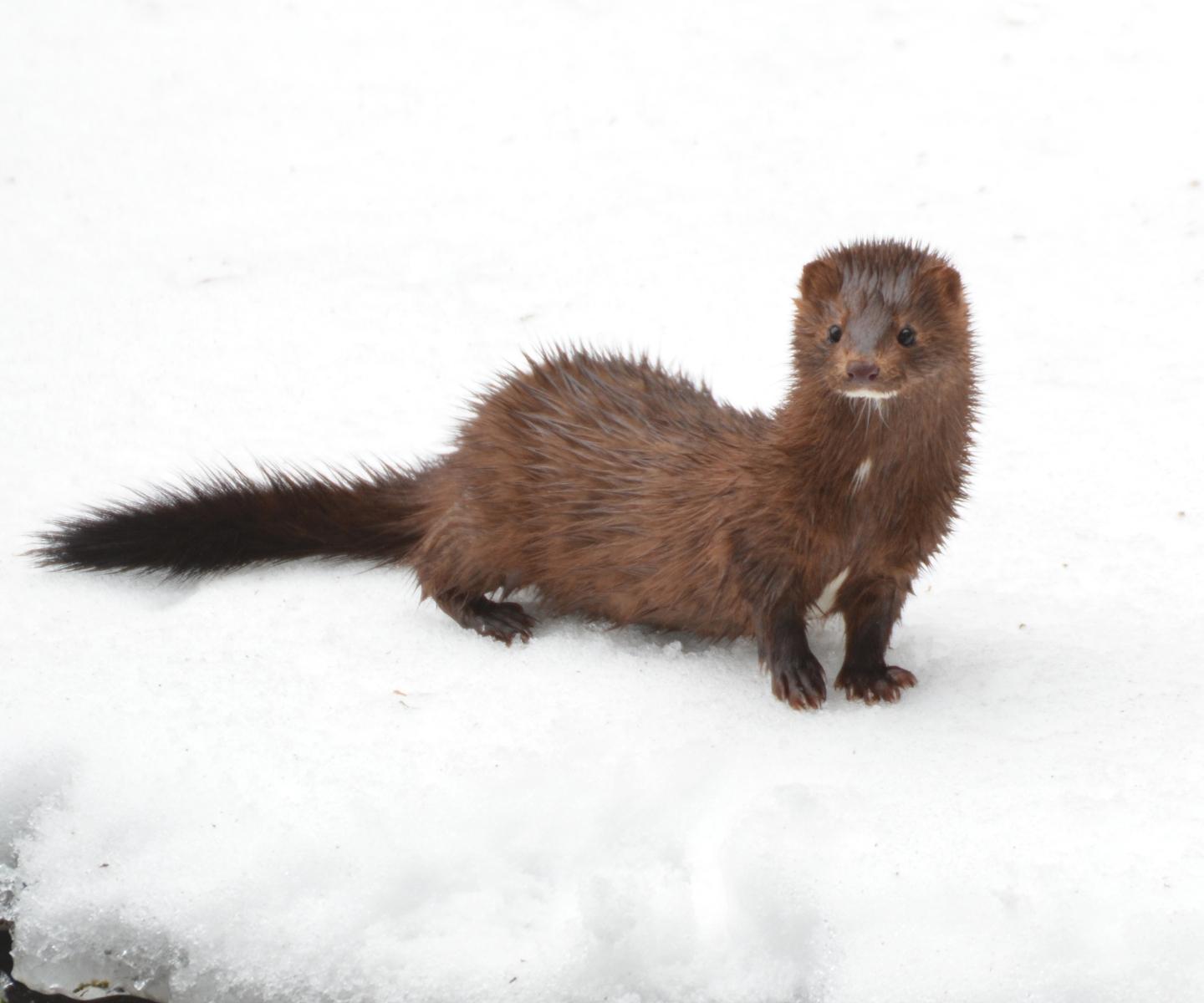
The American Mink represents one of the most complex cases of introduced fauna in Patagonia, where this semi-aquatic carnivore has found ideal habitat in the rivers and lakes of Argentina and Chile. What is an American Mink? A species that, far from its North American origins, today forms a controversial part of the Patagonian ecosystem.
What is the American Mink
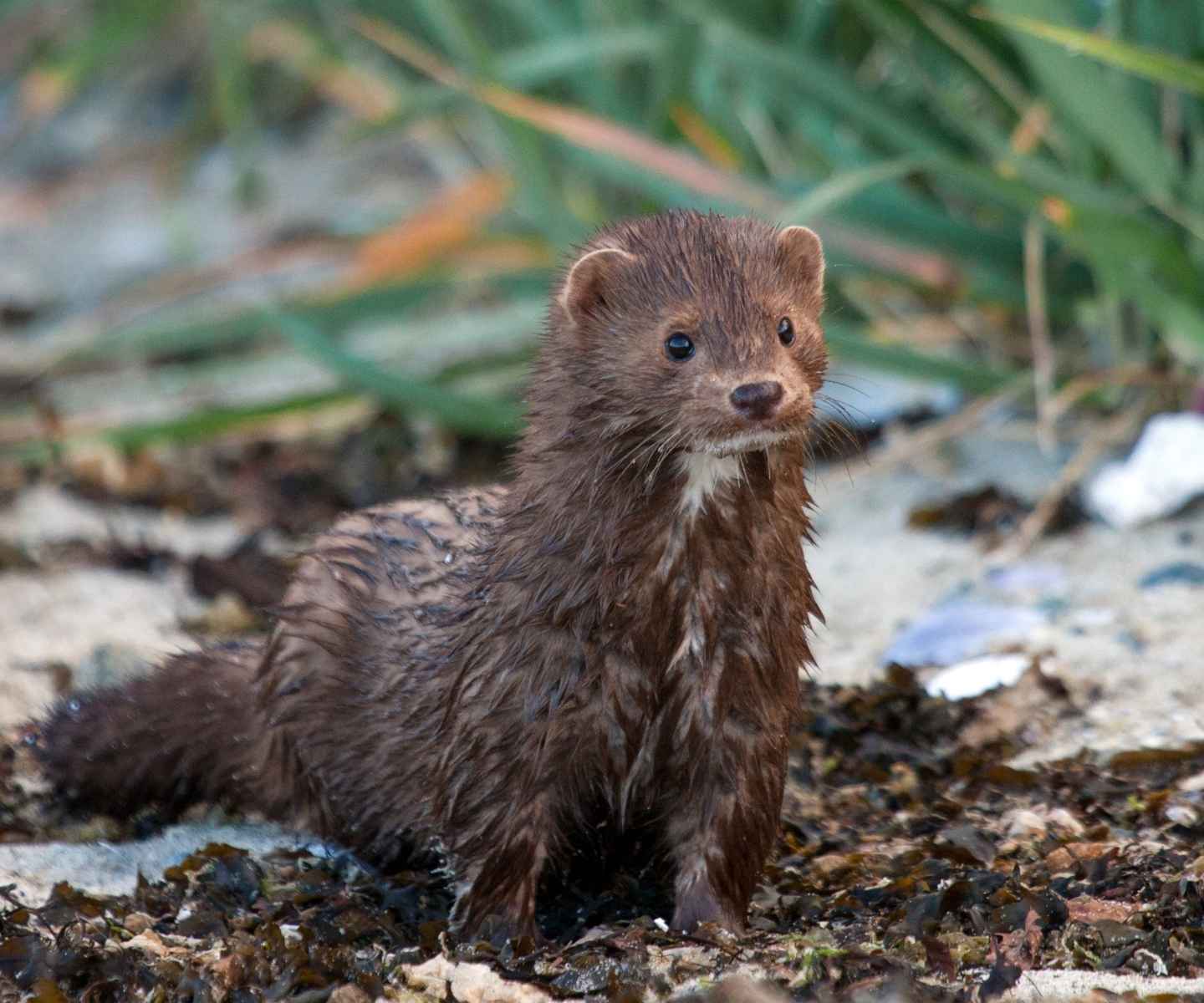
The American Mink (Neovison vison) is a carnivorous mammal belonging to the Mustelidae family, which includes otters, ferrets, and weasels. Where the American Mink originally comes from is key to understanding its current presence: it originates from North America, specifically Canada and the United States.
How the American Mink arrived in Patagonian territory dates back to the 1930s-1950s, when it was introduced for the fur industry. Subsequent escapes and releases established wild populations that now thrive on both sides of the Andes.
Physical characteristics of the American Mink
What the American Mink looks like physically distinguishes it from other Patagonian mustelids. Its elongated and compact body measures between 30-45 centimeters, with a tail that adds another 15-25 centimeters to its total length.
Sexual dimorphism
| Characteristic | Males | Females |
|---|---|---|
| Weight | 1-1.5 kg | 0.6-1 kg |
| Body length | 40-45 cm | 30-38 cm |
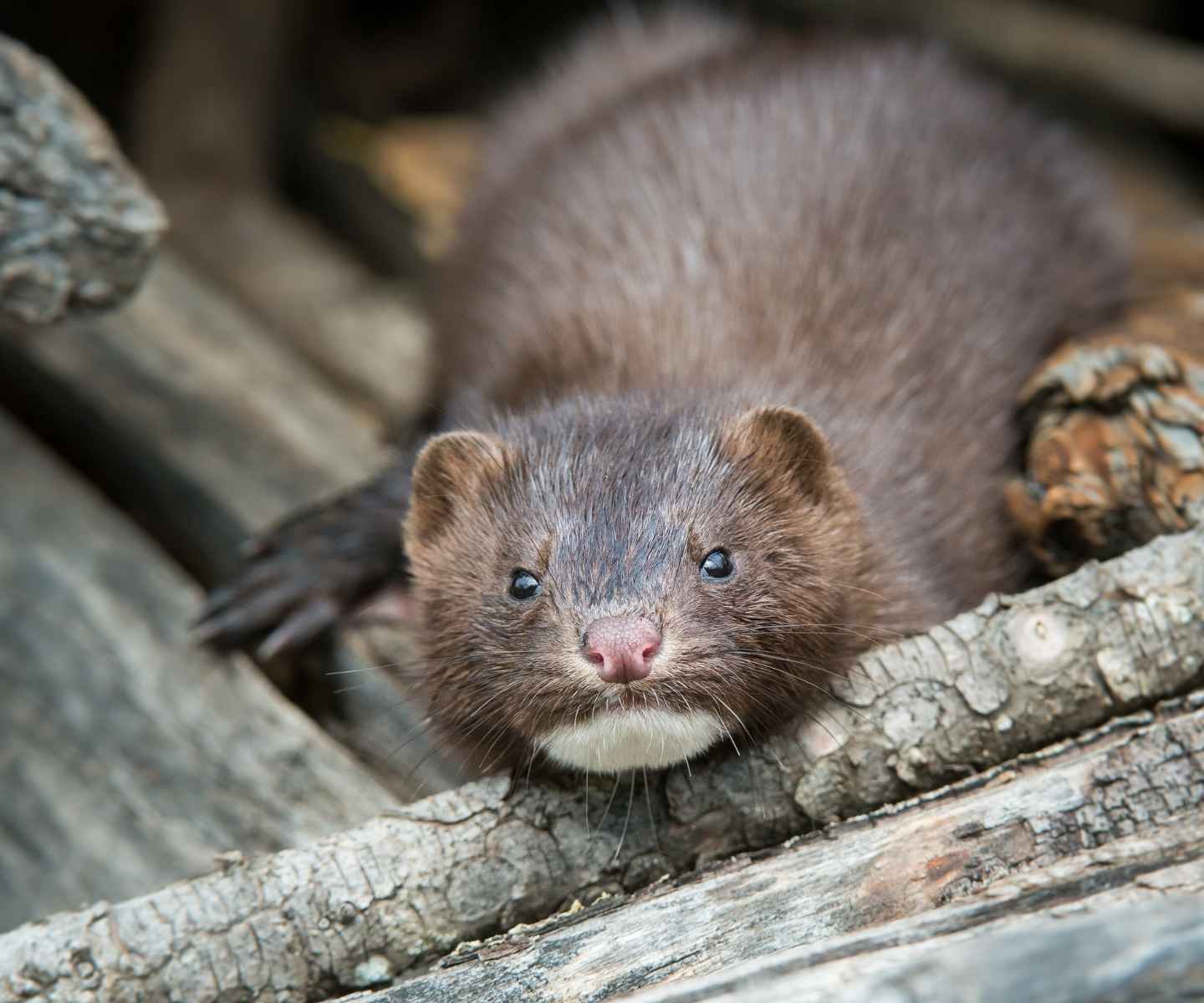
Its dense, waterproof fur varies from dark brown to black, with a characteristic white patch on the chin. The webbed feet and laterally flattened tail reveal its adaptation to aquatic environments.
Essential Mink Field Guide for Patagonia Wildlife Spotting
Identify American Mink tracks, behavior, and habitat with this comprehensive field guide for Patagonia explorers.
American Mink habitat in Patagonia
The Neovison vison has successfully colonized Patagonian riparian ecosystems. In Argentina, it thrives especially in the provinces of Neuquén, Río Negro, Chubut, and Santa Cruz, while in Chile it dominates from the Los Lagos Region to Magallanes.
Distribution in national parks
- Nahuel Huapi National Park (Argentina): especially in the Limay and Traful rivers
- Torres del Paine National Park (Chile): along the banks of the Serrano River
- Los Glaciares National Park (Argentina): Santa Cruz River basin
- Magallanes National Reserve (Chile): waterways of the strait
It prefers waterways with dense riparian vegetation, especially where fallen logs and natural shelters abound. The Futaleufú, Baker, and Palena rivers in Chile, along with the Chubut River and Pescado Creek in Argentina, harbor established populations.
American Mink diet
What the American Mink eats determines much of its ecological impact. This opportunistic predator bases its diet on a wide spectrum of aquatic and terrestrial prey.
Primary diet
What the American Mink feeds on includes mainly native fish such as trout, silverside, and catfish. However, it also consumes freshwater crustaceans, especially pancora crabs (Aegla spp.) endemic to Patagonia.
During the austral summer, the American Mink’s diet diversifies toward aquatic birds and their eggs. Species such as steamer ducks, geese, and flamingos face significant predatory pressure, especially in their nesting colonies.
Did you know…? An adult mink consumes daily between 150-200 grams of food, equivalent to 15-20% of its body weight.
Reproduction and life cycle
The American Mink’s reproduction in Patagonia adapts perfectly to the austral calendar. Mating occurs during the months of July-August (Patagonian winter), taking advantage of delayed implantation.
Reproductive cycle
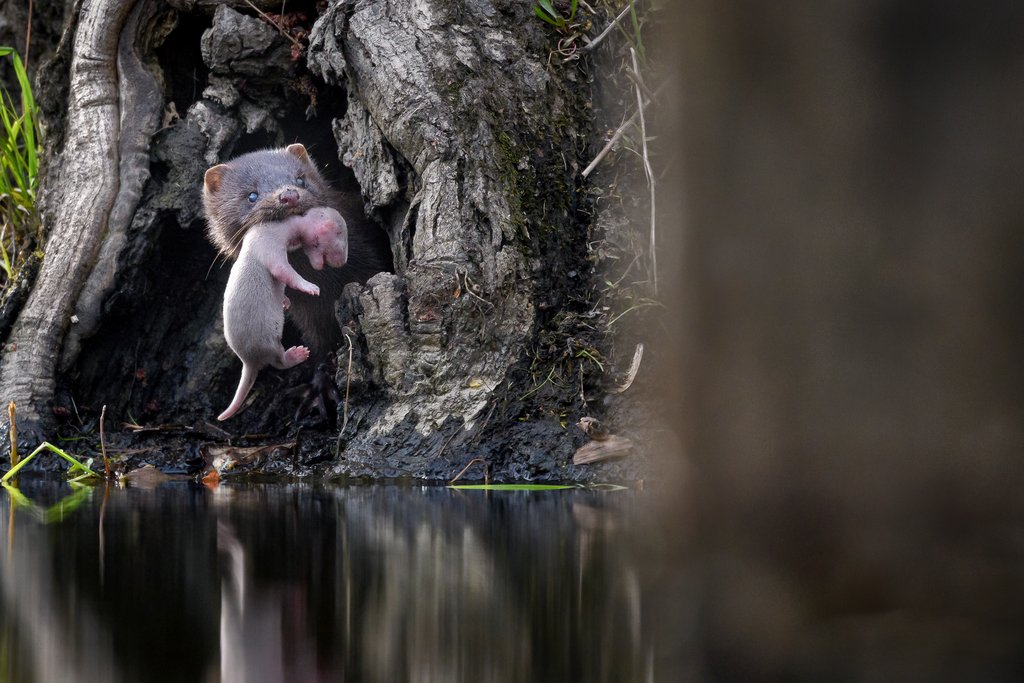
After an effective gestation of 39-76 days, females give birth to between 2-10 young during spring (October-November). Juveniles remain in the den until 5-6 weeks of age, coinciding with the peak of summer food abundance.
Dens are typically located in riverbank bluffs, hollow logs, or abandoned human constructions. In Tierra del Fuego, they frequently use abandoned beaver lodges as reproductive shelters.
American Mink behavior
The behavior of Neovison vison reflects its solitary and territorial nature. Males establish territories of 1-3 linear kilometers along waterways, marking them with secretions from their anal glands.
Daily activity
Predominantly crepuscular and nocturnal, the mink adapts its schedule to prey availability. During the Patagonian summer, with its 17-18 hours of daylight, it extends its activity into the early morning hours.
Its exceptional swimming ability allows it to dive up to 3-4 meters deep and remain underwater for 12-17 seconds, a decisive advantage in deep Patagonian lakes.
Conservation status
According to the International Union for Conservation of Nature (IUCN), the American Mink maintains a status of «Least Concern» globally. However, its status in Patagonia is complex as it is an invasive exotic species.
Regional classification
Both Argentina and Chile consider it a problematic introduced species. Like the Wild Boar, the American Mink faces management challenges as authorities work to control populations that impact native ecosystems. Chile’s Agricultural and Livestock Service (SAG) has classified it as a harmful species, while Argentina’s National Parks Administration implements control protocols in protected areas.
Unlike native species such as the Patagonian Puma, which requires conservation efforts, or the European Hare which also represents an introduced species challenge, the mink’s semi-aquatic nature makes it particularly difficult to manage effectively.
Frequently Asked Questions
1. When did American Minks first arrive in Patagonia, and how did they get there?
American Minks were introduced to Patagonia between the 1930s and 1950s for the fur industry, originating from North America (Canada and the United States). Subsequent escapes and releases from fur farms established wild populations that now thrive on both sides of the Andes Mountains in Argentina and Chile.
2. What do American Minks look like, and how can I identify them in the wild?
American Minks are elongated, compact carnivorous mammals measuring 30-45 centimeters in body length, with tails adding another 15-25 centimeters. Males are noticeably larger, weighing 1-1.5 kg, while females are smaller at 0.6-1 kg, making sexual dimorphism a key identifying feature.
3. Where in Patagonia can travelers encounter American Minks?
American Minks thrive in the rivers and lakes of Patagonia, where they’ve found ideal semi-aquatic habitat on both the Argentine and Chilean sides of the region. Their presence is concentrated in aquatic ecosystems throughout the Andes valleys and waterways.
4. What do American Minks eat, and how do they hunt in Patagonian waters?
As carnivorous mammals, American Minks feed primarily on prey found in aquatic and riparian environments, hunting in Patagonia’s rivers and lakes. Their semi-aquatic nature makes them efficient predators adapted to the region’s freshwater ecosystems.
5. What impact have American Minks had on Patagonia’s native wildlife and ecosystem?
American Minks represent a controversial case of introduced fauna, as their establishment has significantly affected Patagonian ecosystems and native species. Their role as invasive predators makes them a complex conservation and environmental management issue for the region.
6. Are American Minks protected, and what is their current conservation status in Patagonia?
The American Mink’s conservation status in Patagonia reflects its complicated position as an introduced species that now forms a controversial part of the local ecosystem. Understanding their protected status requires examining both their ecological impact and management priorities in Argentina and Chile.