
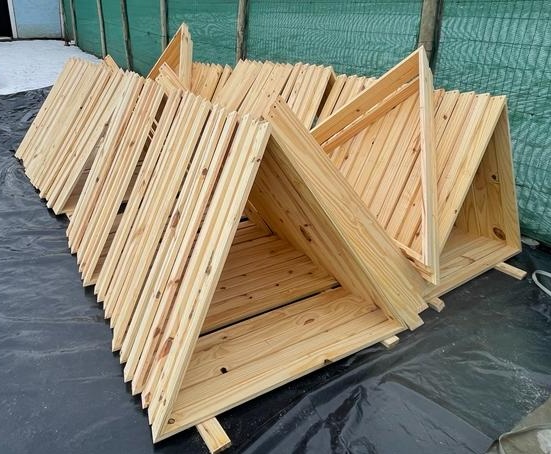
The assembly of triangles for a dome is a fundamental stage in any geodesic construction. After cutting and classifying all the wooden pieces according to the design specifications, this key phase begins—ensuring the structure’s stability, precision, and durability. Each triangle functions as a basic module that, when assembled with the others, forms the characteristic hemisphere of the dome. In this article, we’ll guide you step-by-step on how to organize the pieces, assemble the triangles, and prepare everything for the final on-site installation.
Organizing the Pieces: The First Step to Successful Assembly
Before starting the assembly, it’s essential to have all the pieces correctly labeled and sorted by type. As discussed in the previous article, the Acidome software assigns letters (A, B, C…) to each segment of the dome, simplifying identification and organization both in the workshop and on-site.
To optimize the process:
- Separate the pieces into individual stacks according to their corresponding letter.
- Ensure each wooden strip has visible, indelible markings to avoid confusion.
- Check the cutting angles of the ends: they must match the plans for perfect joints.
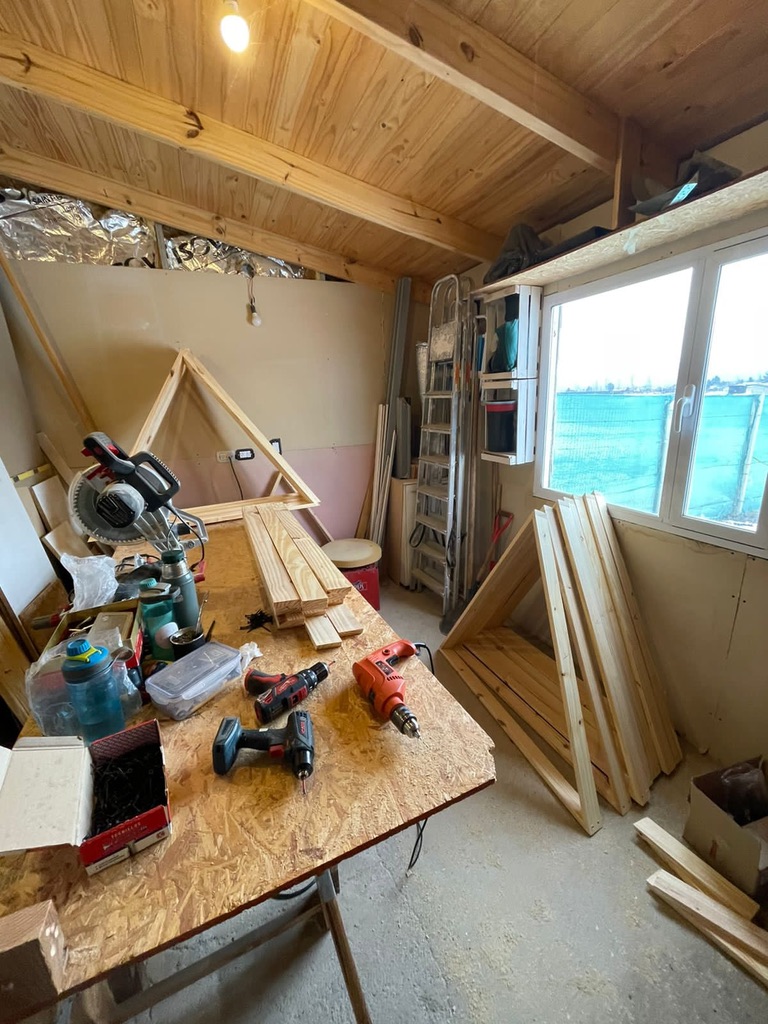
Assembling Geodesic Dome Triangles: A Precise, Artisanal Method
A geodesic dome’s structure consists of dozens of interconnected triangles that distribute the load and provide rigidity. In this stage, the triangles are assembled using the pre-cut angled strips. Each triangle is formed by three strips, which must be joined precisely to ensure stability and prevent future deformations.
This process ideally requires two people: one holds the pieces in position while the other secures them with screws and glue. To assemble each triangle, follow these steps:
- 🧴 Apply carpenter’s glue to each joint to reinforce the bond beyond the screws. We recommend using a trusted brand like Fortex.
- 🔩 Use 2×6 wood screws, placing two per side at an angle, with a minimum distance of 1.5 cm from the edge to prevent wood splitting. The screw’s angle should be visually coordinated with your helper for proper alignment.
- 🛠️ Tools: A cordless drill like the Bosch GSR 1000 SMART 12V with a 1.5 Ah battery for pre-drilling, and a Milwaukee M12 screwdriver to tighten the screws securely.
- 📏 Work area: Work on a flat, stable surface like the floor, with one person seated to hold the pieces and another standing with the tools.
This careful, artisanal method—repeated patiently—ensures perfectly aligned triangles, crucial for the dome’s proper fit during final assembly.
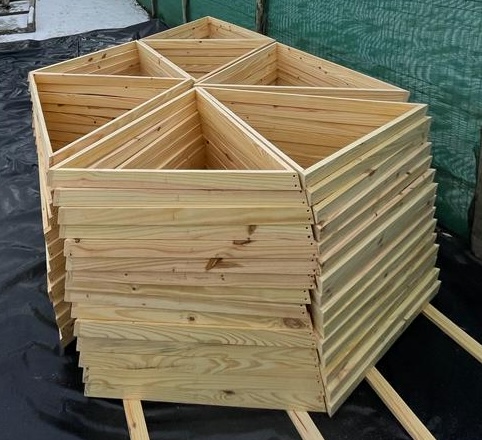
Once assembled, stack the triangles and protect them with plastic or a tarp to prevent moisture or environmental factors from warping them before final installation.
Transport and On-Site Logistics
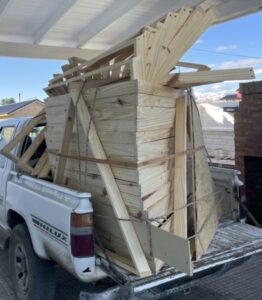
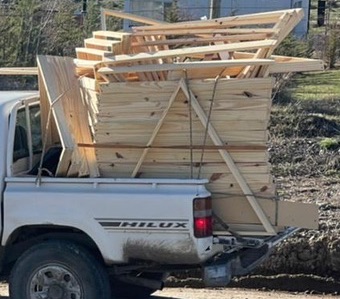
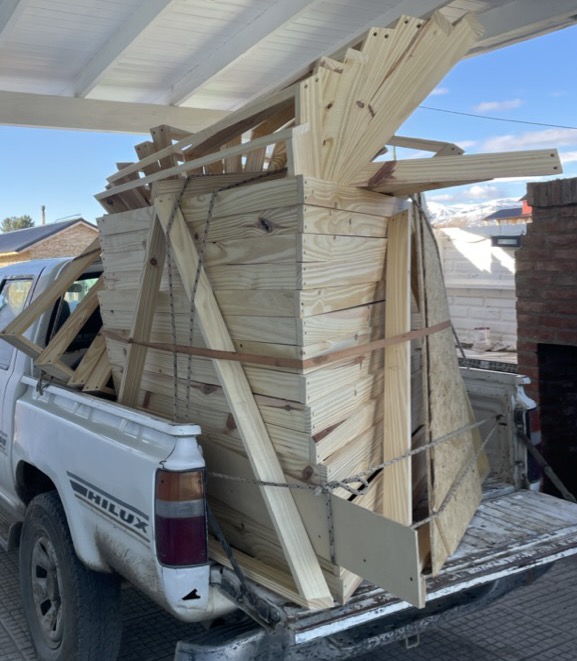
For rural constructions, it’s often more efficient to partially or fully assemble the triangles in the workshop, where tools, covered space, and climate control are available. In this case, the workshop was in the city, and the triangles were carefully transported to the site, which had no electricity or pre-existing infrastructure.
For safe transport:
- Load the triangles into the vehicle carefully, ensuring they don’t twist or collide.
- Drive cautiously to avoid damaging the angled tips or joints, which are critical points.
We recommend printing the Acidome plan with the letter order to guide on-site placement, minimizing errors and speeding up assembly.

Site Preparation and Final Assembly
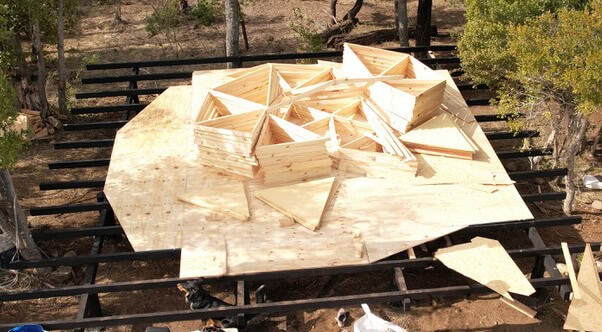
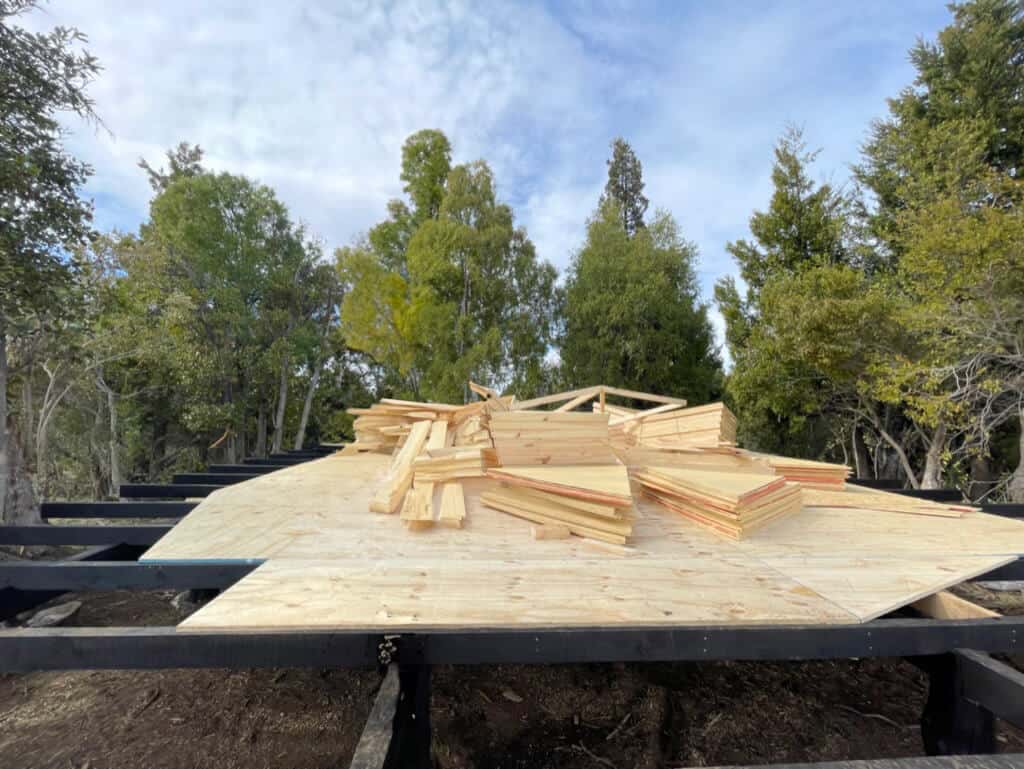
On-site, the triangles are placed on the base platform—in this case, a plywood deck. Each triangle is stacked according to its letter classification and corresponding position, ready to be fixed into the final structure and begin pre-assembling pentagons and hexagons. The photo below shows this process:
In the next article, we’ll dive into the dome’s structural assembly—the crucial stage where the triangles come together to form the resilient, harmonious hemisphere that defines this unique and impressive construction. You’ll discover how each piece fits perfectly to transform the structure into a solid, aesthetic build, ready to withstand time and harsh environments.
With these concrete steps, your dome will grow from a sturdy initial ring into a stable, semi-spherical structure prepared for final finishes and installation. Each advance brings you closer to the home you’ve dreamed of building with your own hands.
Want to Dive Deeper and Master Every Detail?
Additionally, when you message us, we’ll coordinate immediate delivery and offer a unique bonus: the chance to consult us on any questions during the process. We’re here to support you every step of the way, ensuring your project is a total success.
Don’t miss this opportunity to take your dome to the next level.
Frequently Asked Questions
1. What is a geodesic dome and why is triangle assembly so important?
A geodesic dome is a hemispherical structure composed of interconnected triangles that distribute load and provide exceptional rigidity. Triangle assembly is the fundamental stage that ensures the dome’s stability, precision, and durability, as each triangle functions as a basic module that connects with others to form the characteristic hemisphere.
2. How should I organize wooden pieces before assembling a geodesic dome?
Separate all pieces into individual stacks according to their letter designations (A, B, C, etc.) assigned by design software, and ensure each wooden strip has visible, indelible markings for easy identification. Additionally, verify that the cutting angles at the ends of each piece match the original plans to guarantee perfect joints during assembly.
3. What role does the Acidome software play in geodesic dome construction?
Acidome software assigns letters to each segment of the dome, which simplifies identification and organization of pieces both in the workshop and during on-site installation. This labeling system streamlines the entire assembly process and reduces confusion when managing dozens of individual components.
4. What is the recommended workspace setup for assembling geodesic dome triangles?
You should establish a dedicated workspace that accommodates both cutting strips and assembling dome triangles, allowing for efficient organization and assembly of components. This organized space helps ensure that pieces are properly prepared and ready for precise triangle assembly before final on-site installation.
5. Why is checking cutting angles critical before assembling triangles?
Checking that cutting angles match the original plans is essential because even small discrepancies can prevent perfect joints between triangles, compromising the dome’s structural integrity. Precise angles ensure that all triangles fit together seamlessly and distribute load effectively throughout the hemisphere.
6. What is the first step to ensure successful geodesic dome assembly?
The first step is to have all pieces correctly labeled and sorted by type before beginning any assembly work. Proper organization at this stage optimizes the entire construction process and prevents errors during the more complex assembly phases that follow.