
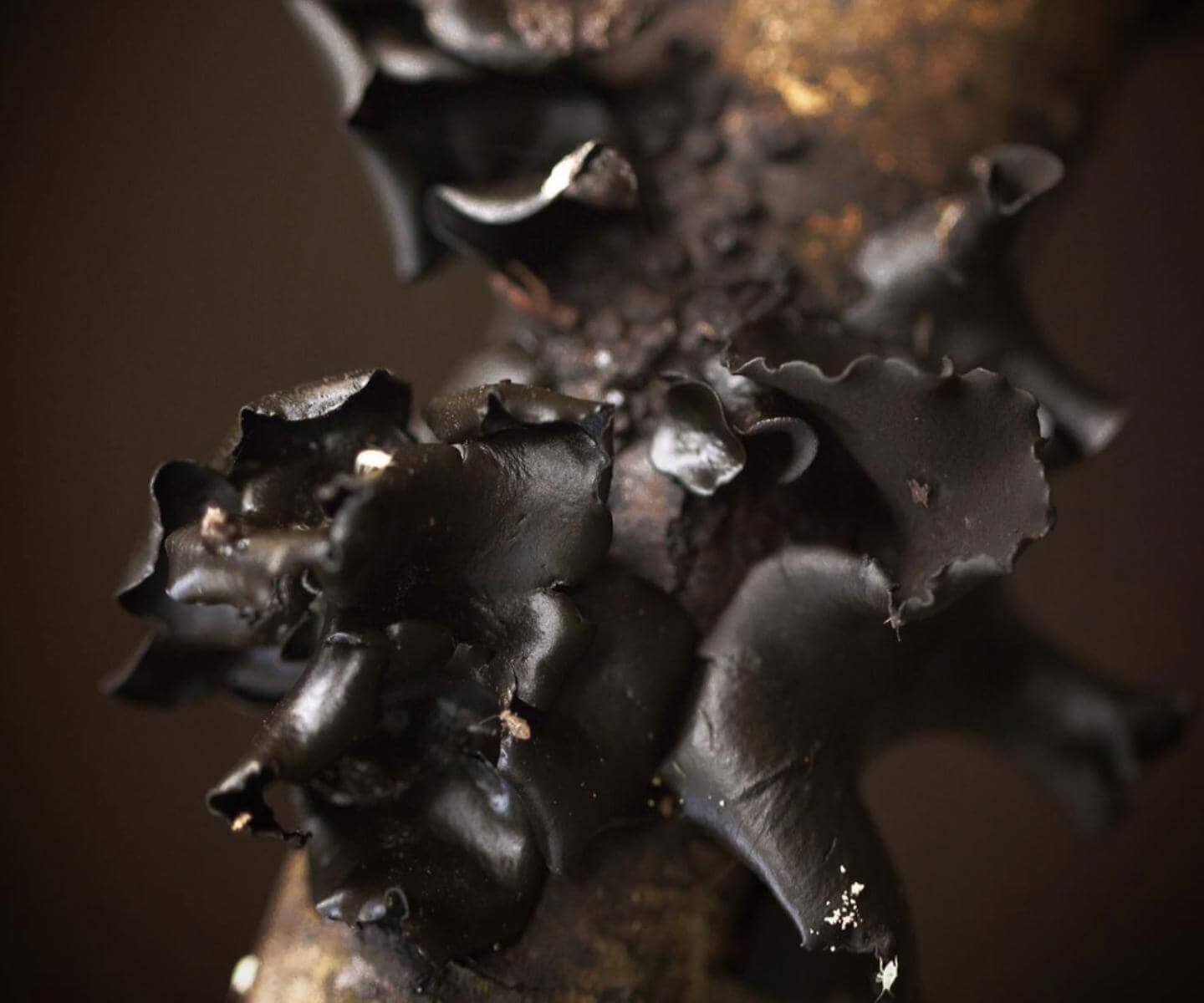
The Black Rose, scientifically known as Ameghiniella australis, is one of the most unique fungi in the Andean-Patagonian forest. Its dark rosette shape, leathery texture, and year-round presence make it a key species for understanding the natural dynamics of the coihue, lenga, and guindo (southern beech) forests. Although it’s often mistaken for a lichen at first glance, this wood-decay fungus is an essential part of the process of decomposing dead wood and is an indicator of healthy, diverse forests.
What is Ameghiniella australis
Ameghiniella australis is a fungus belonging to the phylum Ascomycota, order Helotiales, and family Helotiaceae. It was described in 1887 by mycologist Carlos Spegazzini and has since been identified as a characteristic species of the native forests of southern Argentina and Chile.
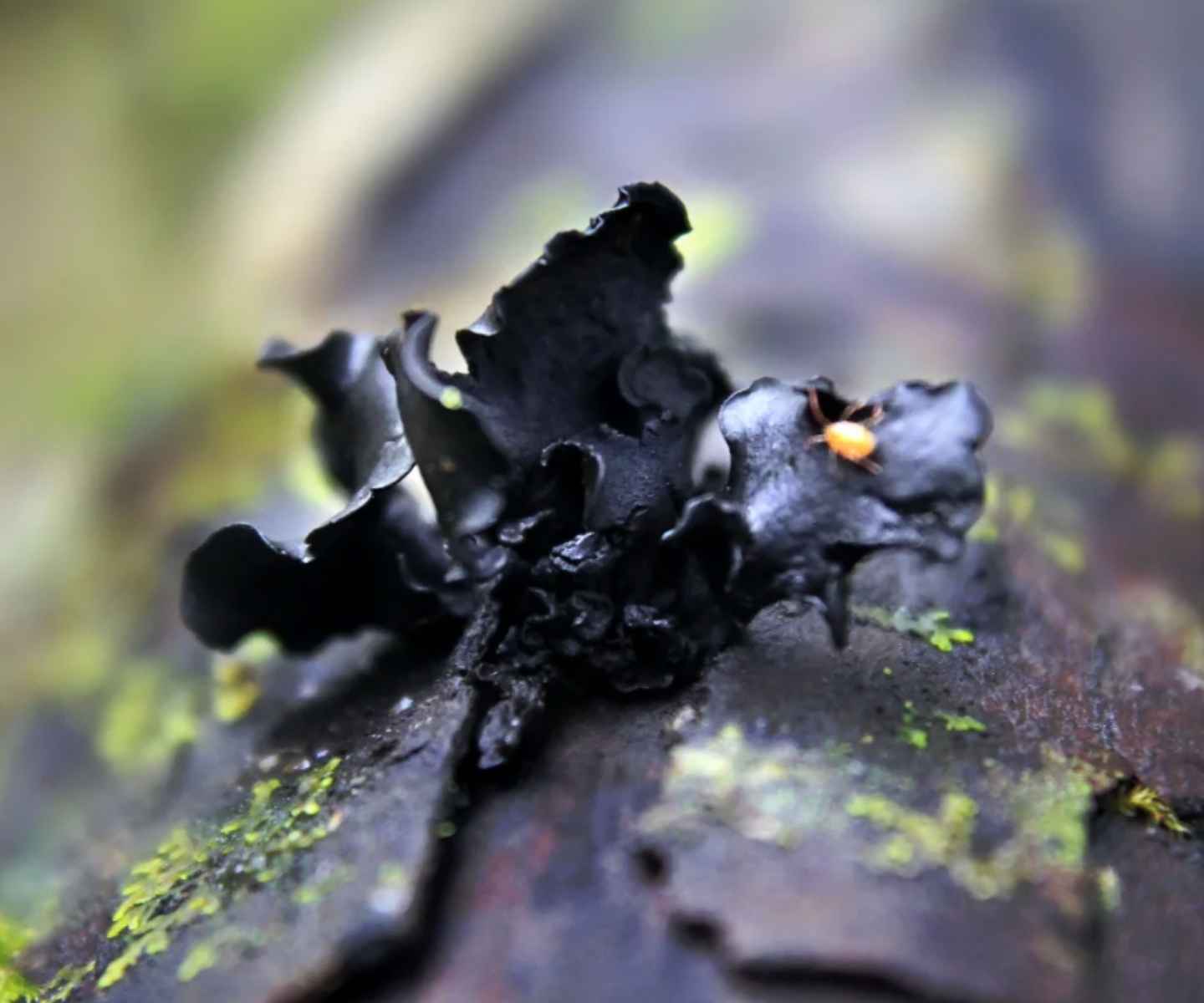
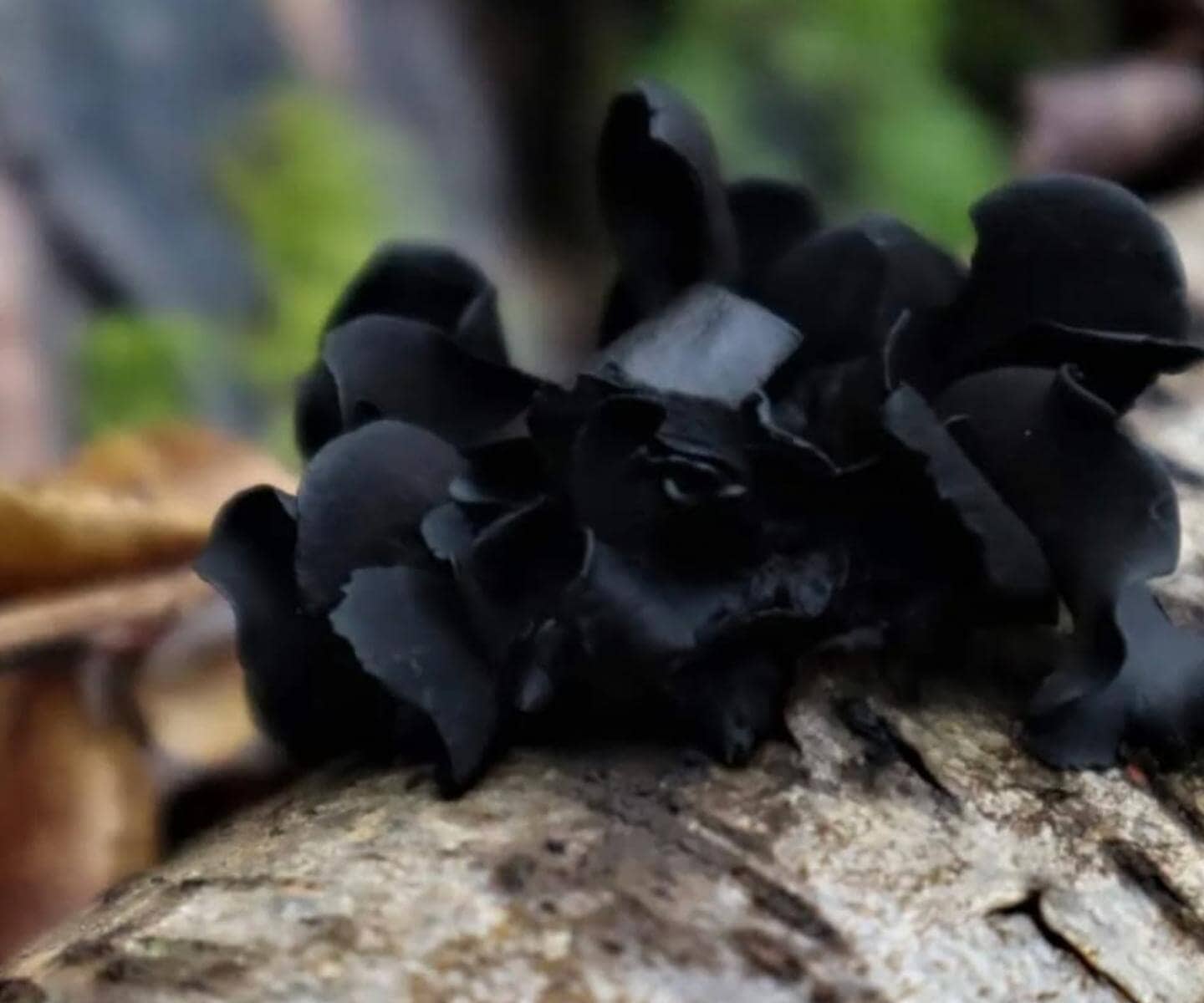
Its dark, flower-like rosette shape makes it unmistakable, though it also causes confusion for those walking through the forest who are unaware of its true fungal nature.
Main Characteristics
General Appearance
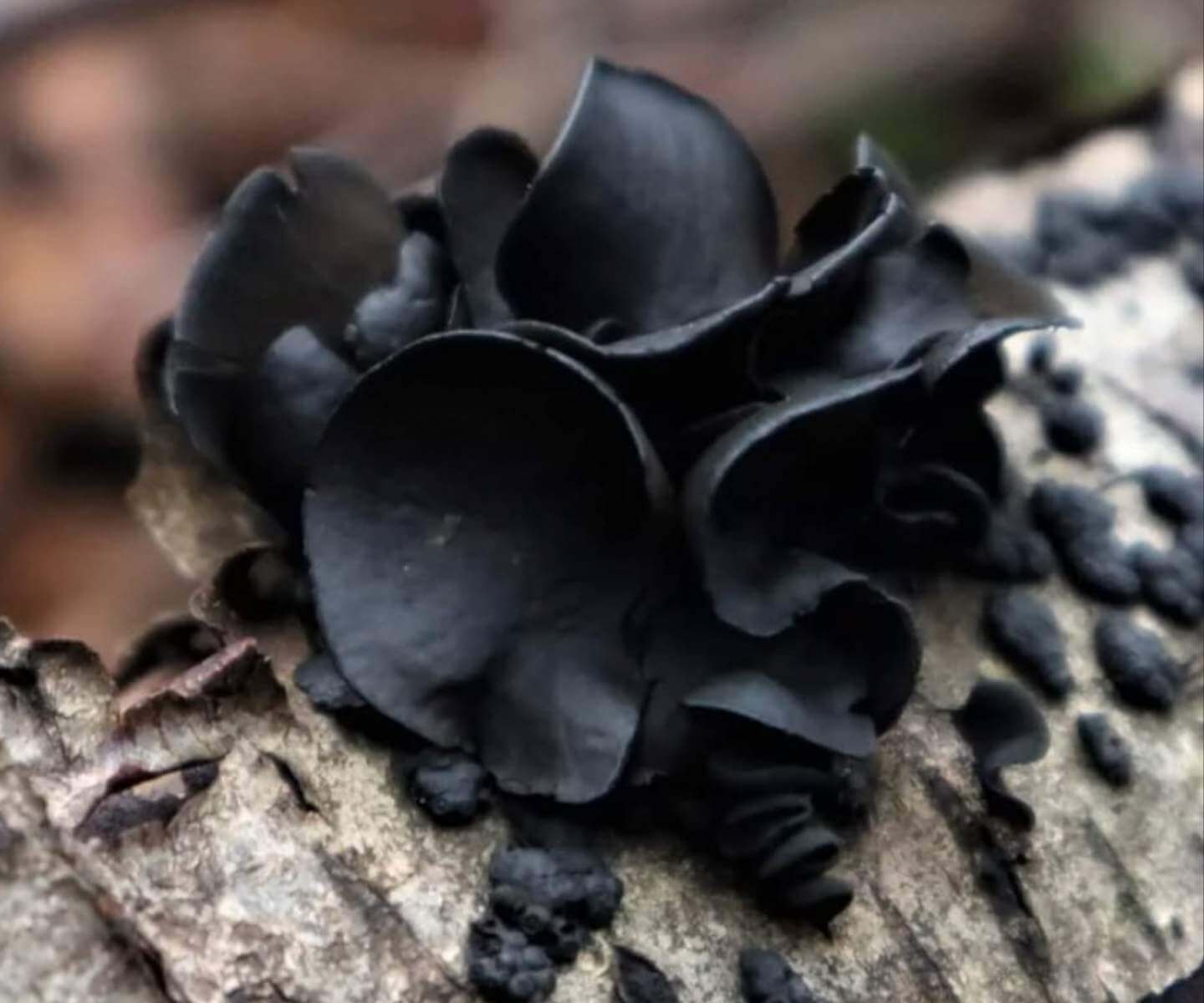
The Black Rose appears as small clusters of fruiting bodies measuring between 1 and 4 centimeters in diameter. Each “flower” can look like a flat cup or a funnel with rolled and torn edges. When growing in isolation, it is usually small, between 0.5 and 1.5 centimeters.
- Color: Dull black or very dark brown.
- Texture: Firm, elastic, and leathery.
- Surface: Warty and not very shiny.
- Spores: 4 to 6 x 1 to 1.5 microns, smooth and enveloped in mucilage.
Fun Fact: When a weak potassium hydroxide solution is applied, the Black Rose releases a purplish pigment. This chemical behavior is known as an ionomidotic reaction.
Behavior in Dry Weather
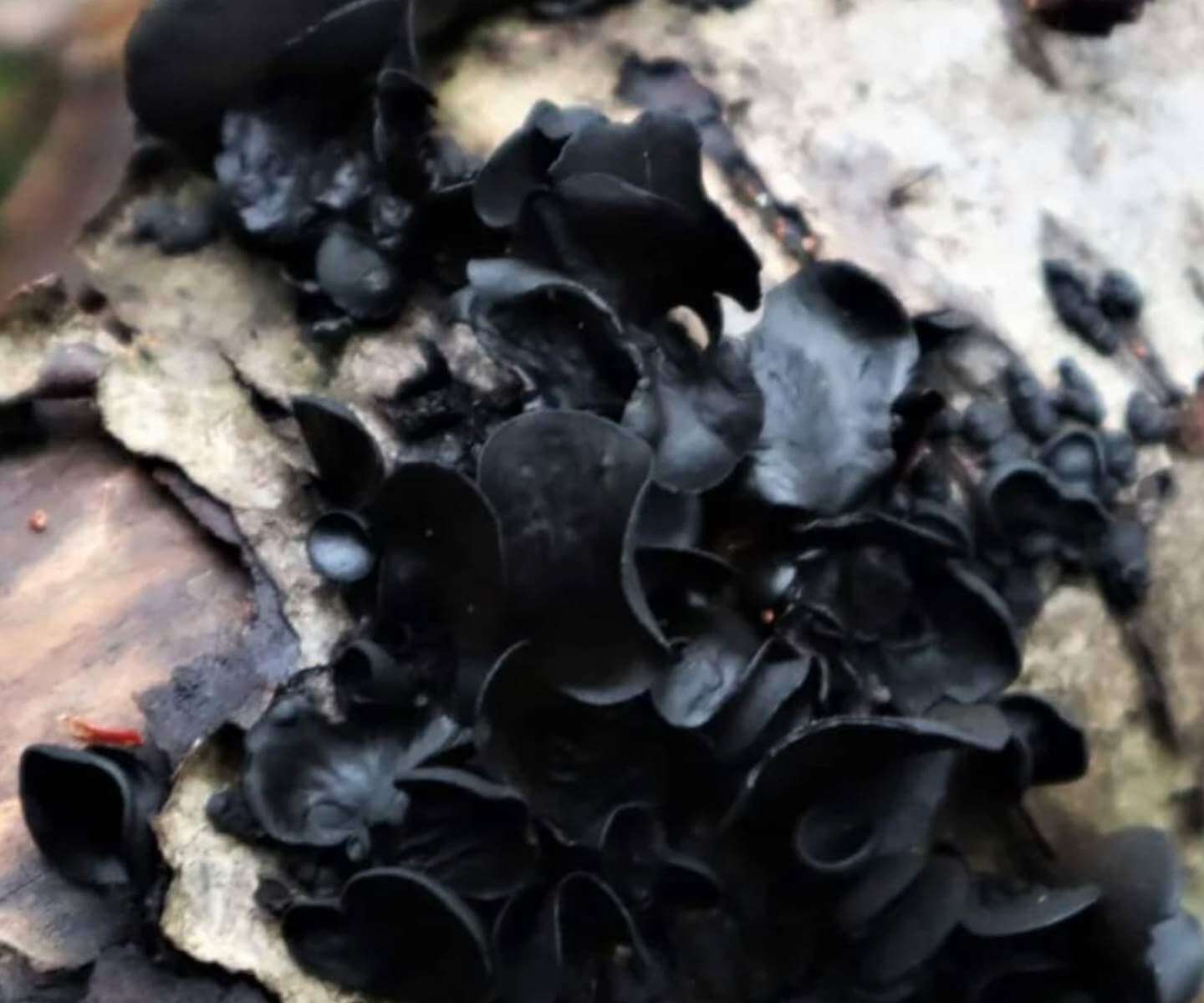
During seasons of low humidity, the fruiting bodies shrink to half their size and become brittle. In this dry state, they most closely resemble lichens, leading to confusion among observers and foragers.
Habitat and Presence in Patagonia
This fungus grows on dead wood, especially fallen logs and branches of coihue (Nothofagus dombeyi), lenga (Nothofagus pumilio), and guindo or mañiú macho (Nothofagus betuloides). Its presence indicates well-preserved, mature forests, as it depends on a humid, cool environment with a natural accumulation of fallen wood.
It is found throughout the Andean-Patagonian region. Peak abundance varies by latitude:
- Northern Zone: Most visible in autumn.
- Southern Zone: More frequent in summer.
- Rest of Patagonia: Even distribution year-round due to its non-perishable nature.
Life Cycle and Seasonal Behavior
Ameghiniella australis produces fruiting bodies (carpophores) that do not decompose easily. This means the reproductive structures can remain visible for months or even longer, explaining their permanent presence in the forest.
Spores are released mainly during humid periods, which aids their dispersal by wind and water.
Ecological Importance
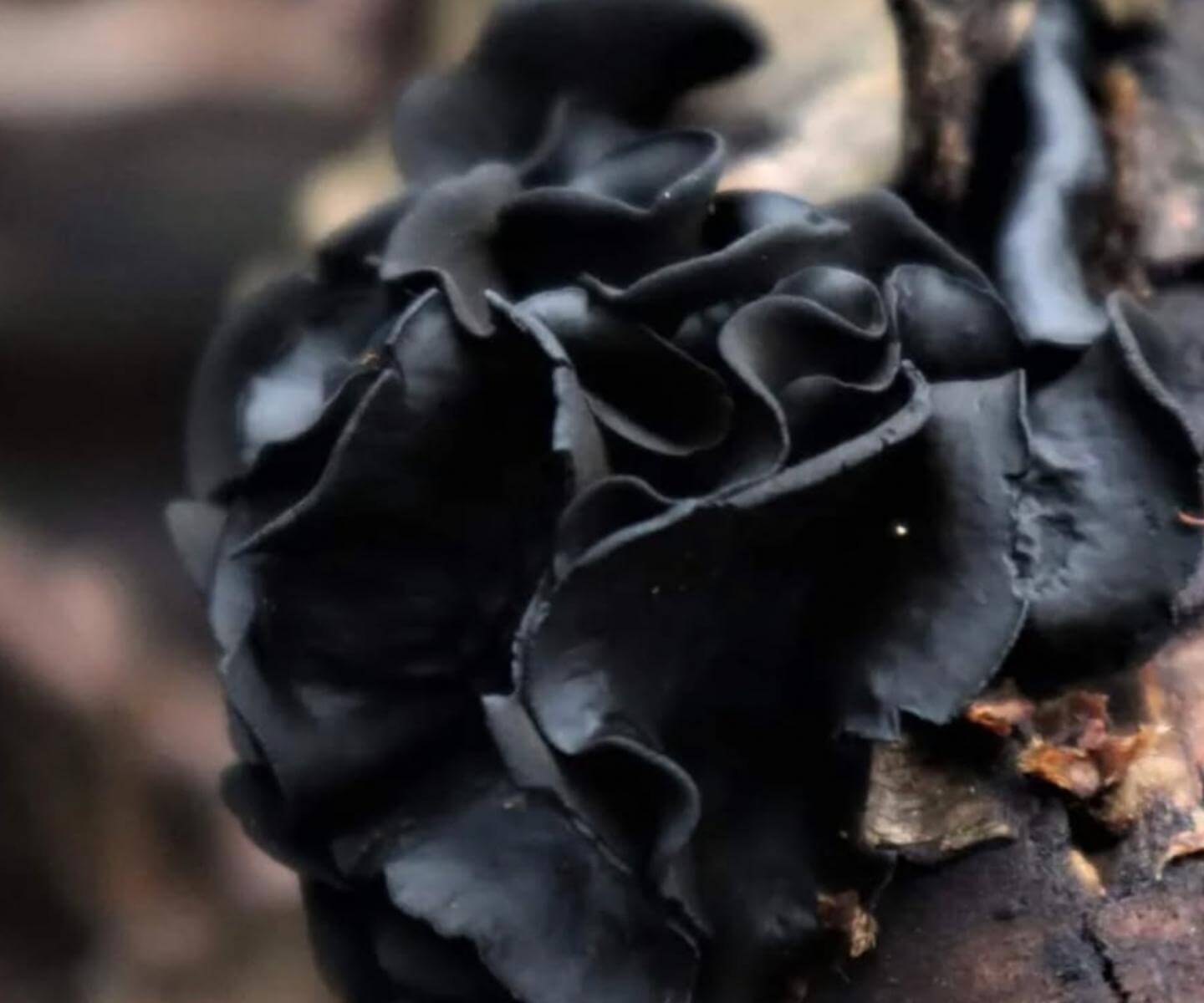
The Black Rose plays a key role in nutrient recycling. By growing on dead logs and twigs, it contributes to the degradation of lignin and cellulose, accelerating the process of returning organic matter to the soil.
- Participates in the decomposition of hardwoods.
- Promotes the formation of new forest soils.
- Indicates undisturbed ecosystems and good environmental health.
Did you know… This fungus is considered an indicator of a well-conserved forest. Its constant presence suggests the natural cycle of woodfall and decomposition has not been interrupted.
Is it Toxic or Edible?
There are no records indicating toxicity in Ameghiniella australis. However, it also has no known culinary value. Its leathery texture and neutral flavor mean it is not considered an edible mushroom.
Consumption is not recommended. Not because it is dangerous, but because it lacks culinary qualities and is part of a delicate ecosystem that should not be subject to foraging.
How to Tell it Apart from Lichens
When dry, many people mistake it for dark lichens. To tell them apart, observe the following:
- Texture: Lichens are brittle and thin; the Black Rose is thicker and more elastic.
- Location: This fungus appears exclusively on fallen wood, while lichens also grow on rocks and living bark.
- Shape: The Black Rose always forms well-defined rosettes.
Timeline and Scientific Classification
- 1887: Spegazzini describes Ameghiniella australis.
- 20th Century: Its classification within Helotiaceae is consolidated.
- 1990s: Gamundi and Horak include it as a common species in Patagonian field guides.
- Present Day: Recognized as one of the most representative wood-decay fungi of the Andean Patagonia.
Recommended Scientific Sources
To learn more about Patagonian fungi, it is recommended to consult:
- Guide to Fungi of the Andean-Patagonian Forests, Gamundi and Horak
- National Institute of Agricultural Technology (INTA – Argentina)
- MycoBank
Frequently Asked Questions
Can the Black Rose be found year-round?
Yes, because its fruiting bodies are non-perishable and remain on the wood for months.
Is it dangerous for humans or pets?
There are no reports of toxicity, but consumption is not recommended.
What tree is it most associated with?
Primarily coihue and lenga, two typical species of the Andean-Patagonian forest.
Does it have medicinal uses?
There are no studies confirming any medicinal properties.
Why is it confused with lichens?
Because when it loses moisture, it becomes small, dry, and very brittle, taking on a similar appearance.
Conclusion
Ameghiniella australis is one of the most striking fungi in Patagonia due to its rose-like shape and intense black color. Although it is not edible or medicinal, its presence is fundamental to forest health, as it actively participates in decomposing dead wood. Recognizing it not only helps in better understanding Patagonian biodiversity but also in appreciating the richness of the Andean ecosystem. Its unique appearance makes it one of the most sought-after curiosities for naturalists, photographers, and forest lovers.