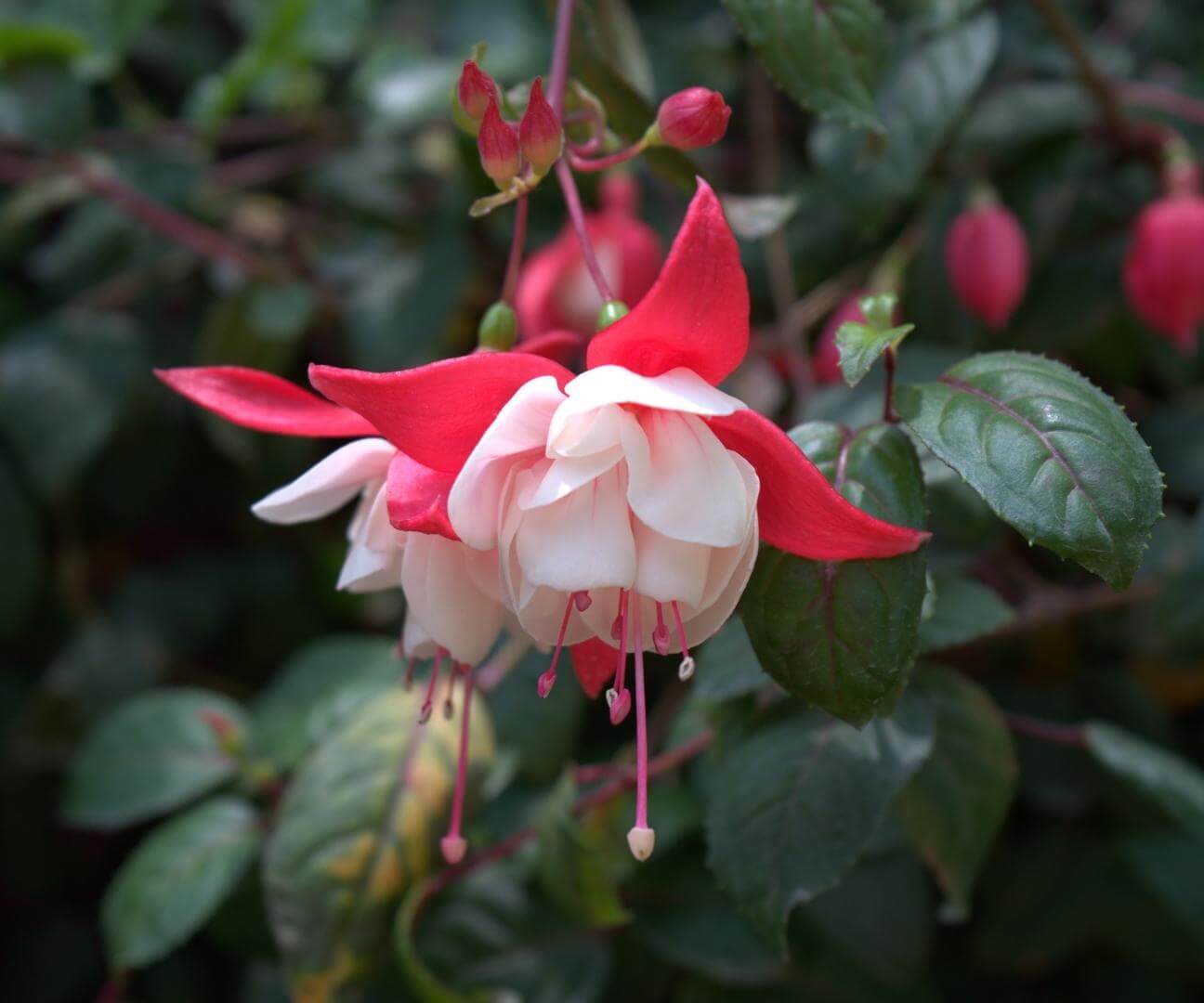
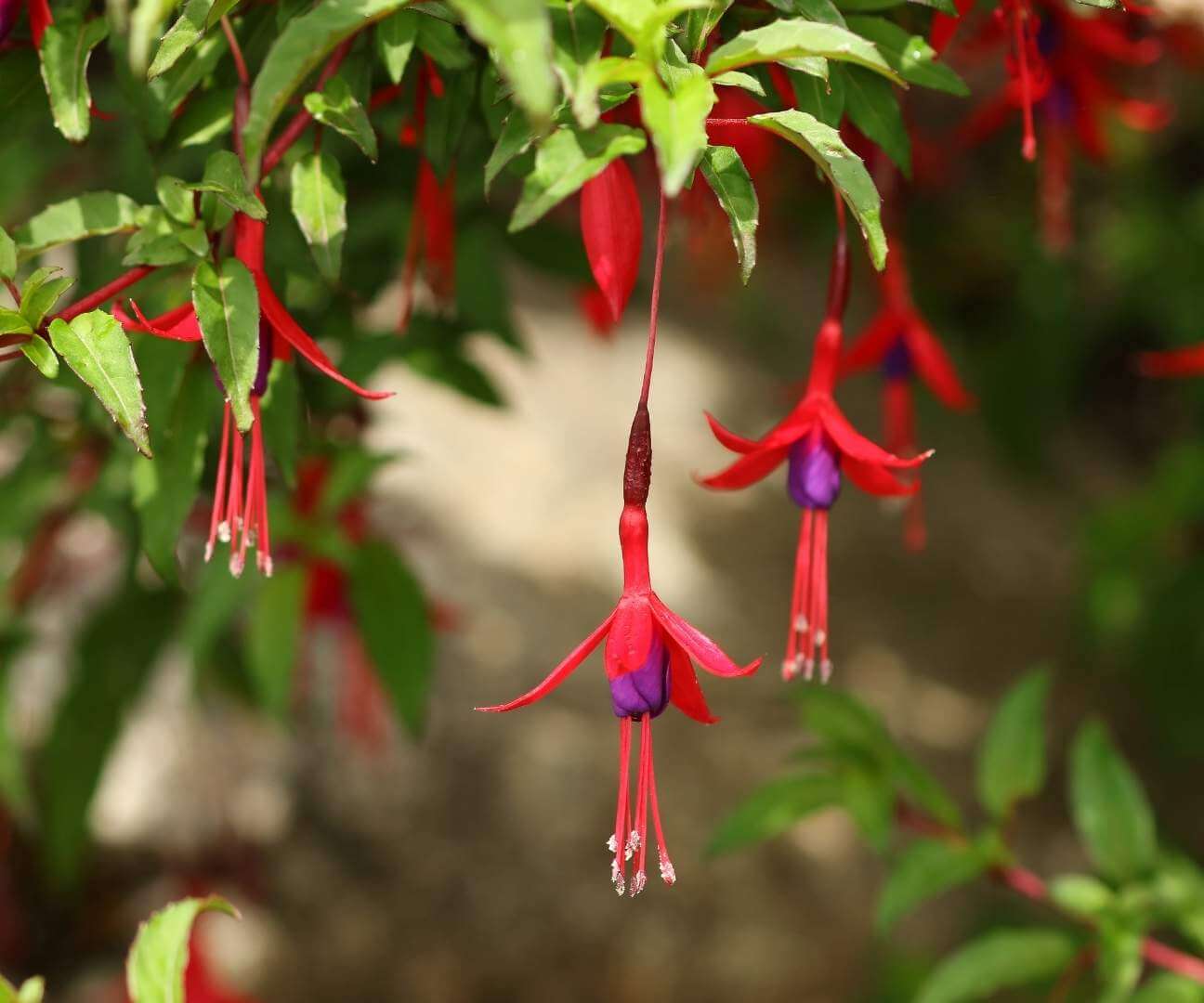
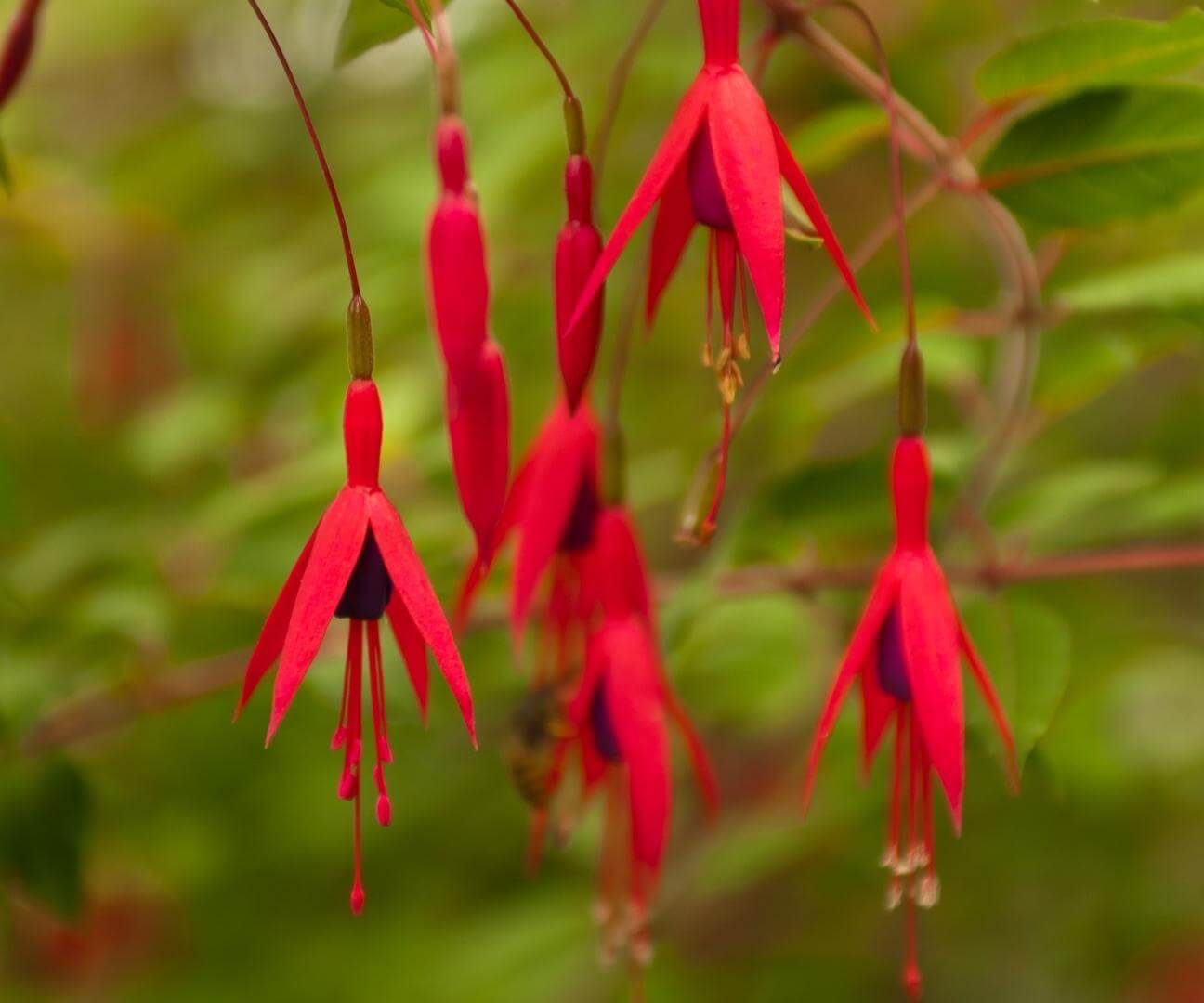
The chilco (Fuchsia magellanica), also known as aljaba, is a shrub native to the southern region of South America that grows wild across much of the Argentine and Chilean Patagonia. Recognizable by its hanging flowers of intense red and fuchsia colors, the chilco not only beautifies the landscape but also holds significant ecological, cultural, and ornamental value. Adapted to cold and humid climates, it is a key species in Patagonian gardens and the native vegetation of Andean-Patagonian forests.
Botanical Description
The chilco is a perennial shrub that can reach between 1 and 3 meters in height, although under optimal conditions it may exceed these values. Its slender stems, lanceolate and opposite leaves, and hanging tubular flowers with red sepals and purple or fuchsia petals are distinctive traits. It belongs to the Onagraceae family and is one of the hardiest species within the Fuchsia genus.
Fun Fact: The chilco flower is primarily pollinated by hummingbirds, especially the green-backed firecrown (Sephanoides sephaniodes), common in Patagonia.
Distribution in Patagonia
It grows wild from the Valparaíso region in Chile to Tierra del Fuego, and in Argentina, mainly in the provinces of Neuquén, Río Negro, Chubut, Santa Cruz, and parts of Tierra del Fuego. It prefers moist, well-drained soils and grows along waterways or in forest clearings.
Its resistance to extreme cold and frost makes it an ideal plant for Patagonian regions where other ornamental species struggle to thrive.
Uses and Cultural Value
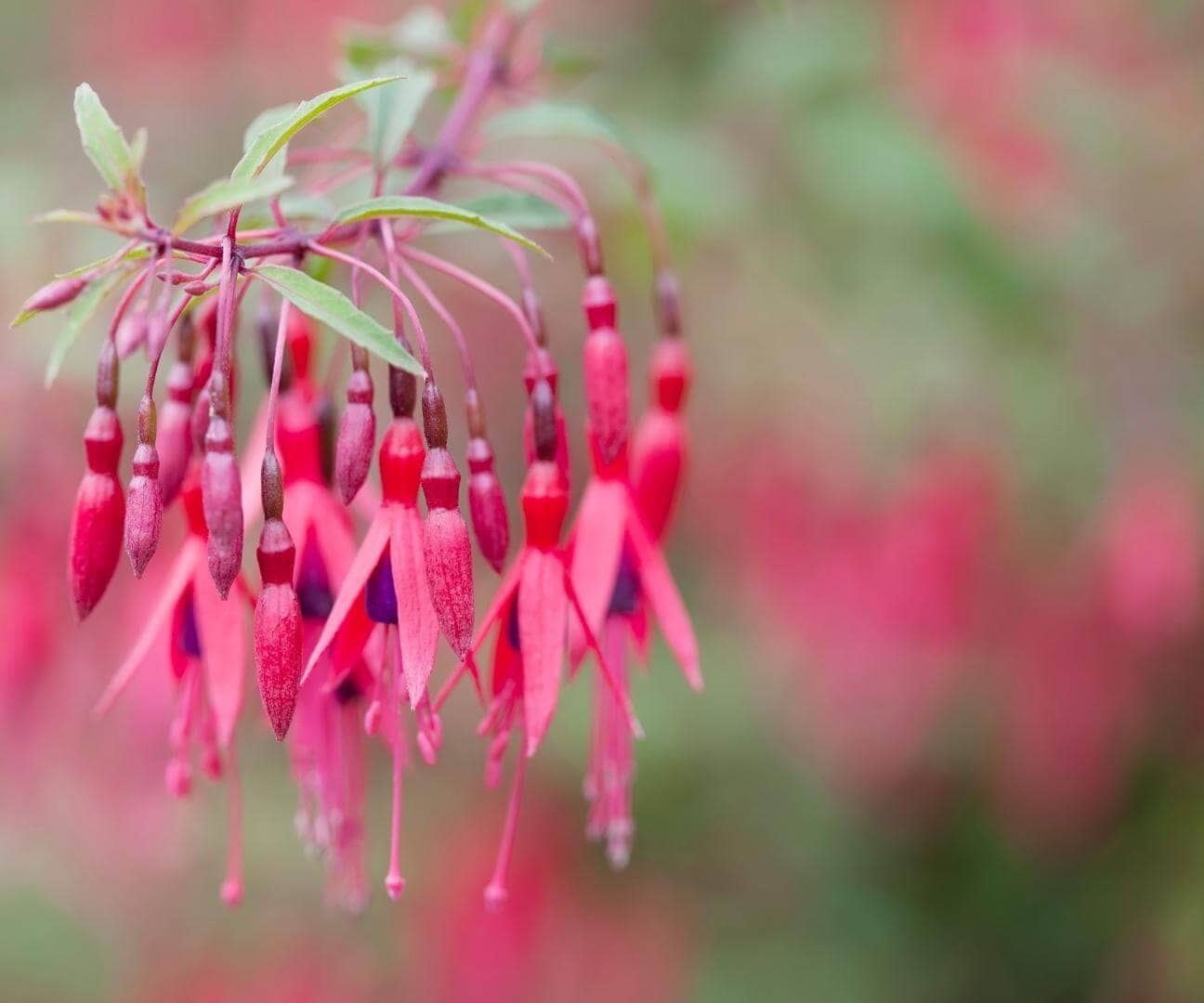
In Mapuche culture, the chilco holds symbolic and ornamental value. Traditionally, it has been used in ceremony decorations and as part of living fences. In gardening, it is highly prized for its prolonged flowering and ability to attract pollinating birds.
Some rural communities use it to prepare mild infusions for medicinal purposes, though consumption should be done with caution, as not all parts of the plant are safe.
Cultivation and Care
The chilco is easy to cultivate and requires minimal intervention once established. However, certain care practices enhance its growth and flowering:
- Exposure: Prefers partial shade but tolerates full sun in cold climates.
- Soil: Moist, fertile, and well-drained.
- Watering: Regular, avoiding prolonged waterlogging.
- Pruning: In late winter, removing dead branches and renewing shoots.
- Propagation: By semi-hardwood cuttings in spring or summer.
Varieties and Cultivated Forms
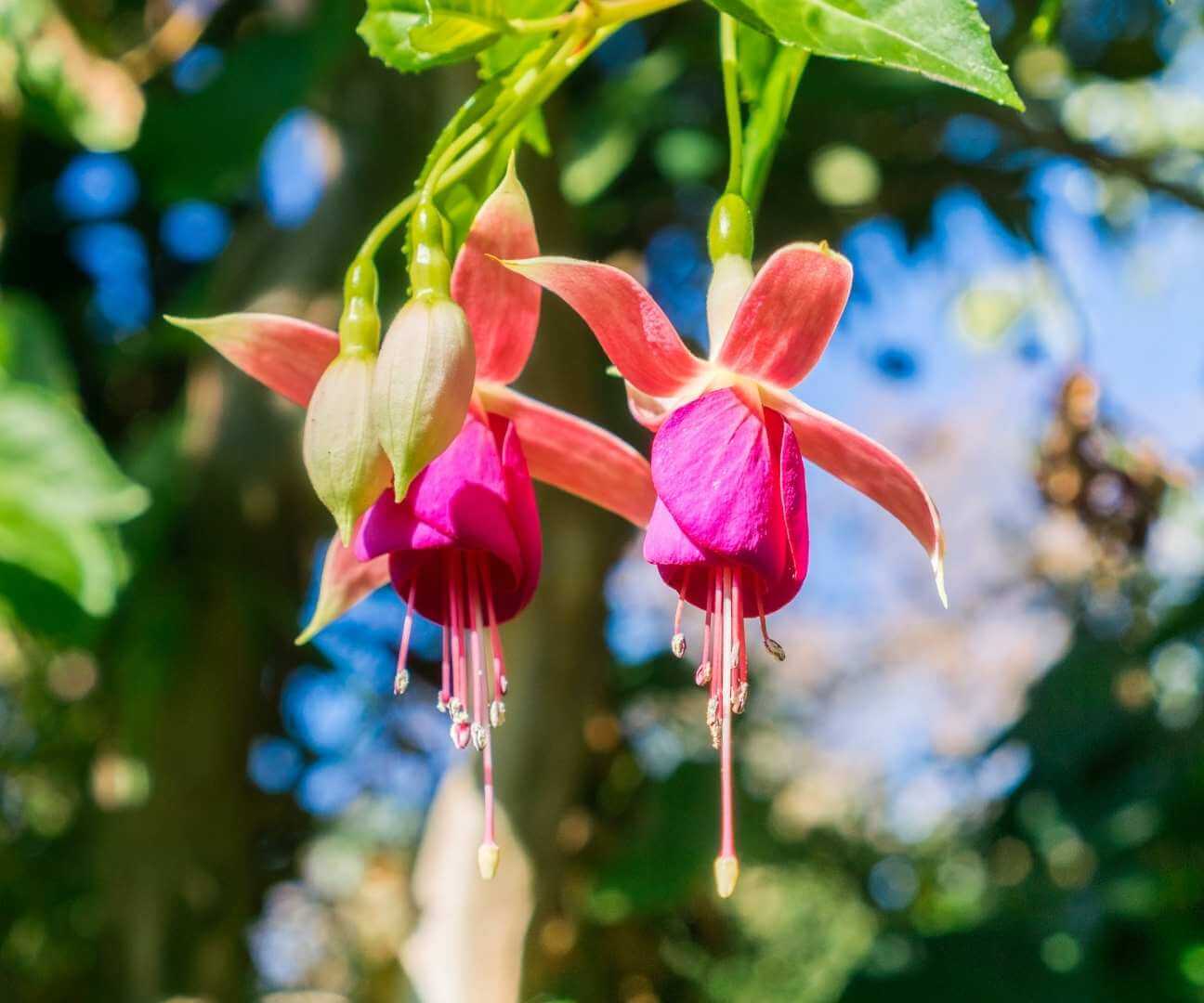
There are numerous varieties and cultivars of Fuchsia magellanica, adapted to different climates and with color variations:
- Fuchsia magellanica var. molinae: Lighter flowers with white or pink sepals.
- ‘Riccartonii’: Large flowers with intense colors, ideal for hedges.
- ‘Alba’: White flowers, less common in Patagonia.
- Dwarf forms, suitable for pots and small gardens.
Ecological Impact and Associated Fauna
The chilco plays a key ecological role as a nectar source for native hummingbirds and bumblebees. Its flowers also attract pollinating insects and contribute to local ecosystem balance. As a dense shrub, it provides shelter for small birds.
Historical Timeline
- 16th Century: Early references to chilco in chronicles of European explorers in the southern extreme.
- 19th Century: Introduction of cultivars in Europe as cold-hardy ornamental plants.
- 20th Century: Expansion of its use in Patagonian and urban gardens in southern Argentina and Chile.
- Present Day: Recognized as an emblematic ornamental species of Patagonia.
Conclusion
The chilco, with its resilience, beauty, and cultural value, is more than an ornamental shrub: it is a symbol of Patagonian flora. Adapted to extreme climates and capable of attracting wildlife, it remains a top choice for gardens and green spaces in the region and beyond.
Frequently Asked Questions About Chilco
Is chilco native to Patagonia?
Yes, it grows naturally in southern regions of Argentina and Chile.
Does it tolerate intense frost?
Yes, it is one of the most cold-resistant Fuchsia species.
When does it bloom?
From late spring to early autumn.
Is it easy to grow?
It requires basic care and adapts well to various soils and exposures.
Does it attract wildlife?
Yes, especially hummingbirds and bumblebees.