
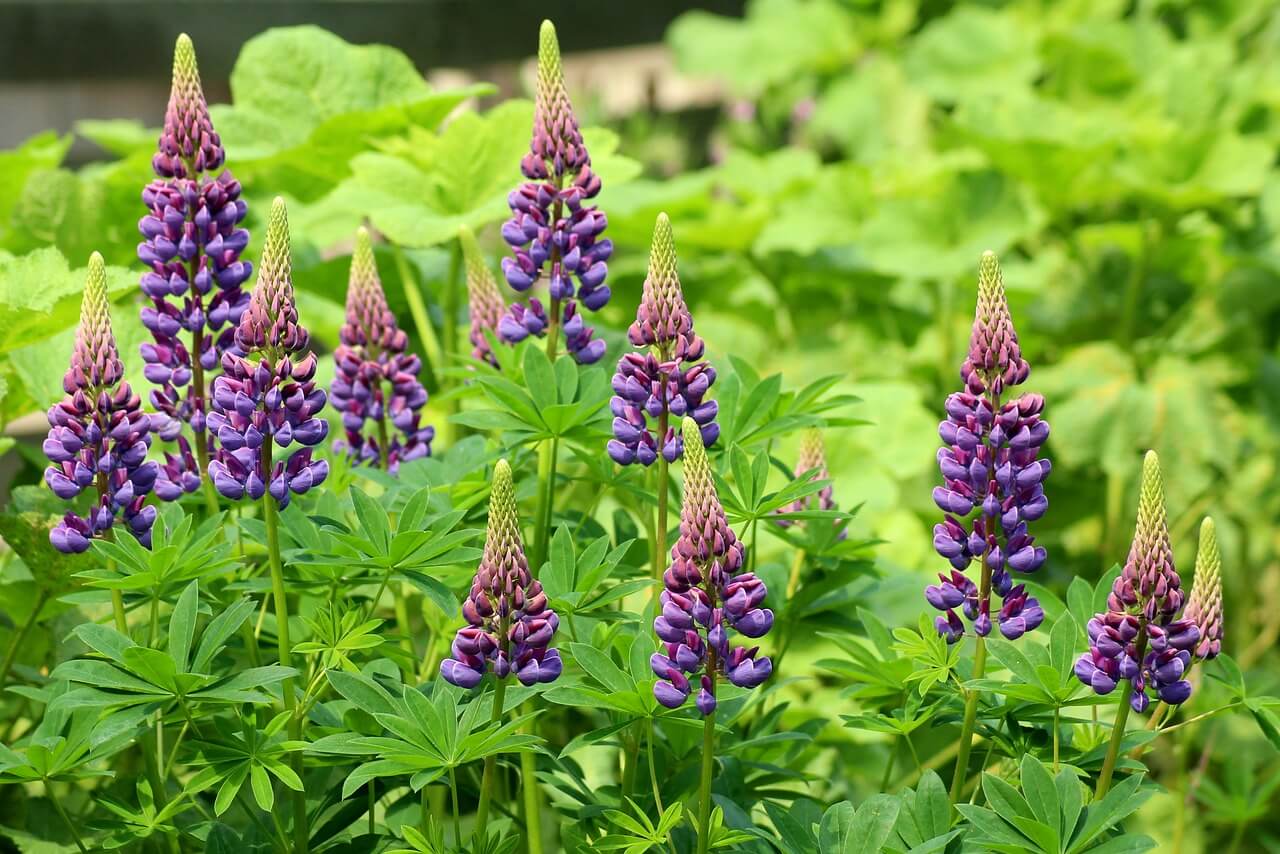
Lupins in Patagonia, scientifically known as Lupinus, are native plants that bloom in the landscapes of the southern tip of South America. This region is shared by Argentina and Chile. Lupins belong to the legume family and are appreciated for their beauty and vital ecological role, as well as their nutritional properties.
How long does it take for lupins to bloom?
The blooming time of lupins varies depending on the species and growing conditions, such as climate and soil:
- Time to bloom: Lupins bloom in their first growing season (spring in Patagonia). This occurs between 8 and 12 weeks after being sown from seeds. Some species may take longer or shorter, but generally, lupins bloom early.
- Duration of bloom: The blooming period of lupins lasts from several weeks to a month. This depends on the climate and the care the plants receive. During this time, the plants produce showy clusters of flowers in colors ranging from white to blue, pink, and purple.
- Plant life: After blooming, lupins produce pods with seeds. When the seeds mature, the plants die. In some cases, lupins are perennials, meaning they regrow in the next season from the same root. This varies by species and climate.

These timelines are approximate and can vary. For specific information about a particular species of lupin and its growth cycles, consult specific resources or gardening guides related to that variety.
A fun fact for when you visit Patagonia
When lupins have mature seeds and someone approaches them, they explode! This natural phenomenon occurs when touching the seed pods, creating a sound similar to a rattle, like a melody in nature. We plan to update this article soon with an audio capturing this fascinating phenomenon.
Stay tuned to hear this natural wonder!
Lupins: small seed, big benefits
Lupins in Patagonia, also known as chochos, altramuces, or tremosos, are leguminous plants native to the Mediterranean and America. With around 200 species, these stems, similar to a closed umbrella, present a varied range of colors, from white to deep blue, giving them high ornamental value alongside other native plants like maqui.
The fruit of the lupin is a yellow or white legume, similar to corn, noted for its high nutritional value. They are an authentic energy source due to their high content of carbohydrates, amino acids, and high-quality vegetable proteins.
Studies by the Instituto de Investigaciones Agropecuarias (INIA) Carillanca have shown that lupins excel in protein content compared to other legumes like lentils, peas, beans, and chickpeas. Protein levels vary between 21% and 25%. Depending on the species, lupins approach the protein content of soybeans, around 39%, and can even surpass it.
Traditionally used as animal feed, this legume has been a vital resource for families during times of famine, providing necessary nutritional values for survival. Today, lupins are considered a “superfood,” comparable to quinoa and avocado in terms of benefits, though they are not used as food in Argentina, but they are in Chile, much like other Patagonian ingredients such as calafate.
Lupins, in addition to providing all essential amino acids, contain important antioxidants such as lutein, zeaxanthin, and beta-carotene, as well as phytosterols, which act as antioxidants. These properties help regulate cholesterol levels and are effective in treating hypertension and preventing cardiovascular diseases, similar to the health benefits found in other regional flora like blueberries and rosehip.
Find more information about lupins in this article.
Frequently Asked Questions
1. When do lupins bloom in Patagonia?
Lupins in Patagonia typically bloom during spring, appearing 8 to 12 weeks after seeds are sown. The exact timing can vary depending on the specific species and local growing conditions like climate and soil quality.
2. How long does the lupin blooming period last?
The blooming period for lupins generally lasts from several weeks to about a month, depending on the climate and care conditions in the region. During this time, the plants display spectacular clusters of flowers in white, blue, pink, and purple hues.
3. What makes lupins ecologically important in Patagonia?
Lupins belong to the legume family and play a vital ecological role in Patagonian landscapes while also being appreciated for their striking beauty and nutritional properties. Their presence supports the region’s natural ecosystem and biodiversity.
4. Are lupins native to Patagonia?
Yes, lupins (scientifically known as Lupinus) are native plants to Patagonia, the southern region shared by Argentina and Chile at the tip of South America. They are well-adapted to the local climate and landscape conditions.
5. Do lupins come back every year or only bloom once?
Some lupin species are annual plants that die after producing seed-filled pods, while others are perennials that regrow from the same roots in subsequent seasons. The plant type varies by species and local climate conditions.
6. What should visitors know about lupin seeds in Patagonia?
After lupins bloom, they produce pods containing seeds that mature over time, and visitors may notice interesting seed pod formations during their Patagonian travels. The mature seeds are an important part of the plant’s life cycle and natural reproduction.