
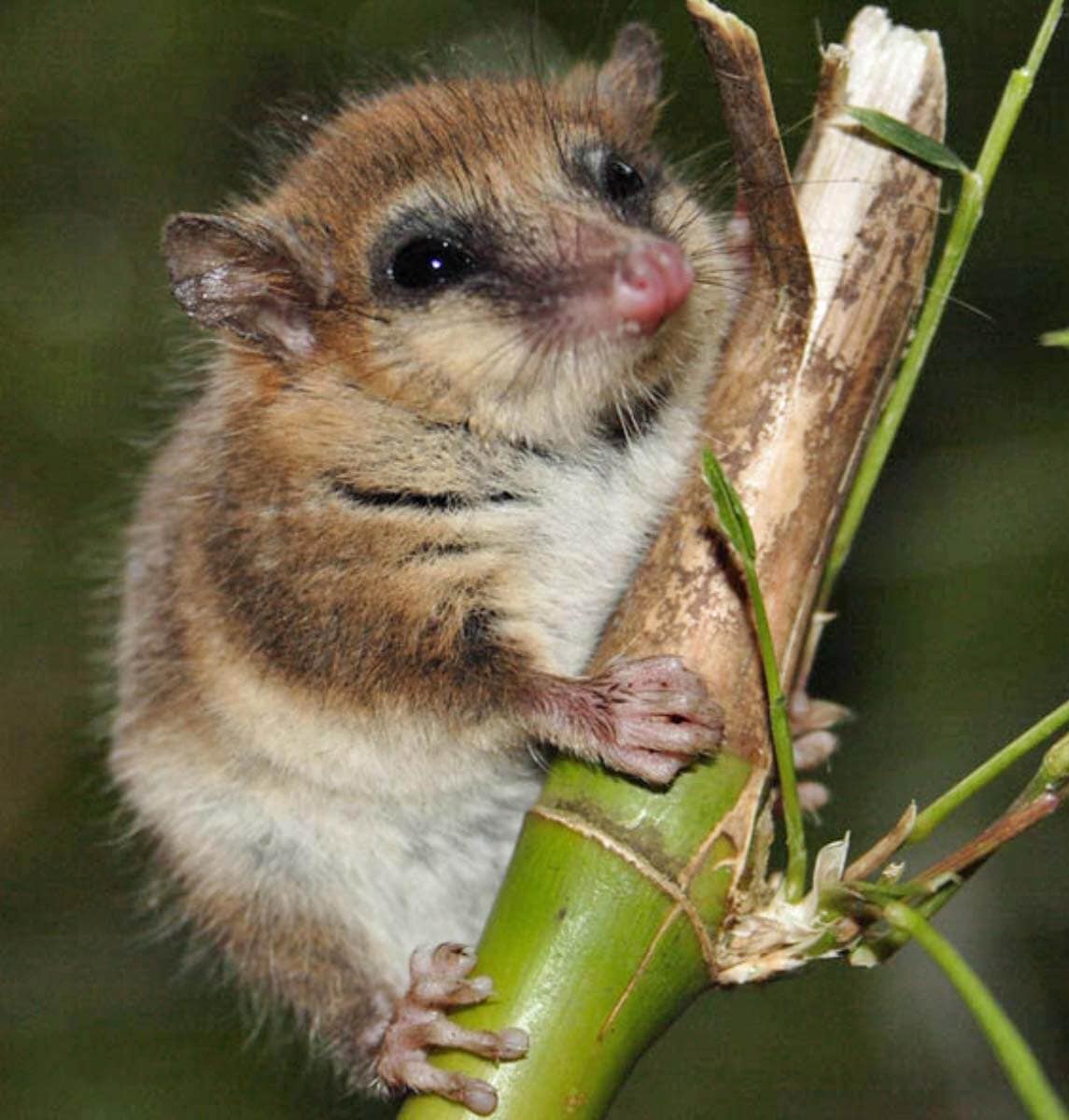
The monito del monte (Dromiciops gliroides) is a small marsupial that inhabits the temperate rainforests of southern Chile and Argentina. Considered a “living fossil,” it represents the only surviving species of an ancestral lineage that connects South America with Australia. Its presence in Patagonia is of immense ecological, cultural, and scientific importance: it plays a key role in forest regeneration, holds deep symbolic value for local communities, and draws the attention of researchers from around the globe.
Description and Characteristics
The monito del monte measures between 11 and 13 centimeters in length, featuring a tail used for storing fat. In addition, its average weight ranges from 20 to 40 grams. Furthermore, the dense fur displays brown and gray tones on the back with a white belly.
Morphological Details
- Small, Rounded Ears: These help detect subtle sounds within the forest.
- Agile Paws: Equipped with opposable thumbs, perfectly adapted for life in the trees.
- Functional Pouch (Marsupium): Females use this to raise their young.
- Sharp Teeth: Allowing them to feed on both insects and fruits.
Baby Monito del Monte
The young are born in a very immature state and complete their development inside the mother’s pouch. After a few months, they are capable of exploring on their own, though they remain dependent on the mother until weaning. Baby monitos del monte are particularly striking due to their tiny size and disproportionately large dark eyes.
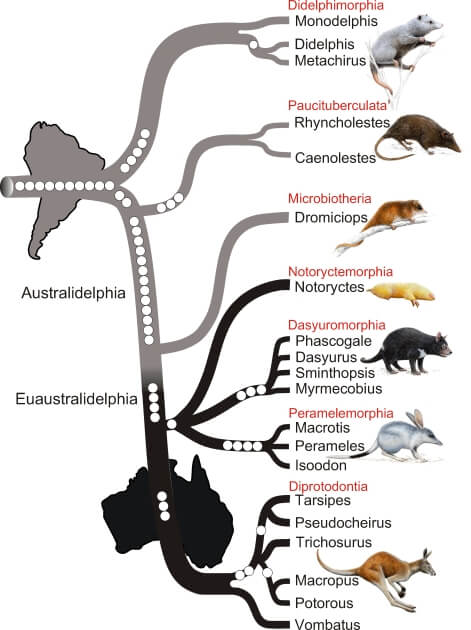
Fun Fact: The monito del monte is the only living member of the order Microbiotheria, a group of marsupials that appeared more than 40 million years ago in Gondwana.
Habitat and Distribution in Patagonia
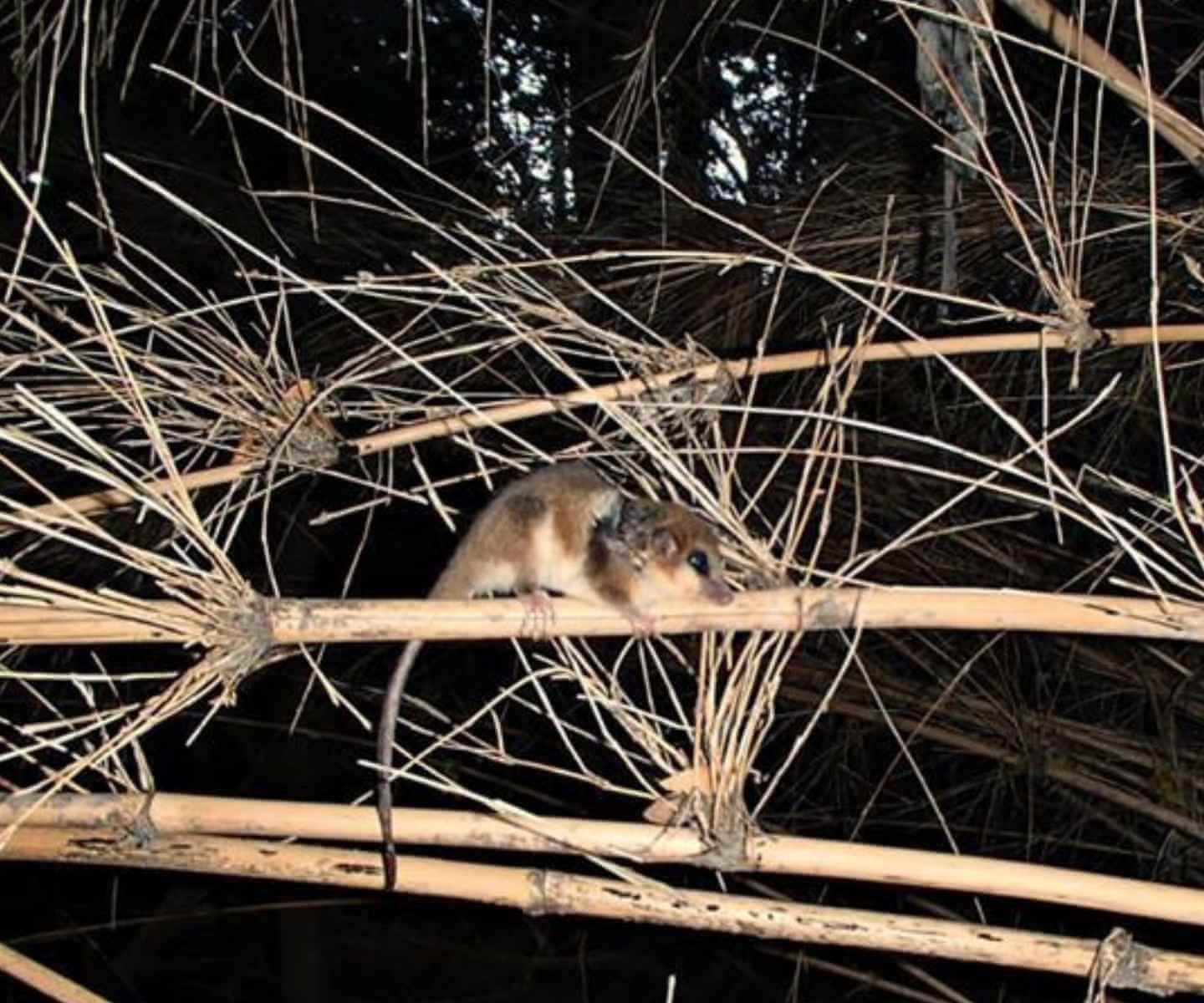
The monito del monte lives in the humid temperate forests of southern South America. In Argentina, it is found in parts of Neuquén, Río Negro, and Chubut, primarily in protected areas such as Lanín National Park and Los Alerces National Park. In Chile, its distribution stretches from the Maule Region to Chiloé Island, including the Valdivian temperate rainforests.
Habitat Preferences
- Nothofagus forests (Lenga, Coihue, Ñire).
- Humid areas with abundant shrub cover.
- Fallen trees and hollow logs where they build their nests.
Adaptations to the Patagonian Climate
In winter, when temperatures drop and food becomes scarce, this marsupial enters a state of hibernation or partial torpor. During this period, it reduces its body temperature and metabolism to survive. Its ability to store fat in its tail is fundamental for enduring the coldest and windiest months in Patagonia.
Diet and Ecological Role
The monito del monte is an omnivore. Its diet includes insects, larvae, spiders, small invertebrates, and wild fruits. However, its most vital role in the ecosystem is as a seed disperser.
Key Plants in its Diet
- Tristerix corymbosus (Patagonian Mistletoe/Quintral).
- Maqui berries (Aristotelia chilensis).
- Amancay fruits (Alstroemeria spp.).
- Calafate berries (Berberis microphylla).
Did you know? The monito del monte is the only known disperser of the Patagonian mistletoe. Without it, this plant would face enormous difficulties reproducing.
Behavior, Life Cycle, and Predators
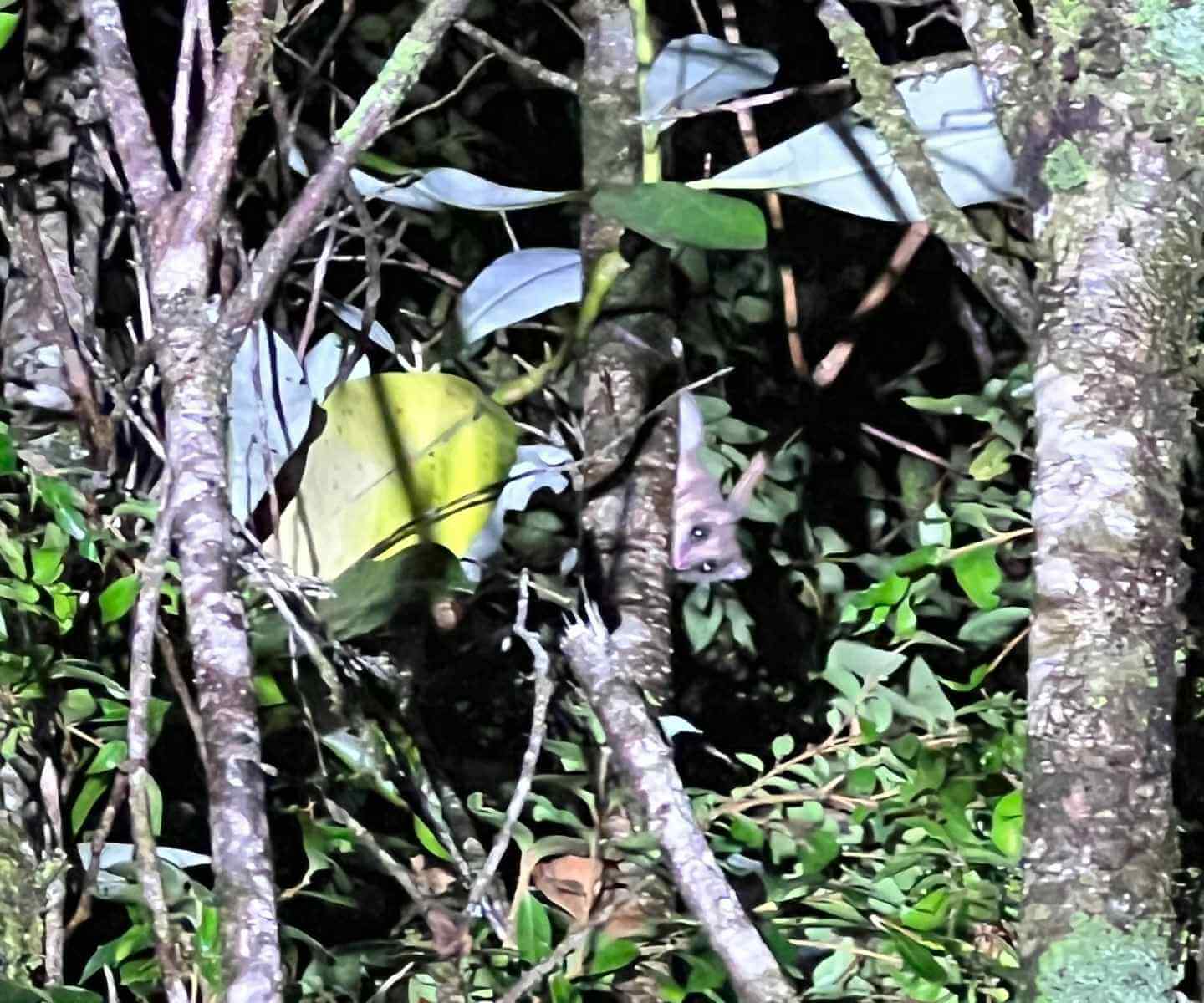
This marsupial is nocturnal and spends most of its life in the trees. It builds spherical nests using moss and twigs, located in dense shrubs or tree cavities. These are insulating structures that maintain temperature and provide protection from predators.
Life Cycle
- Gestation: Lasts approximately 14 days.
- Offspring: Remain in the pouch for up to 5 months.
- Maturity: Reached at one year of age.
- Lifespan: Between 3 and 4 years in the wild.
Natural Predators
The monito del monte is preyed upon by birds of prey such as the Magellanic Horned Owl, as well as mammals like the Culpeo Fox and domestic cats introduced by humans.
Conservation, Threats, and Protection
While listed as “Near Threatened” by the IUCN, it faces multiple risks:
- Habitat Loss: Deforestation and forest fires are its primary threats.
- Invasive Species: Domestic cats and dogs attack young individuals.
- Climate Change: It alters the cycles of fruit availability and shelter.

Conservation Measures
In Argentina, it is protected within national parks such as Los Alerces and Lanín. In Chile, there are community conservation programs and scientific studies funded by universities and NGOs. Local awareness is key: many rural communities consider it a symbol of forest balance.
Cultural and Scientific Significance
The monito del monte is part of the stories and beliefs of the indigenous Mapuche people, who associate it with the invisible guardians of the forest. Furthermore, it has been the subject of international research, as it is considered a key to understanding marsupial evolution.
In modern science, the monito del monte is considered a “bridge” species connecting South American marsupials with those of Oceania.
Historical Timeline
- 40 Million Years Ago: The Microbiotheria lineage appears in Gondwana.
- Fossils in Argentina: Findings in Miocene sediments.
- 19th Century: Initial scientific description of the genus Dromiciops.
- 1980s: Studies confirm its ecological role in mistletoe dispersal.
- 2006: Declared a keystone species for the conservation of temperate forests.
- Present: A symbol of Patagonian biodiversity and conservation.
Conclusion
The monito del monte is much more than a small animal of the southern forests: it is a living testament to evolutionary history, a fundamental player in the ecological dynamics of Patagonia, and a cultural symbol. Its survival depends on protecting the forests it inhabits, reducing human threats, and recognizing its value as a species unique in the world.
Frequently Asked Questions about the Monito del Monte
Where does the monito del monte live?
In the humid temperate forests of southern Chile and Argentina, especially in Patagonia.
What does the monito del monte eat?
Insects, larvae, spiders, and wild fruits like maqui and calafate.
Why is it called a living fossil?
Because it is the only survivor of the order Microbiotheria, which originated more than 40 million years ago.
What are its predators?
Owls, Culpeo foxes, and domestic cats represent its main natural and human-induced threats.
Is it protected in Patagonia?
Yes, in both Argentina and Chile, there are national parks and community projects that actively protect it.