
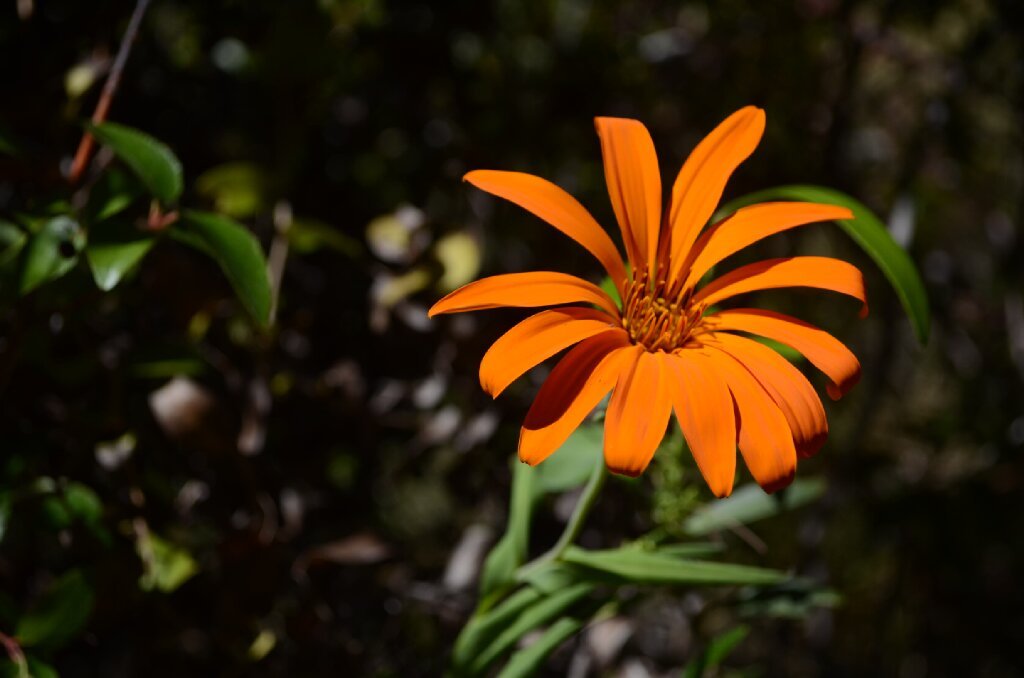
The Mutisia decurrens, commonly known as field carnation, is one of the most emblematic botanical species of Argentine and Chilean Patagonia. With its vibrant flowers and ability to adapt to extreme conditions, this climbing plant not only enriches the landscape but also plays a crucial role in local ecosystems.
Botanical Characteristics of Mutisia decurrens
The Mutisia decurrens belongs to the Asteraceae family and is distinguished by its striking flowers, which can appear in orange, red or white tones. Its most notable features include:
- Stems: Glabrous (hairless) and branched, with tendrils that allow it to climb shrubs and trees.
- Leaves: Simple, oval-shaped and decurrent (extending along the stem).
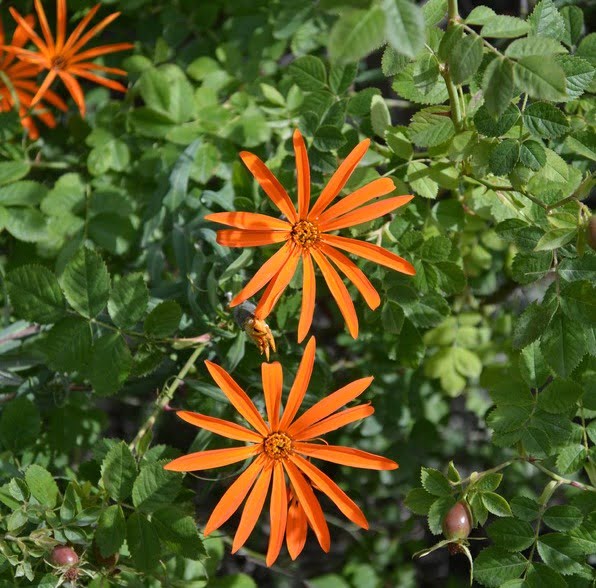
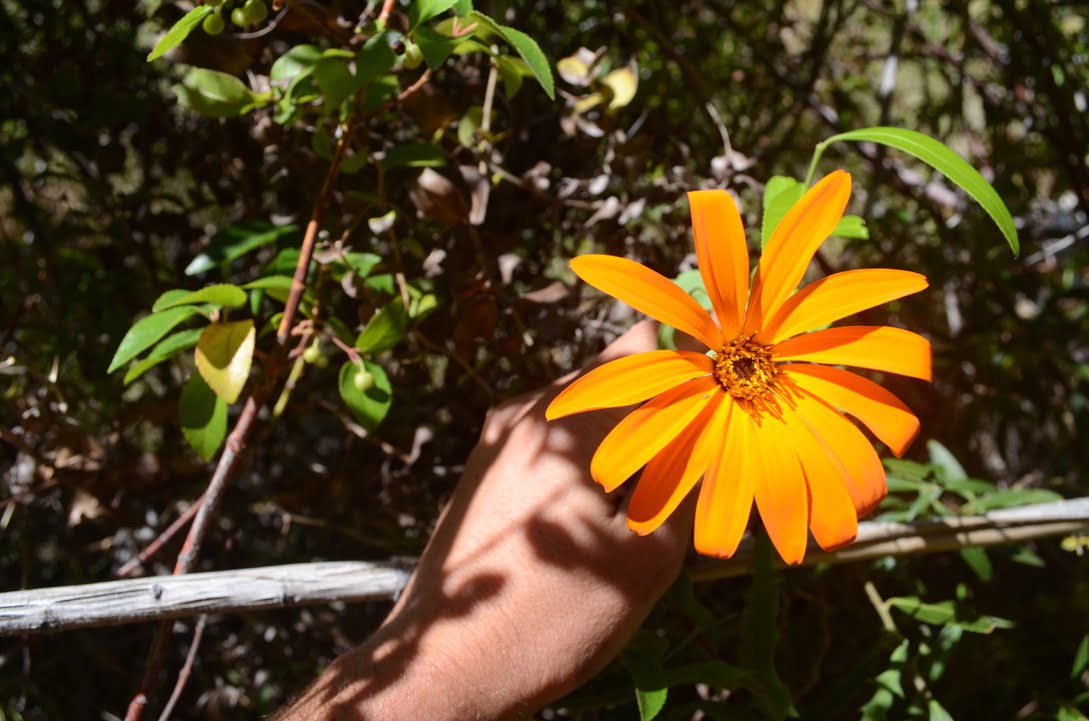
- Flowers: Composed of 7 to 14 petals, each about 5 cm long, forming an open corolla.
Distribution and Habitat of Mutisia Decurrens in Patagonia
This species is native to the Patagonian region and is distributed in:
- Argentina: Mainly in the Patagonian forest belt. Declared the official flower of Neuquén province.
- Chile: Its presence extends to mountainous areas and temperate forests, where it grows wild.
It grows at altitudes ranging from 500 to 2000 meters above sea level, adapting to rocky soils and variable climatic conditions.
Ecological and Cultural Importance
The Mutisia decurrens is valued not only for its beauty but also for its role in the ecosystem:
- Pollination: Its flowers attract butterflies, bees and hummingbirds, contributing to biodiversity.
- Phytoremediation: Recent studies suggest its potential for restoring degraded soils.
- Patagonian culture: It’s a symbol of resilience and adaptation, representing native flora in regional identity.
“The Mutisia decurrens is a natural treasure of Patagonia, a flower that withstands strong winds and poor soils, but when blooming, paints the landscape with unmatched colors.” — Patagonian Botanist
Conservation and Threats
Despite its adaptability, the Mutisia decurrens faces challenges such as:
- Climate change: Alterations in rainfall and temperature patterns.
- Human activity: Urbanization and unregulated tourism in natural areas.
Local organizations promote its conservation through reforestation projects and environmental education.
Traditional and Modern Uses
Beyond its ecological value, this plant has been historically used by indigenous communities and is currently being studied for:
- Sustainable gardening: Due to its resilience and low maintenance.
- Natural medicine: Some research explores its anti-inflammatory properties.
Where to Observe Mutisia decurrens in Patagonia
The best places to appreciate this species include:
- Nahuel Huapi National Park (Argentina)
- Malalcahuello National Reserve (Chile)
- Neuquén steppe trails
Conclusion: A Patagonian Emblem
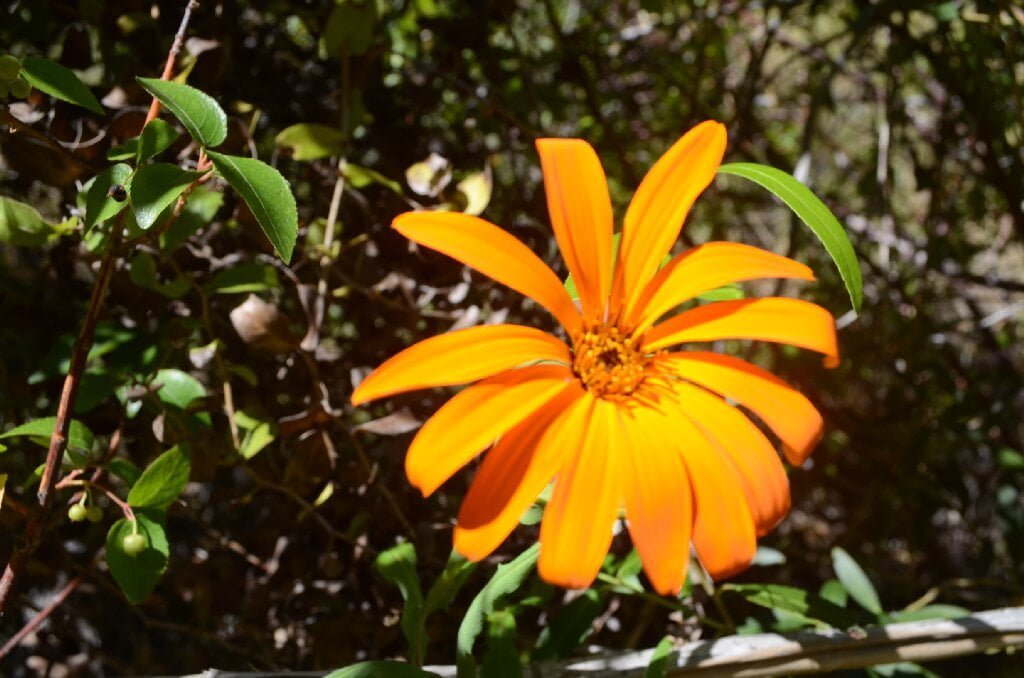
The Mutisia decurrens is much more than a wildflower: it’s a symbol of Patagonia’s resilience and beauty. Its conservation is key to maintaining the ecological and cultural balance of this unique region in the world.
Discover more Patagonian flowers
References and Sources
- Wikipedia – Mutisia decurrens
- Neuquén Province – Provincial flower
- Studies from the National University of Comahue on Patagonian flora
Frequently Asked Questions
1. What is Mutisia decurrens and where can I find it in Patagonia?
Mutisia decurrens, commonly known as field carnation, is a striking climbing plant native to Argentine and Chilean Patagonia, belonging to the Asteraceae family. You’ll find it distributed across the Patagonian forest belt in Argentina (where it’s the official flower of Neuquén province) and in Chile’s mountainous and temperate forest areas, typically at altitudes between 500 to 2000 meters above sea level.
2. What do the flowers of Mutisia decurrens look like?
The Mutisia decurrens produces vibrant flowers in orange, red, or white tones, composed of 7 to 14 petals each measuring about 5 cm long that form an open corolla. These striking blooms make it one of Patagonia’s most visually distinctive botanical species.
3. How does Mutisia decurrens survive in Patagonia’s harsh climate?
This climbing plant has adapted remarkably to extreme Patagonian conditions through several features, including glabrous (hairless) branched stems with tendrils that allow it to climb shrubs and trees for support, and an ability to thrive in rocky soils with variable climate conditions. Its resilience makes it perfectly suited to the challenging Patagonian environment.
4. What wildlife does Mutisia decurrens attract?
The vibrant flowers of Mutisia decurrens play a crucial ecological role by attracting butterflies, bees, and hummingbirds, which rely on the plant for pollination and food sources. This makes it an important species for supporting Patagonia’s local biodiversity.
5. Why is Mutisia decurrens culturally important in Patagonia?
Mutisia decurrens holds significant cultural value in the region, most notably being declared the official flower of Neuquén province in Argentina. Its emblematic status reflects its importance to the identity and pride of Patagonian communities.
6. What are the distinctive physical characteristics that identify Mutisia decurrens?
Key identifying features include simple, oval-shaped leaves that are decurrent (extending along the stem), hairless and branched stems with climbing tendrils, and the characteristic large, colorful flowers with 7 to 14 petals. These features make it easily recognizable to nature enthusiasts exploring Patagonia.