
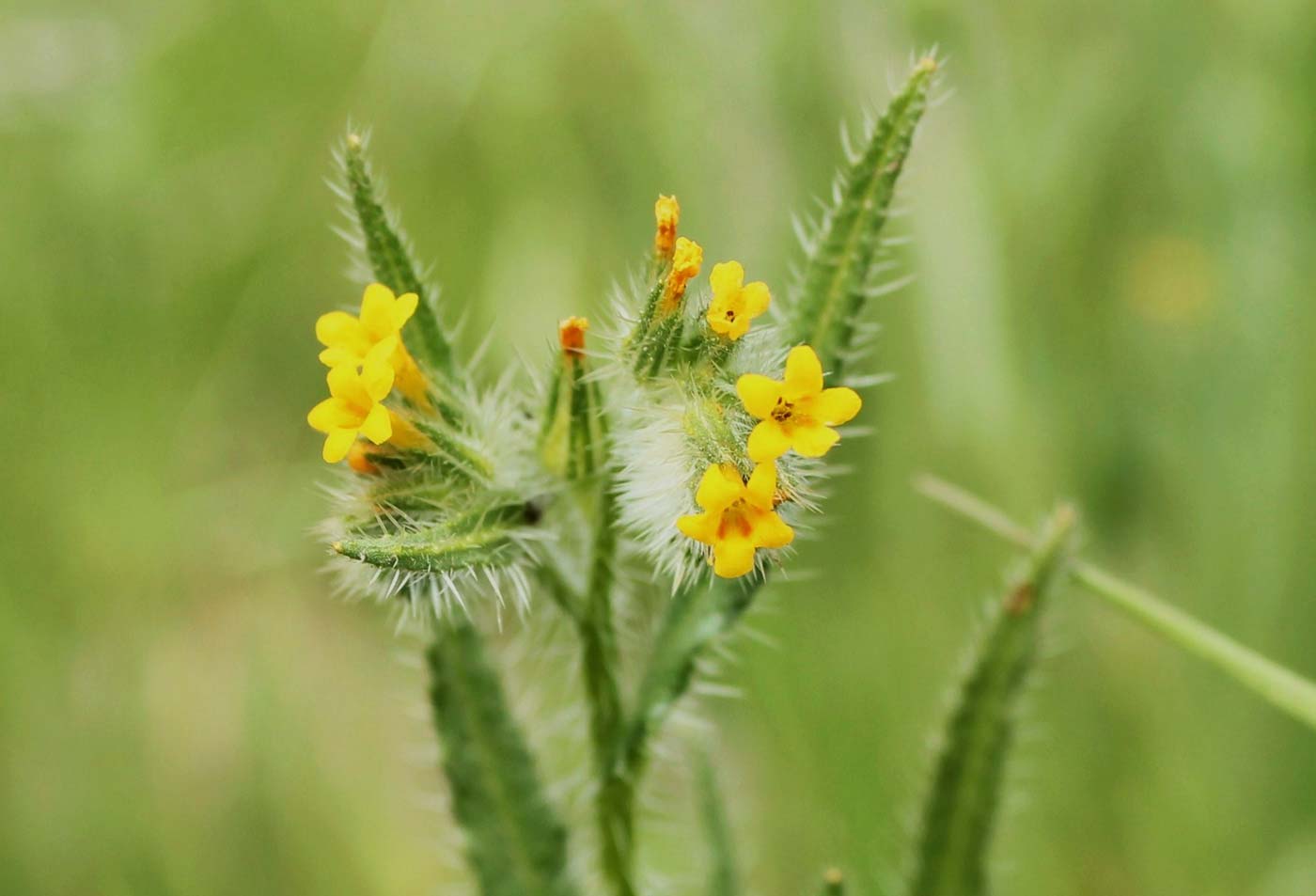
In the vast landscapes of Patagonia, among eroded soils and open fields, grows a little-known plant of great botanical and cultural interest: the Patagonian fiddleneck (Amsinckia calycina). This species, belonging to the Boraginaceae family, is not only native to Argentina and Chile but has also become naturalized in distant locations like Australia and southwestern Europe.
Botanical Description of Patagonian Fiddleneck
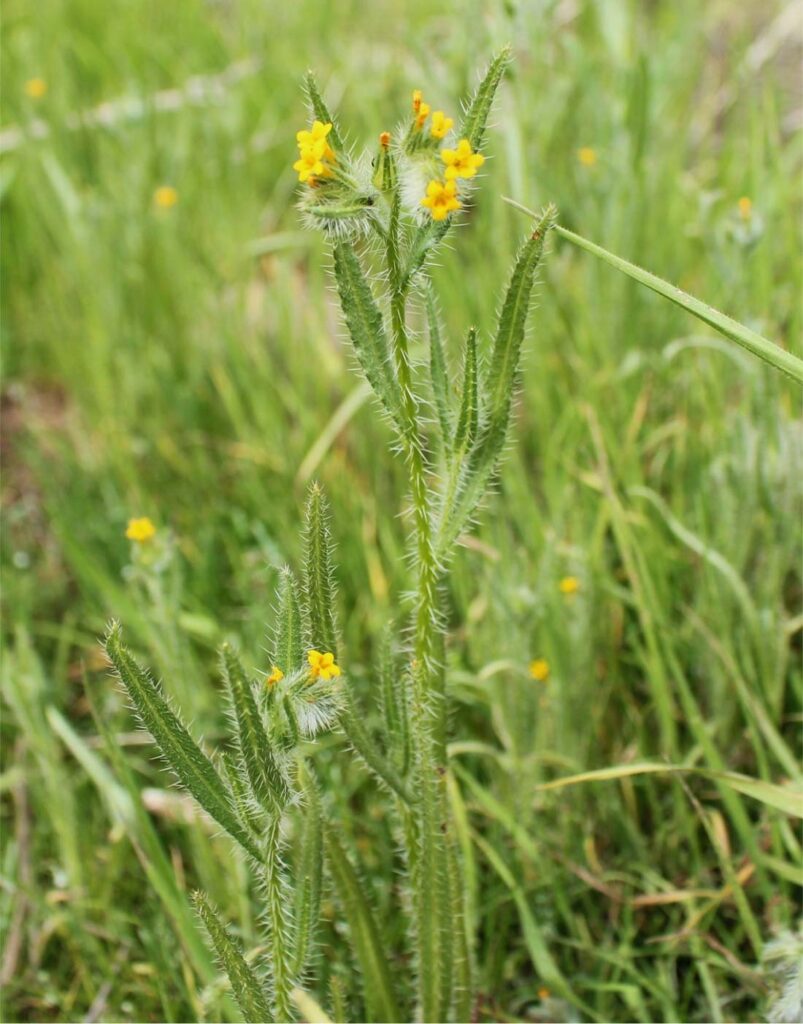
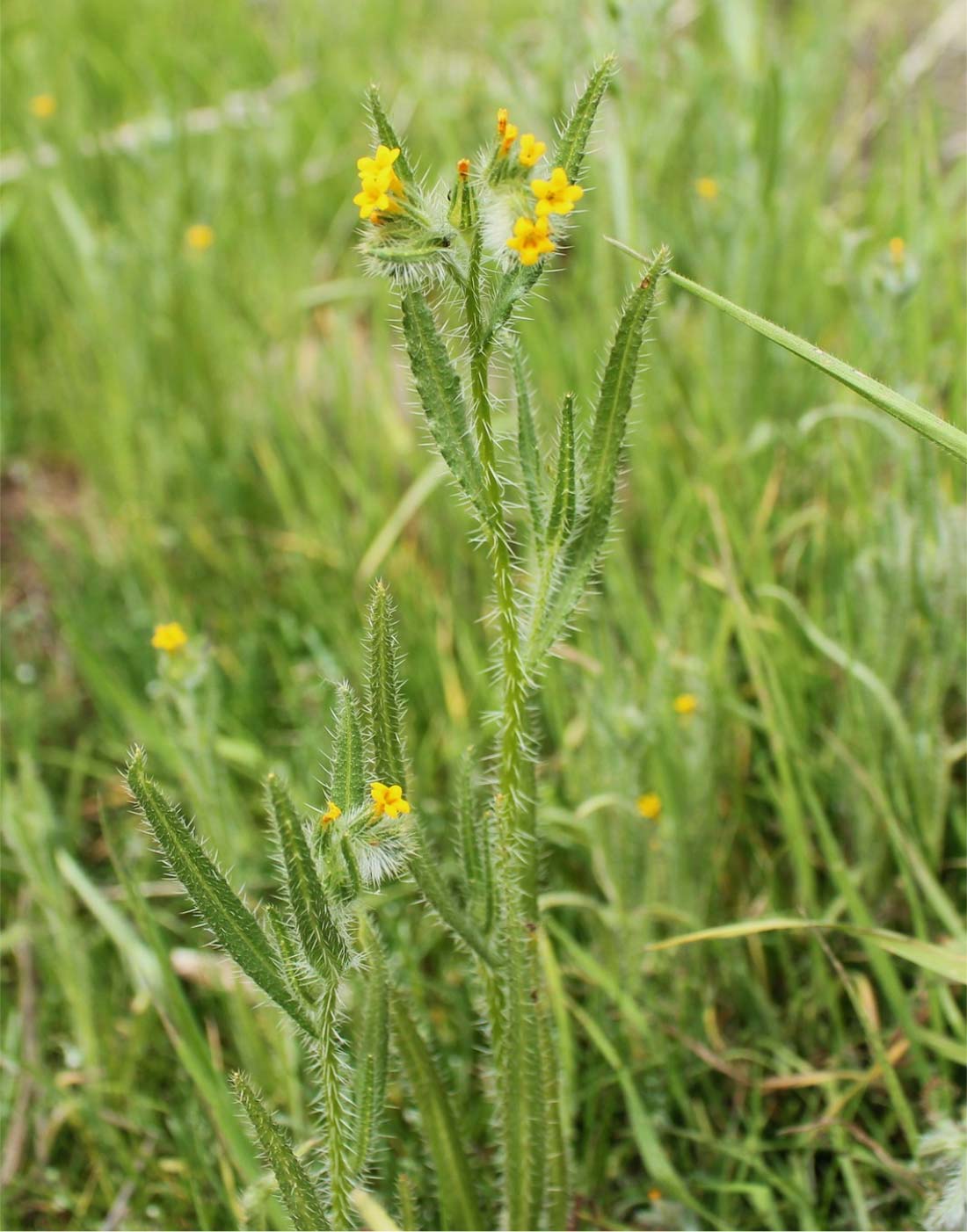
The Patagonian fiddleneck is an annual herb reaching between 10 and 60 cm in height, though under optimal conditions it may exceed these measurements. It displays the following distinctive characteristics:
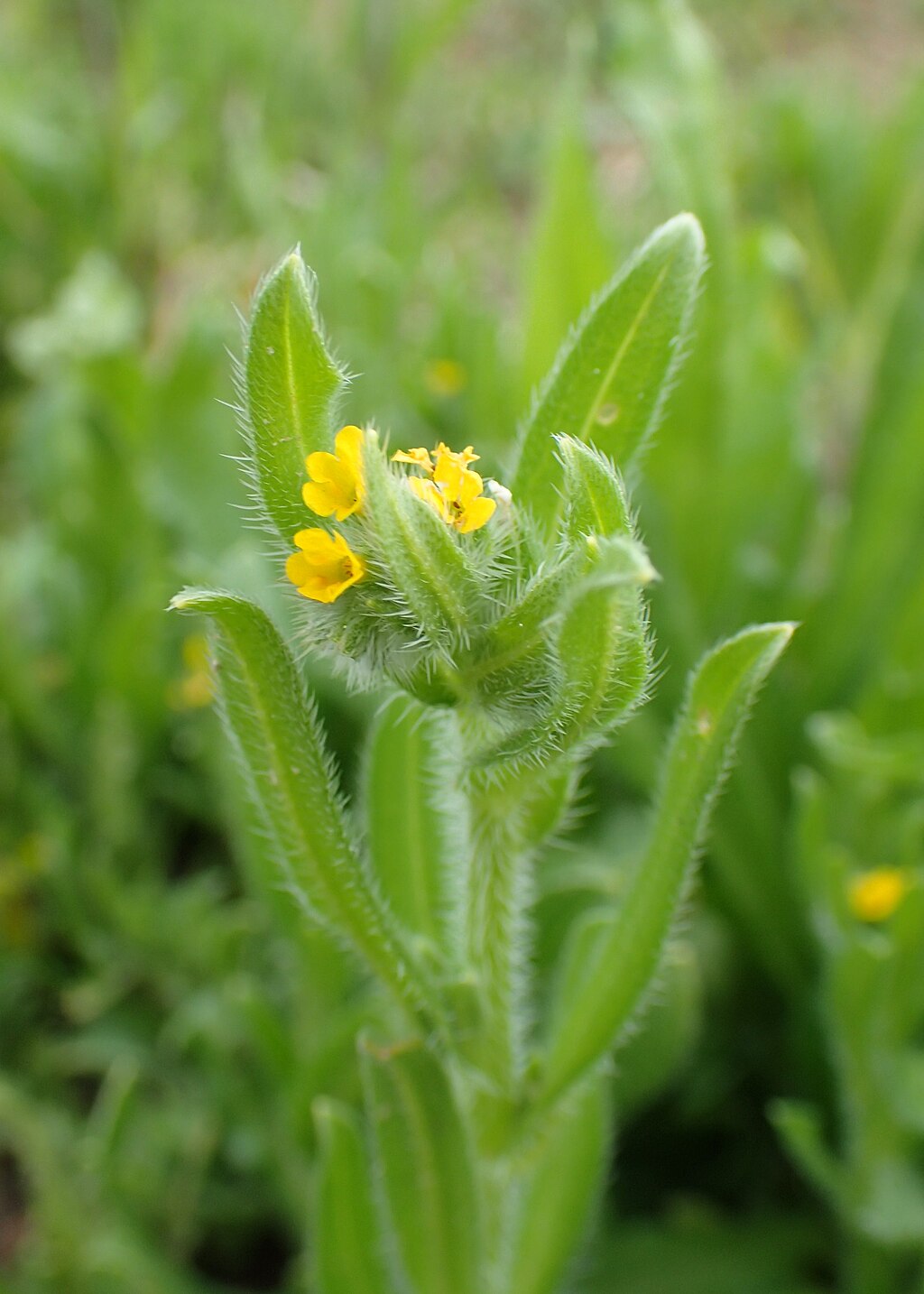
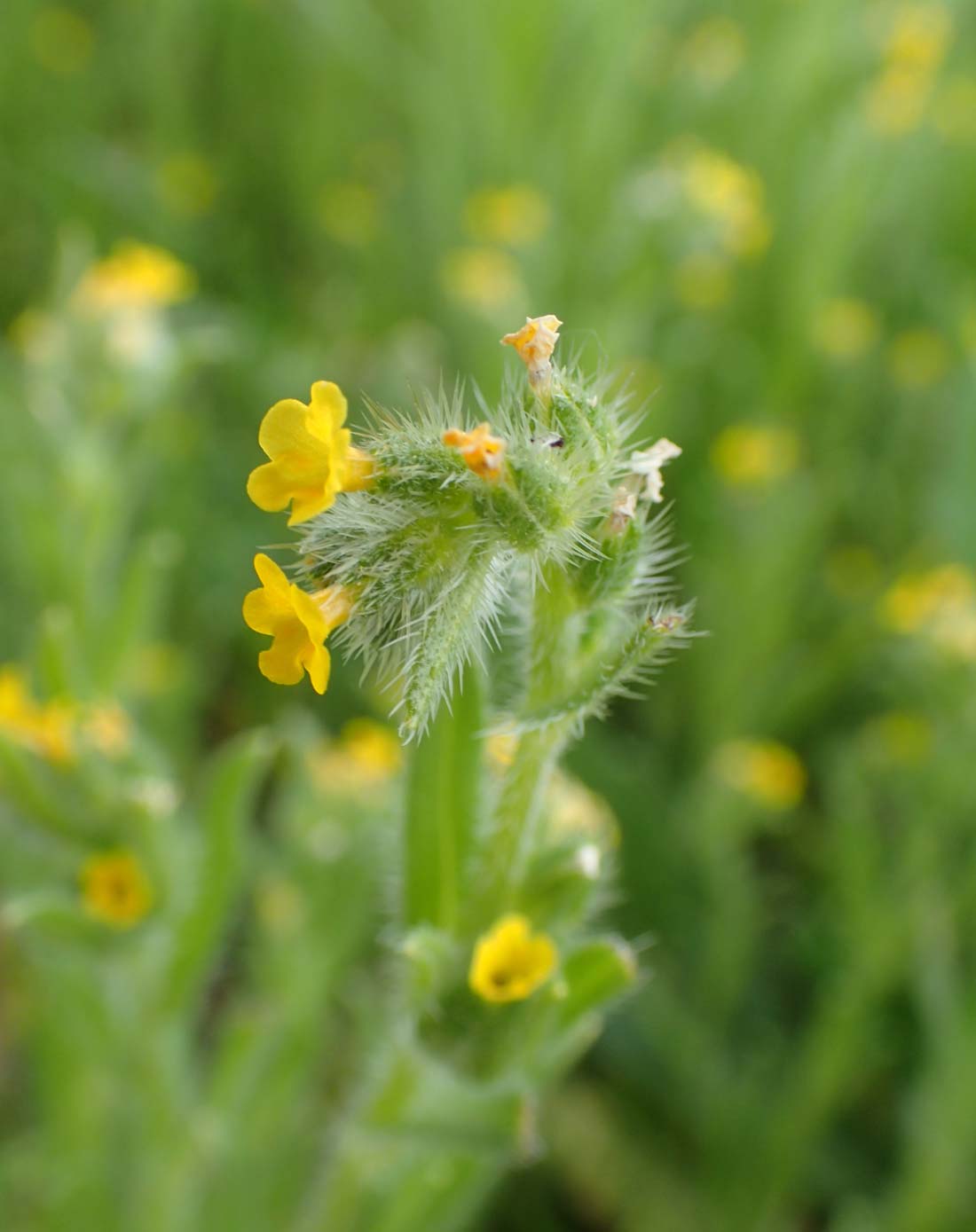
- Stem: Erect, branched in the upper section, covered with rough (hispid) hairs of varying sizes.
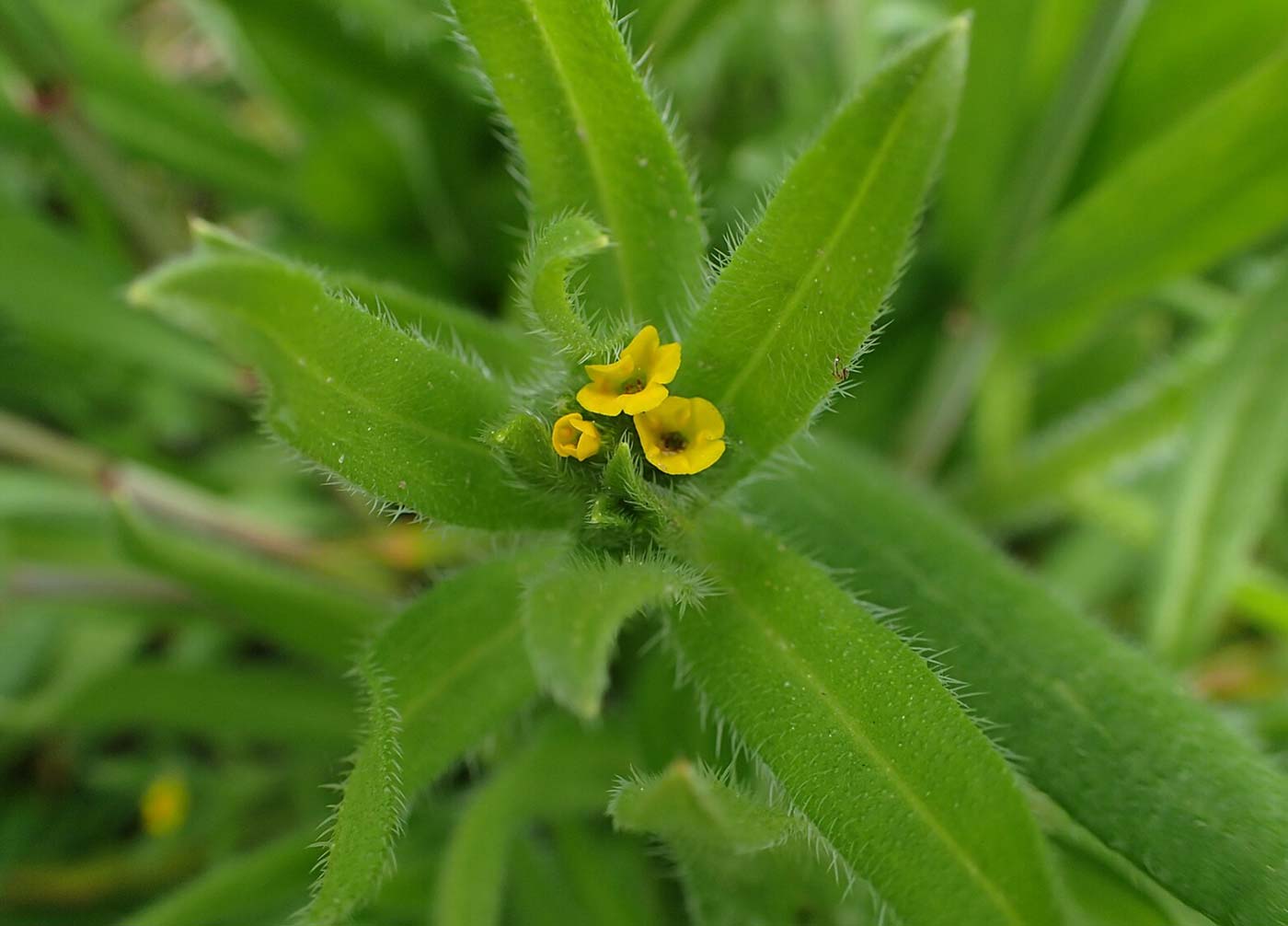
- Leaves: Elongated and linear, up to 14 cm long on lower leaves, with hairy surfaces.
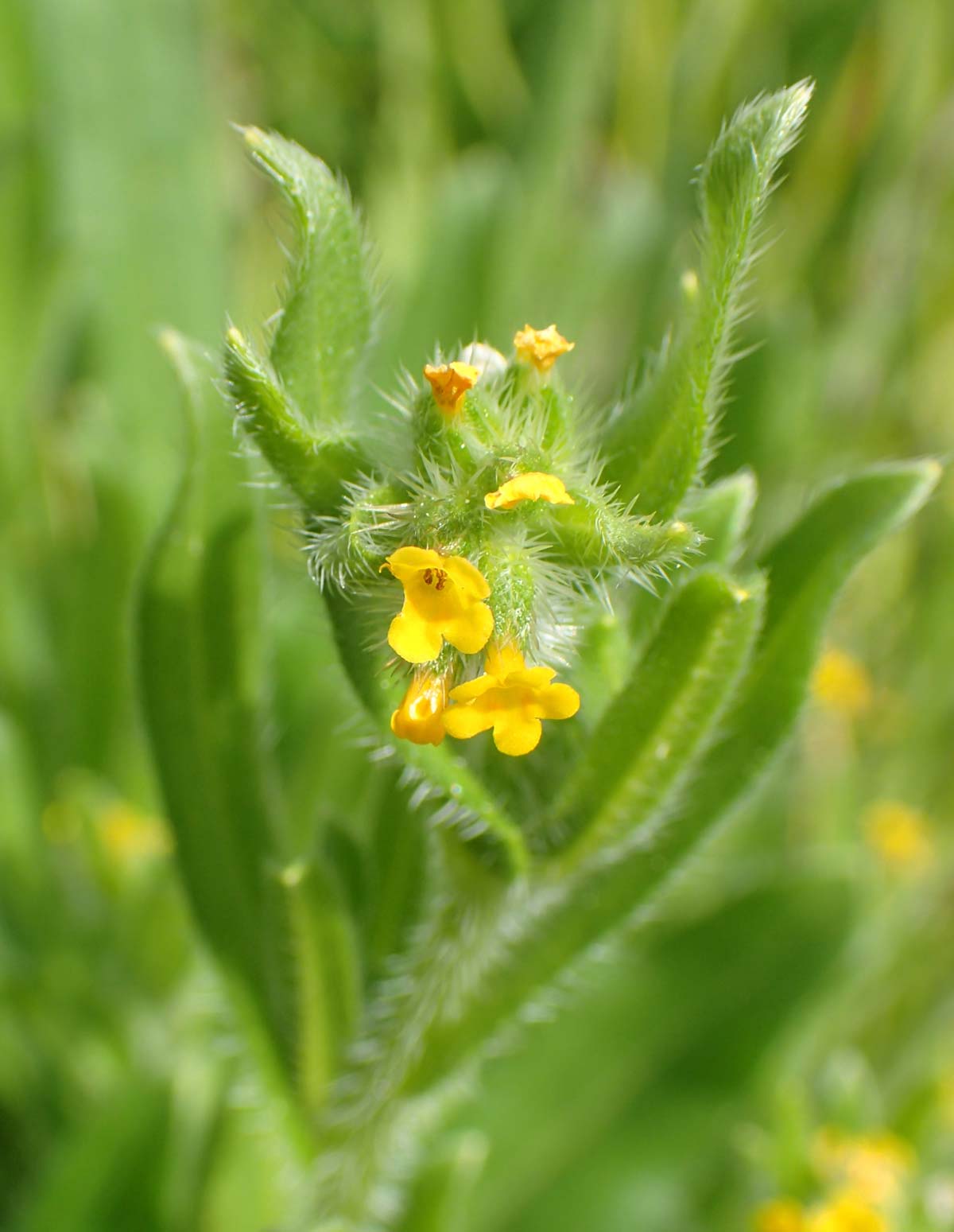
- Flowers: Small, yellow or yellow-orange, grouped in curved inflorescences resembling a “scorpion’s tail”.
- Fruit: Composed of four segments (nutlets) with prominent ridges and rough surfaces.
Distribution in Patagonia
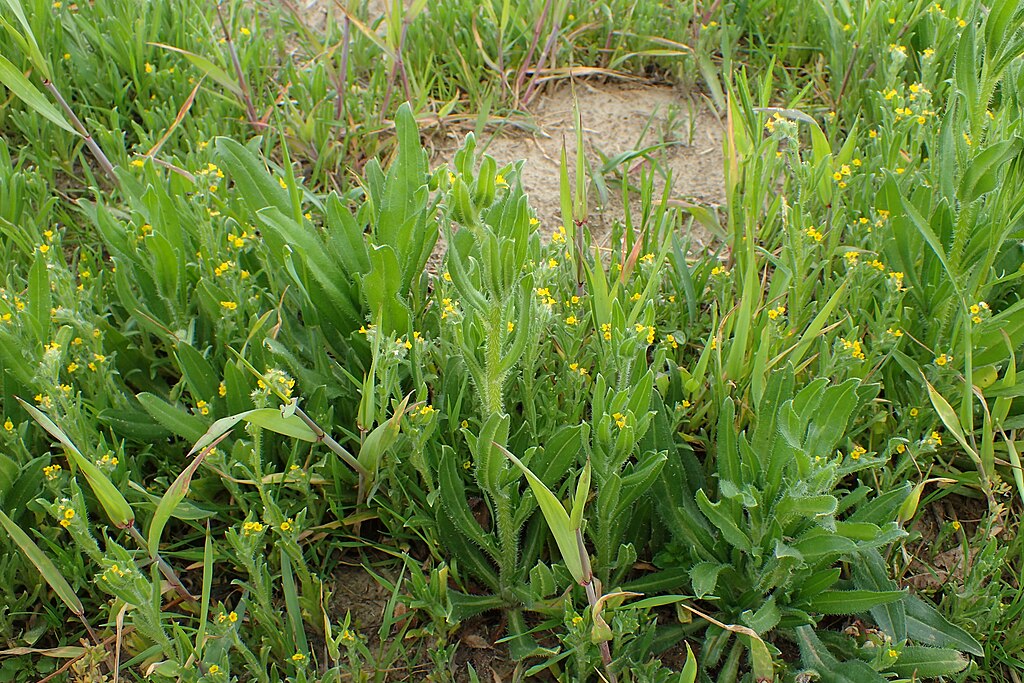
This plant is primarily distributed throughout the Patagonian region, commonly found in:
- Open fields
- Eroded terrain
- Degraded areas
- Roadsides
“The Patagonian fiddleneck is a fascinating example of a ruderal species that has found an ideal habitat in Patagonia, thriving even in poor soil conditions and semi-arid environments.” – Patagonian Botany, 2023
Taxonomy and Etymology
The scientific name Amsinckia calycina has interesting origins:
- Genus Amsinckia: Honors Wilhelm Amsinck, mayor of Hamburg and benefactor of the city’s Botanical Garden.
- Species calycina: Refers to the flower’s calyx, particularly noticeable when the plant matures.
It was formally described by (Moris) Chater and published in the Botanical Journal of the Linnean Society in 1971.
Fiddleneck and Stinging Properties
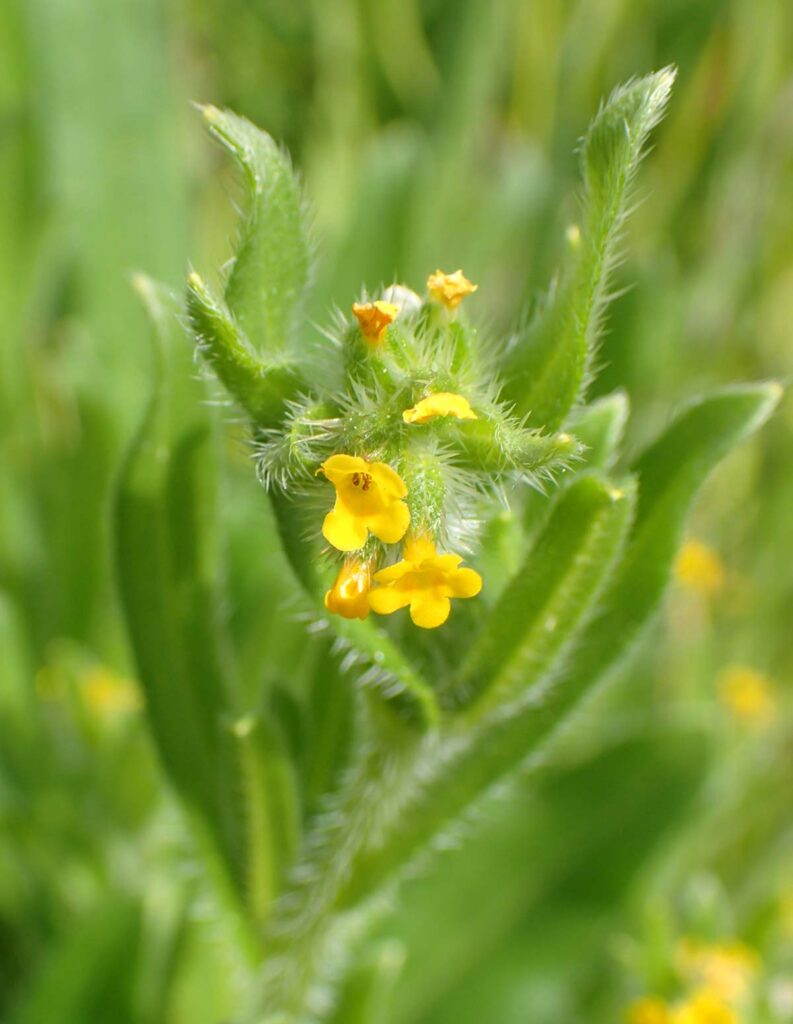
It’s important to differentiate this plant from true nettles (Urticaceae). While its common name “fiddleneck” might suggest stinging properties, Amsinckia calycina doesn’t actively sting as a defense mechanism. However, handling precautions are recommended because:
- Rigid hairs: Its stems and leaves are covered with hispid hairs that can embed like micro-spines, especially in sensitive skin.
- Mechanical irritation: These structures may leave nearly invisible residues causing persistent discomfort (similar to fiberglass).
- Allergic reactions: 12% of the population shows sensitivity to its epidermal compounds according to studies by Comodoro Rivadavia Regional Hospital.
Practical tip: When collecting botanical samples, wear thick cloth gloves and avoid rubbing eyes or exposed skin.
Ecology and Conservation
In Patagonia, the fiddleneck plays an interesting ecological role:
- It’s among the first species to colonize disturbed terrain.
- Protects soil against wind erosion, common in the region.
- Serves as food for certain insects and small herbivores, and as a nectar source for pollinators in Patagonian environments.
While not considered a threatened species, its presence may indicate soil degradation processes requiring attention in Patagonia’s fragile ecosystems.
Differences from Similar Species
In Patagonia, it’s important to distinguish the fiddleneck from similar plants:
| Characteristic | Amsinckia calycina | Other Patagonian Boraginaceae |
|---|---|---|
| Height | 10-60 cm | Varies by species |
| Flower color | Yellow to yellow-orange | Blue, violet or white in others |
| Inflorescence | Dense curved cymes | Other arrangements |
Potential as Natural Insecticide
Rural Patagonia has oral traditions about using Amsinckia calycina for pest control, a practice now under scientific investigation:
Future Prospects
Research centers are developing selective nano-encapsulations that could utilize its compounds without harming pollinators, with promising trials in berry crops.
| Method | Effectiveness | Ecological Risk |
|---|---|---|
| Aqueous extract | 30-40% | Moderate |
| Nano-encapsulated | 75% (trials) | Low |
Interesting Facts About Fiddleneck
- Its ability to thrive in poor soils makes it a pioneer species in degraded areas.
- In Australia, where naturalized, it’s considered a weed in some regions.
- Its flowering period in Patagonia extends through summer.
Conclusion
The Patagonian fiddleneck (Amsinckia calycina) represents a fascinating example of Patagonian flora, demonstrating remarkable adaptation to hostile environments. Though not the most showy or well-known species in the region, its presence in Patagonia’s open fields speaks to the resilience of plant life in this unique ecosystem.
For those exploring southern landscapes, learning to recognize this plant can add a new dimension to appreciating local biodiversity, reminding us that even the most humble species have their place and function in Patagonia’s complex ecological web.
Patagonian Fiddleneck: Natural Insecticide
ortiguilla-insecticida-natural
Did you know the Patagonian fiddleneck is a natural insecticide? Learn how to identify it, proper handling precautions, and much more.
Frequently Asked Questions
1. What is the Patagonian fiddleneck and where does it grow?
The Patagonian fiddleneck (Amsinckia calycina) is a small annual herb native to Argentina and Chile that belongs to the Boraginaceae family and thrives in poor soil conditions throughout Patagonia’s open fields, eroded terrain, and roadsides. Despite its humble appearance, this plant has become naturalized in distant locations including Australia and southwestern Europe, demonstrating its adaptability to various climates.
2. What are the distinctive physical characteristics of the Patagonian fiddleneck?
This plant typically grows between 10 and 60 cm tall and features erect, branched stems covered with rough hairs, elongated leaves up to 14 cm long, and small yellow or yellow-orange flowers arranged in curved inflorescences that resemble a scorpion’s tail. Its fruit consists of four nutlet segments with prominent ridges and rough surfaces, making it botanically distinctive.
3. Why is the Patagonian fiddleneck considered valuable to nature lovers?
The Patagonian fiddleneck is a fascinating example of a ruderal species—one that thrives in disturbed and degraded areas—and represents important botanical and cultural interest in its native Patagonian habitat. Its ability to flourish in semi-arid environments and poor soil conditions makes it a resilient species worth studying for both ecological and practical purposes.
4. What family of plants does the Patagonian fiddleneck belong to?
The Patagonian fiddleneck belongs to the Boraginaceae family, a diverse plant family known for various useful and ornamental species. This classification helps botanists and nature enthusiasts understand the plant’s characteristics and relationships to other flowering plants.
5. How has the Patagonian fiddleneck spread beyond its native range?
Originally native to Argentina and Chile, the Patagonian fiddleneck has become naturalized in distant locations such as Australia and southwestern Europe, likely through human activity, trade, or natural dispersal mechanisms. This global spread demonstrates the plant’s remarkable adaptability to diverse environmental conditions outside its original habitat.
6. Where in Patagonia is the Patagonian fiddleneck most commonly found?
The Patagonian fiddleneck is primarily distributed throughout the Patagonian region, where it can be encountered in open fields, along roadsides, and in eroded or degraded areas. Its preference for disturbed and poor soil conditions makes it a common sight for travelers exploring Patagonia’s varied landscapes.