
Here is the translation of the article into US English, maintaining the original structure and HTML tags:
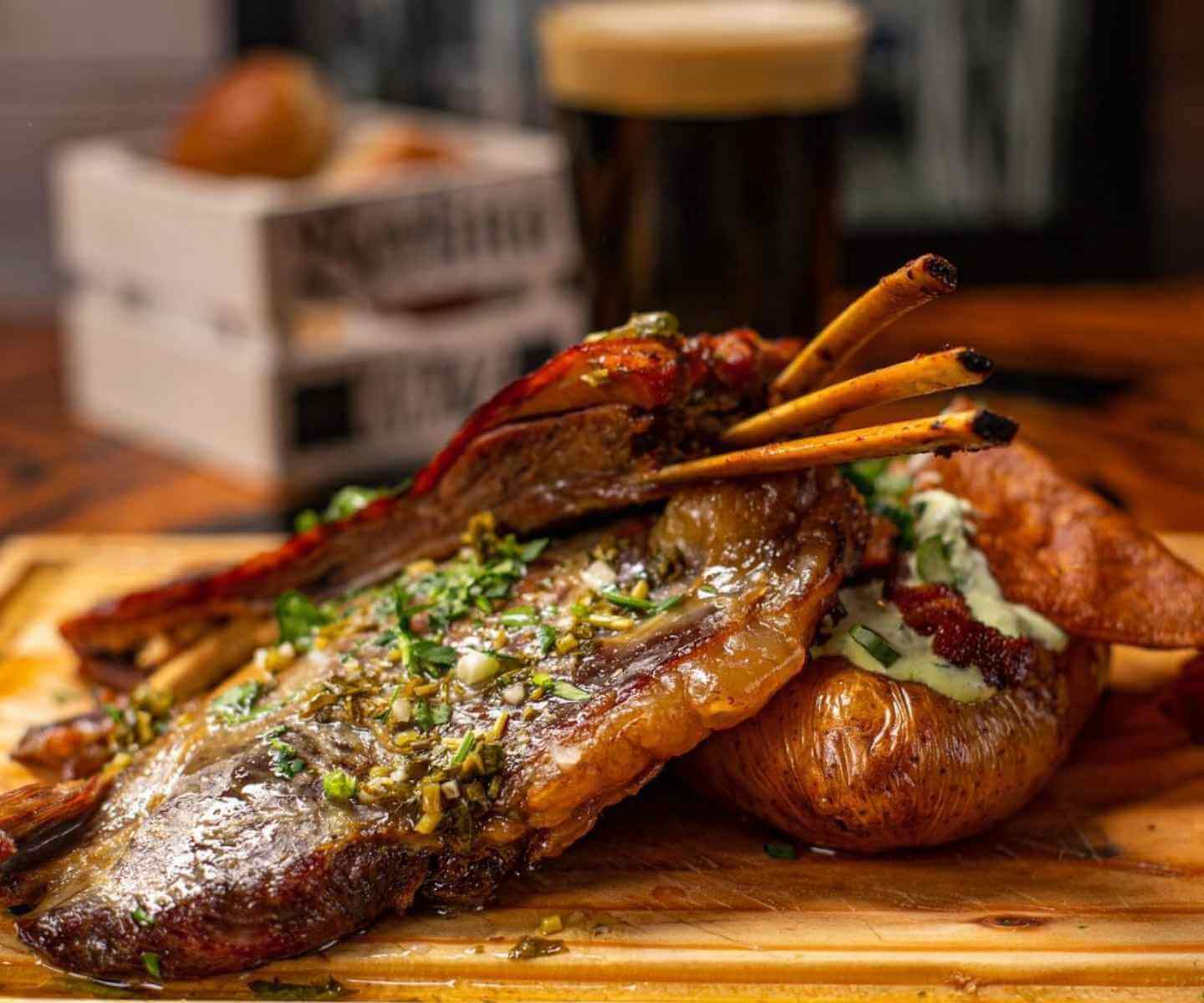
Patagonian lamb is much more than a typical food from southern Argentina. It represents a way of life linked to the wind, the steppe, and the productive history of Patagonia. For over a century, sheep farming has defined the landscape, regional economy, and cultural identity of vast areas of Chubut, Santa Cruz, Río Negro, and Tierra del Fuego. Its meat, known for its mild flavor and tender texture, is a direct result of the natural environment in which the animal is raised and livestock practices adapted to extreme conditions.
This article takes an encyclopedic and documented look at Patagonian lamb, explaining what it is, how it is raised, why its meat is unique, and its historical, cultural, and productive importance in Argentine Patagonia.
What is Patagonian Lamb?
Patagonian lamb refers to a young sheep raised in the Patagonian region under extensive natural grazing systems. It is generally slaughtered when it is only a few months old, resulting in lean meat with short fibers and a delicate flavor. It is not a specific breed but rather a product defined by its geographical origin, diet, and livestock management.
Geographic Clarification: Argentine and Chilean Patagonia
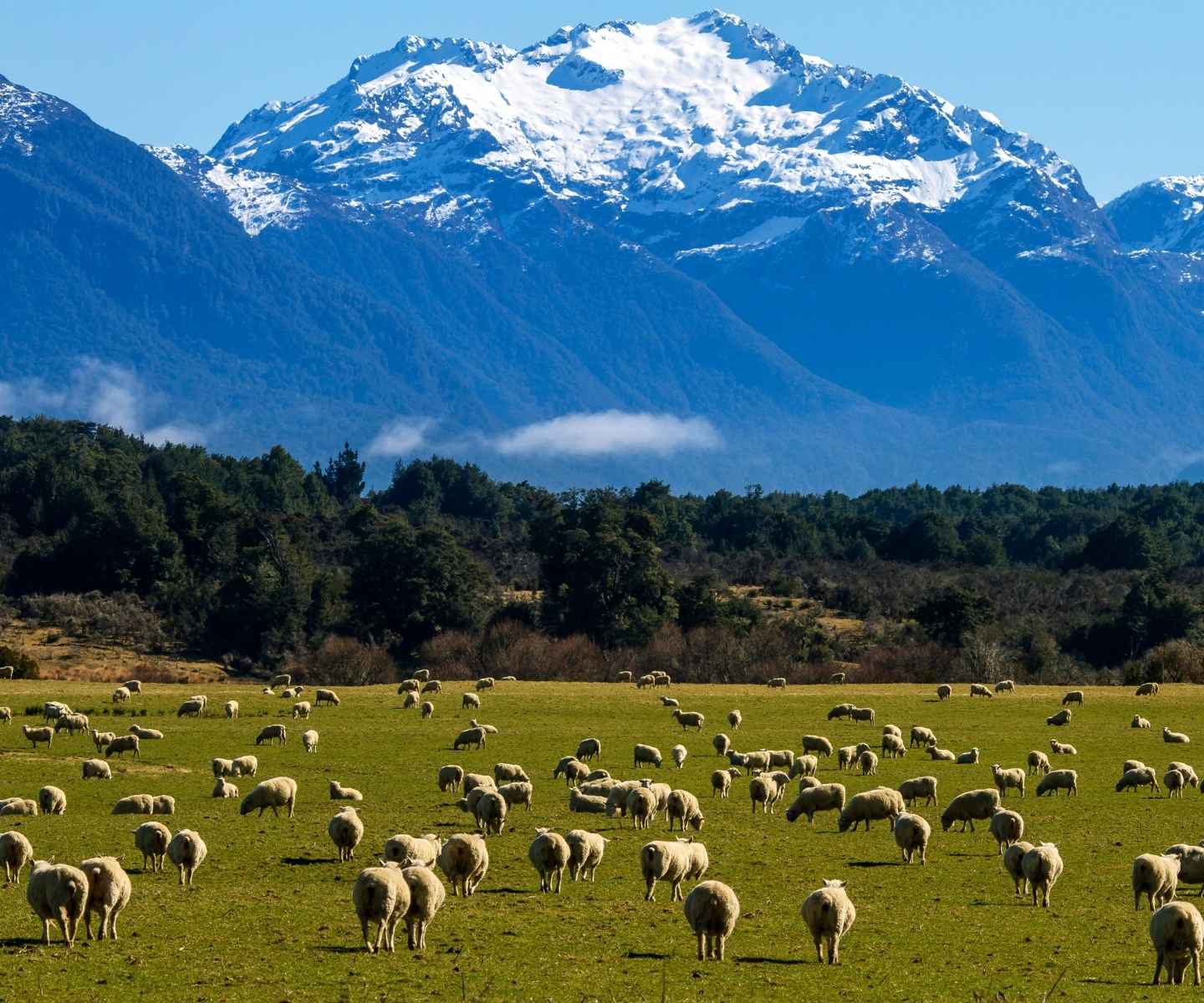
While Patagonia is a region shared between Argentina and Chile, the denomination Patagonian lamb, as used in gastronomy and certification systems, is mainly associated with the product of Argentine origin. In Argentina, the term “Patagonian lamb” is used descriptively to refer to lambs raised in the Patagonian region, associated with extensive production systems and the particular environmental conditions of the country’s south.
In Chile, especially in the Magallanes Region, there is also significant sheep production in the Patagonian territory. There, sheep meat is often marketed under names such as Magellanic lamb or Southern lamb, associated with the regional identity and the country’s own production and regulatory frameworks.
Most lambs raised in Argentine Patagonia belong to breeds like Corriedale and Merino, historically adapted to extensive systems and cold, dry, windy climatic conditions. The term “Patagonian” is used descriptively to identify its geographical origin and the production characteristics associated with the region, not as a response to a formally regulated quality standard.
Patagonian Lamb as an Animal
Biological Characteristics
The Patagonian lamb as an animal develops in an environment of low population density, with vast open fields. This directly influences its physiology and behavior.
- Slow and natural development.
- Diet based on native pastures.
- Lower intramuscular fat content.
- High resistance to adverse weather conditions.
Relevant Fact: the natural diet of Patagonian lamb includes native herbaceous species rich in minerals, which influences the sensory profile of the meat.
Animal Welfare
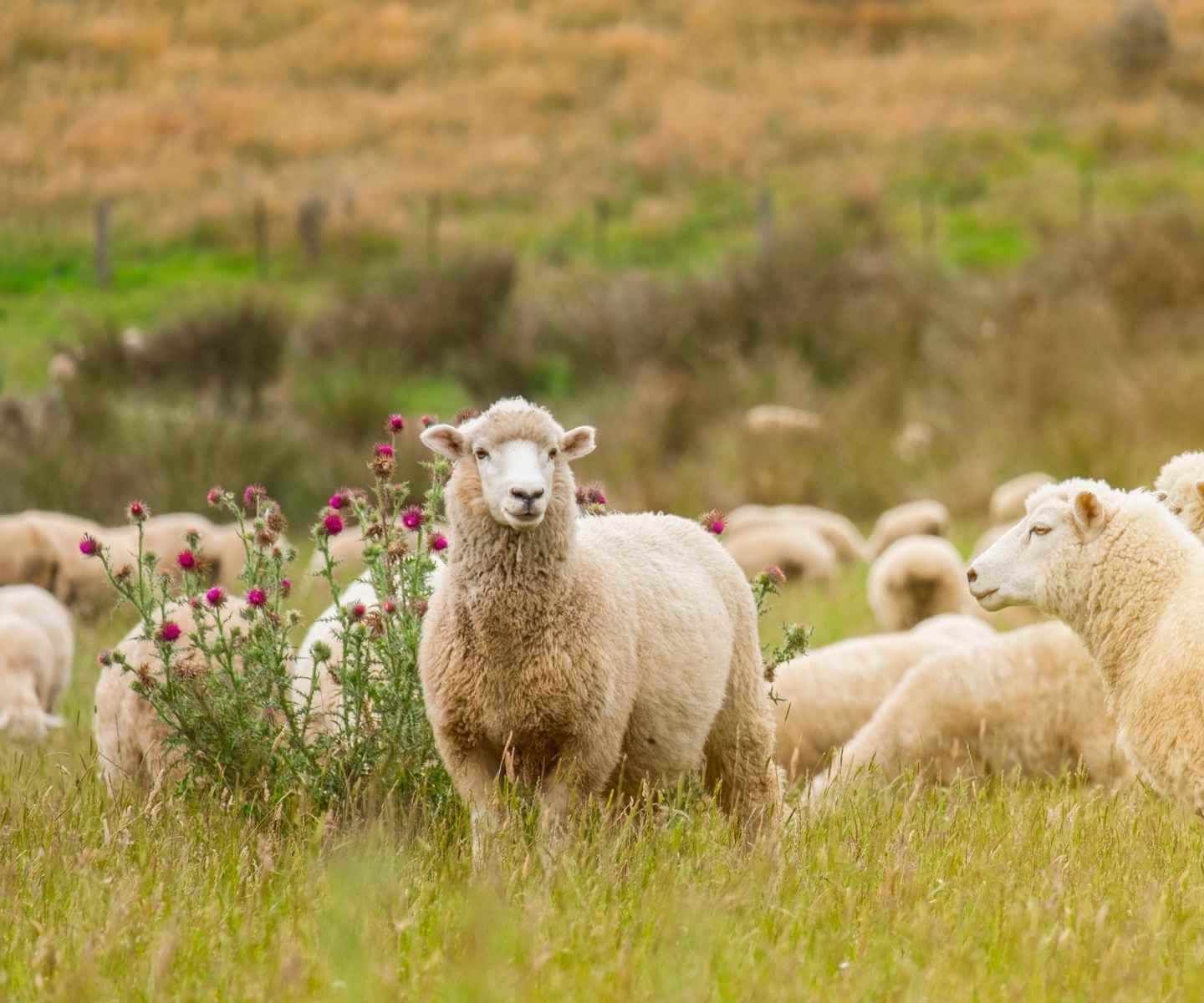
Sheep production in Patagonia is mostly developed under extensive systems, conditioned by climate, distances, and pasture availability. Various technical studies by INTA (National Agricultural Technology Institute) analyze how factors like management, transportation, and environmental conditions influence the final meat quality, without there being an automatic relationship between the production system and the level of animal stress.
Patagonia and Its Influence on the Meat
The rearing conditions in Patagonia, with animals roaming over large expanses and feeding mainly on natural grasslands, influence the characteristics of the sheep meat. These factors are often associated with leaner meats and flavor profiles linked to the environment, although the final result depends on multiple management variables and the timing of slaughter.
Sheep Production in Patagonia
Producing Regions
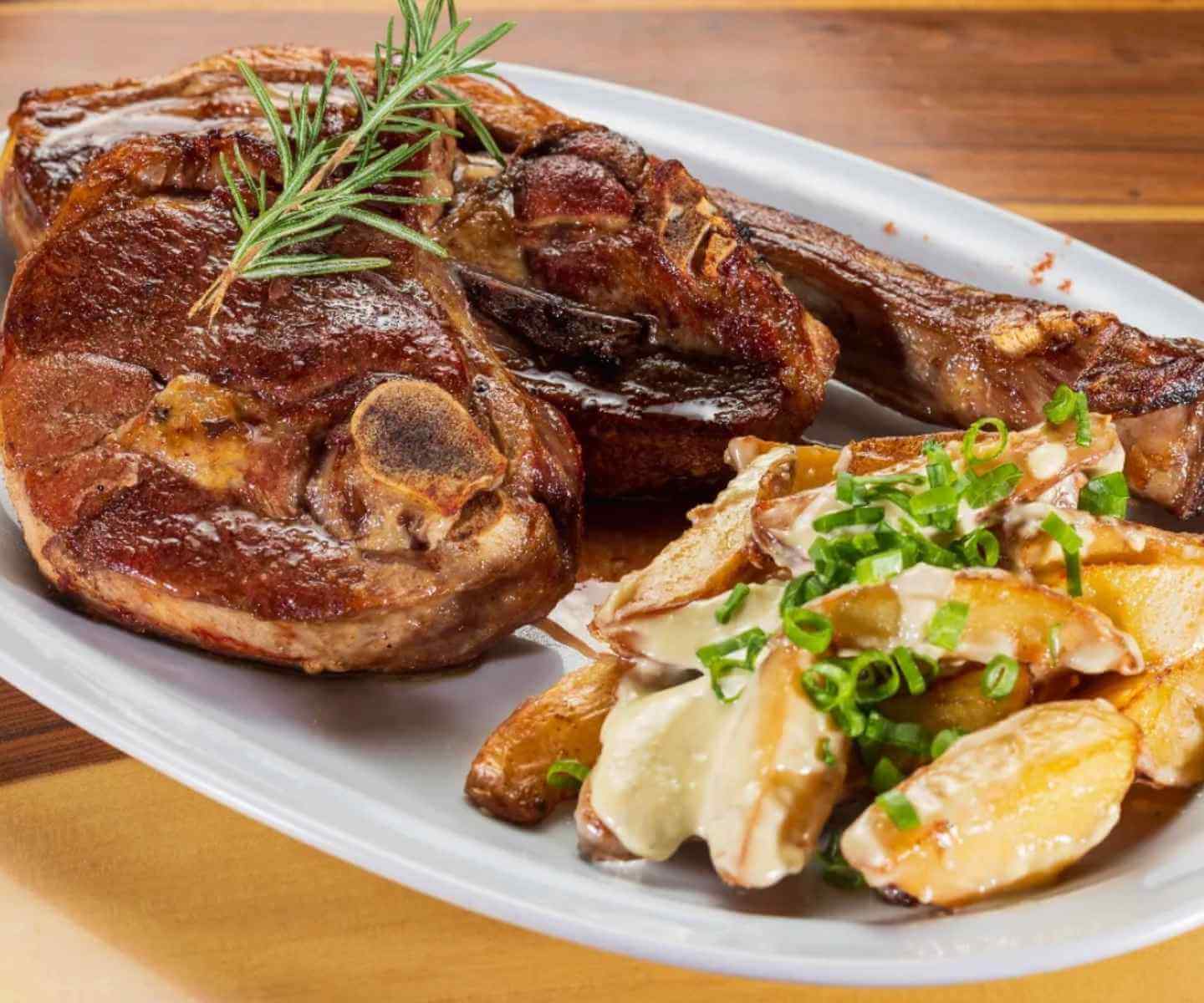
Sheep production is mainly concentrated in Argentine Patagonia. The region combines the environmental and productive conditions that have historically supported sheep farming in the south of the country. The provinces with the most sheep production are:
- Chubut
- Santa Cruz
- Río Negro
- Tierra del Fuego
According to official data, Patagonia concentrates the majority of Argentina’s sheep stock, exceeding 60% at the national level. This predominance explains the historical and productive weight of lamb within the Patagonian rural economy.
Use of the Name “Patagonian Lamb”
The term “Patagonian lamb” is used descriptively to identify lambs raised in the Patagonian region and the meat obtained from them. In Argentina, there is no nationwide Geographical Indication or Denomination of Origin that uniformly regulates the use of this name.
Although there have been local initiatives, regional promotion programs, and certification experiences driven by producer associations or provinces, their application is not mandatory or homogeneous across the entire territory. For this reason, the use of the denomination “Patagonian lamb” responds mainly to a geographical and cultural reference, rather than to a single regulatory framework.
Patagonian Lamb on the Spit (Asador)
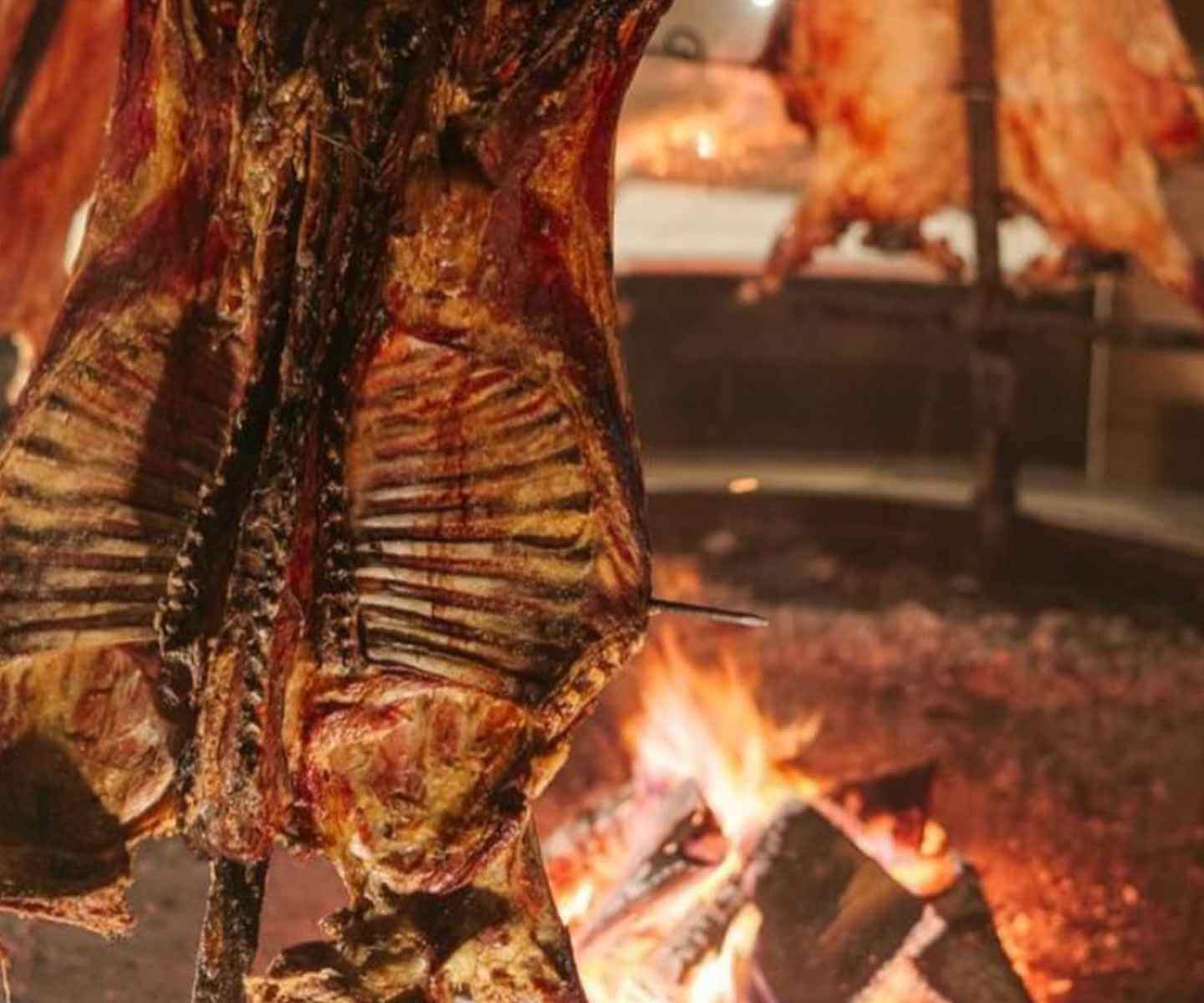
Patagonian lamb cooked on an open-fire spit (*asador*) is one of the most emblematic preparations of southern Argentine cuisine. Traditionally, it is cooked whole, splayed open (“a la cruz”), slowly over wood fire.
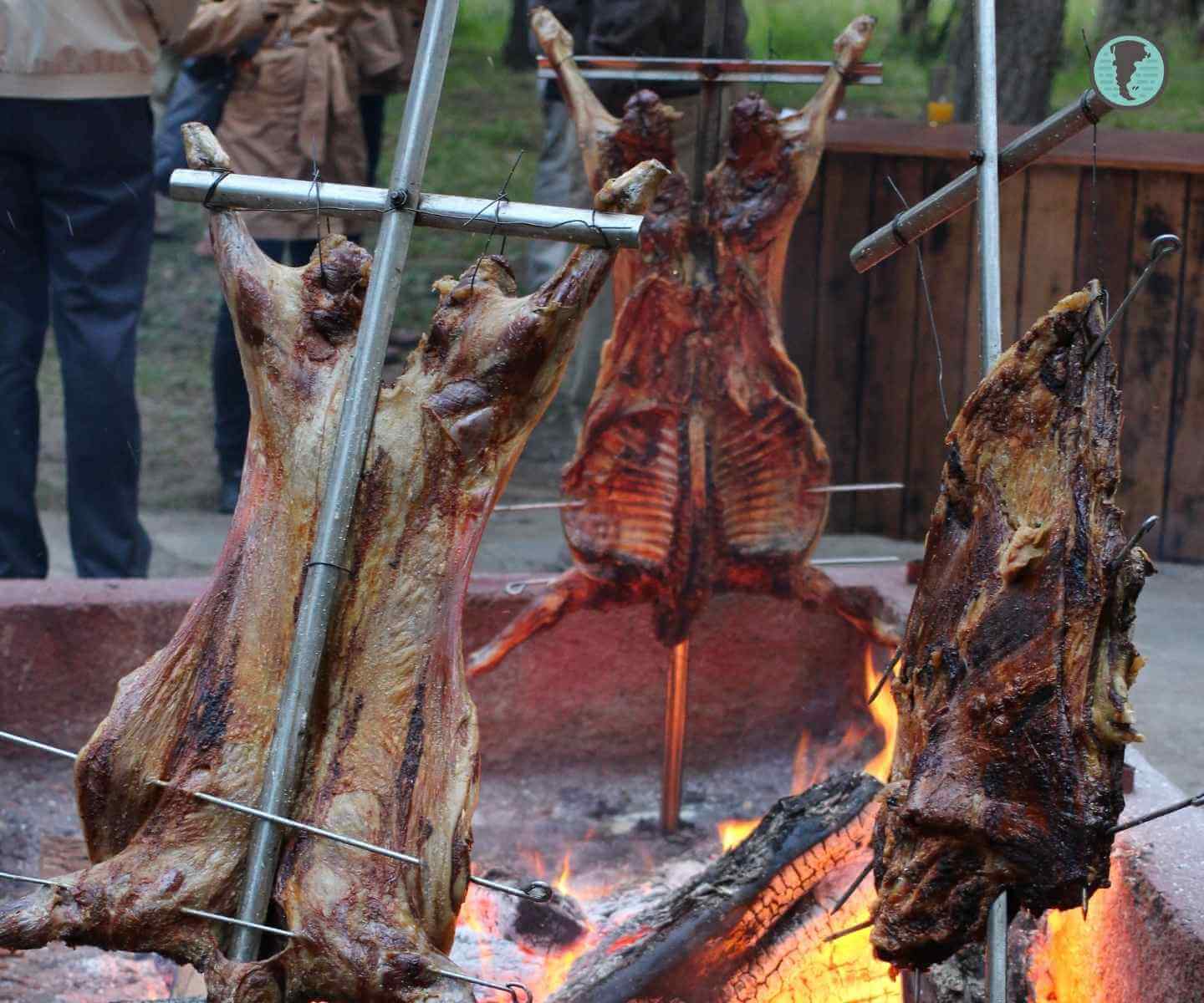
- Slow cooking for 3 to 5 hours, often extending longer depending on the animal’s size and fire conditions.
- Use of coarse salt as the main seasoning.
- Fire made with wood or fuel available in the area, adapted to the environmental conditions.
Did you know…? Patagonian lamb barbecue is often prepared for community celebrations, sheep shearings, and rural festivals.
Brief History of Patagonian Lamb
- Late 19th century: Introduction of sheep by European settlers.
- Early 20th century: Boom in sheep farming and wool exports.
- 1950s–1970s: Consolidation of local sheep meat consumption.
- 21st century: Gastronomic valorization and recognition of origin.
The history of Patagonian lamb is intimately linked to the settlement and economic development of the region.
Cultural and Social Value
Patagonian lamb is part of the intangible cultural heritage of Patagonia. It is present in popular festivals, family gatherings, and rural celebrations.
Furthermore, it represents a source of cultural roots for rural communities that maintain productive traditions passed down from generation to generation.
Sustainability, Desertification, and New Productive Approaches
Sheep farming in Patagonia has historically been associated with soil degradation and desertification processes, due to inadequate management, overgrazing, and the natural fragility of the steppe ecosystems. These impacts are part of a documented reality and cannot be omitted when analyzing the role of sheep in the Patagonian territory.
In this context, in recent decades, productive approaches have emerged that seek to reverse these processes. One of the most relevant is the model promoted by Ovis21, an organization born in Patagonia that promotes regenerative livestock farming with sheep as a tool for soil restoration and productivity improvement.
What is Ovis21?
Ovis21 is a B Corporation of Patagonian origin that works with producers, technicians, and professionals to transform large-scale sheep farming. Its goal is to develop productive models that improve profitability without compromising the environment, integrating ecological, economic, and social variables.
- Networks producers and technical teams in different regions.
- Promotes continuous improvement in field management.
- Seeks to reconcile sheep production and ecosystem regeneration.
Regenerative Livestock Farming with Sheep
The regenerative livestock approach proposes a shift in perspective on the role of sheep. Instead of considering it solely as a factor of degradation, it suggests that, under proper management, the herbivore can become a tool for improving soil health.
This model is based on principles such as:
- Strategic use of the herbivore: The sheep is managed as an agent of regeneration, not of wear.
- Imitating nature: Grazing is planned to replicate the behavior of wild herbivores—high intensity for short periods followed by long rest periods.
- Holistic Management: A decision-making framework that integrates environmental, productive, and social variables.
Sought Results
The goal of these systems is not solely productive but also ecological and economic in the long term. Among the results sought are:
- Soil: Greater plant cover, increase in mulch, better water infiltration, and higher carbon content.
- Biodiversity: Recovery of perennial plant species and greater presence of wildlife.
- Productivity: Increase in grass production and available forage.
- Profitability: Strengthening of biological and social capital, with better sustained economic results over time.
How it Works in Practice
The model is implemented through planned grazing, where animals are moved frequently between paddocks, allowing plants to complete their recovery cycles. This management requires constant observation, measurement, and permanent adjustments based on the ecosystem’s response.
Ovis21 complements this approach with technologies developed in other livestock-producing countries, like Australia, and with a network of professionals organized into regional nodes that support and validate the method’s implementation.
In summary, the proposal by Ovis21 redefines the role of sheep in Patagonia: from being part of the historical problem of desertification, to becoming—under proper management—a tool for restoring degraded lands and building more resilient livestock systems.
Recommended Video
To see directly how Patagonian lamb is prepared on the spit (*asador*), we recommend this video from Locos x el Asado. The recording shows the real process of slow-fire cooking, handling of the slaughtered animal, and the practice behind one of the most deep-rooted traditions in southern Argentina.
In the Patagonian countryside, the relationship with lamb is direct and without romanticism. Rearing and consumption respond to a practical logic, marked by climate, distances, and the need to make use of available resources. It is not about an idealized vision of respect for the animal, but rather a rustic coexistence, typical of a rural life where work and subsistence go hand in hand.
The consumption of lamb is part of a cycle known and assumed by those who live in Patagonia. Roasting a lamb is not only a gastronomic tradition but also a way of recognizing the animal’s value within that system: everything possible is used, waste is avoided, and the meat is understood as the result of a process linked to the territory.
From Outdoor Patagonia’s perspective, talking about respect for the animal implies not denying this rural reality. Understanding where what we consume comes from, how it is produced, and what conditions make it possible is a fundamental part of that honest relationship with food and the environment.
Conclusion
Patagonian lamb is a product deeply linked to the geography, history, and culture of southern Argentina. Its quality is no accident: it is the result of a unique natural environment and livestock practices adapted to that landscape. Beyond its gastronomic value, it represents identity, rural labor, and Patagonian tradition.
Frequently Asked Questions
What makes Patagonian lamb different from other lamb?
The difference lies mainly in its geographical origin and production context. Patagonian lamb is raised in extensive systems typical of Patagonia, conditioned by climate, landscape, and rural management, which influences the characteristics of the meat without adhering to a single, unique standard.
Is Patagonian lamb a specific breed?
No. Patagonian lamb is not a specific breed, but a descriptive denomination that refers to lambs raised in the Patagonian region, generally of breeds such as Corriedale and Merino.
Where is it mainly produced?
Patagonian sheep production is mainly concentrated in the provinces of Chubut, Santa Cruz, Río Negro, and Tierra del Fuego, which hold the majority of the country’s sheep stock.
What is Patagonian lamb on the spit (*asador*)?
It is a traditional preparation from southern Argentina in which the lamb is cooked whole, splayed open (“a la cruz”), slowly over fire for several hours. It is characterized by the use of coarse salt as the main seasoning and cooking adapted to the environmental conditions.
Does Patagonian lamb have an origin certification?
There is no nationwide origin certification or Geographical Indication that uniformly regulates the use of the name Patagonian lamb. Its denomination responds mainly to a geographical and cultural reference.