
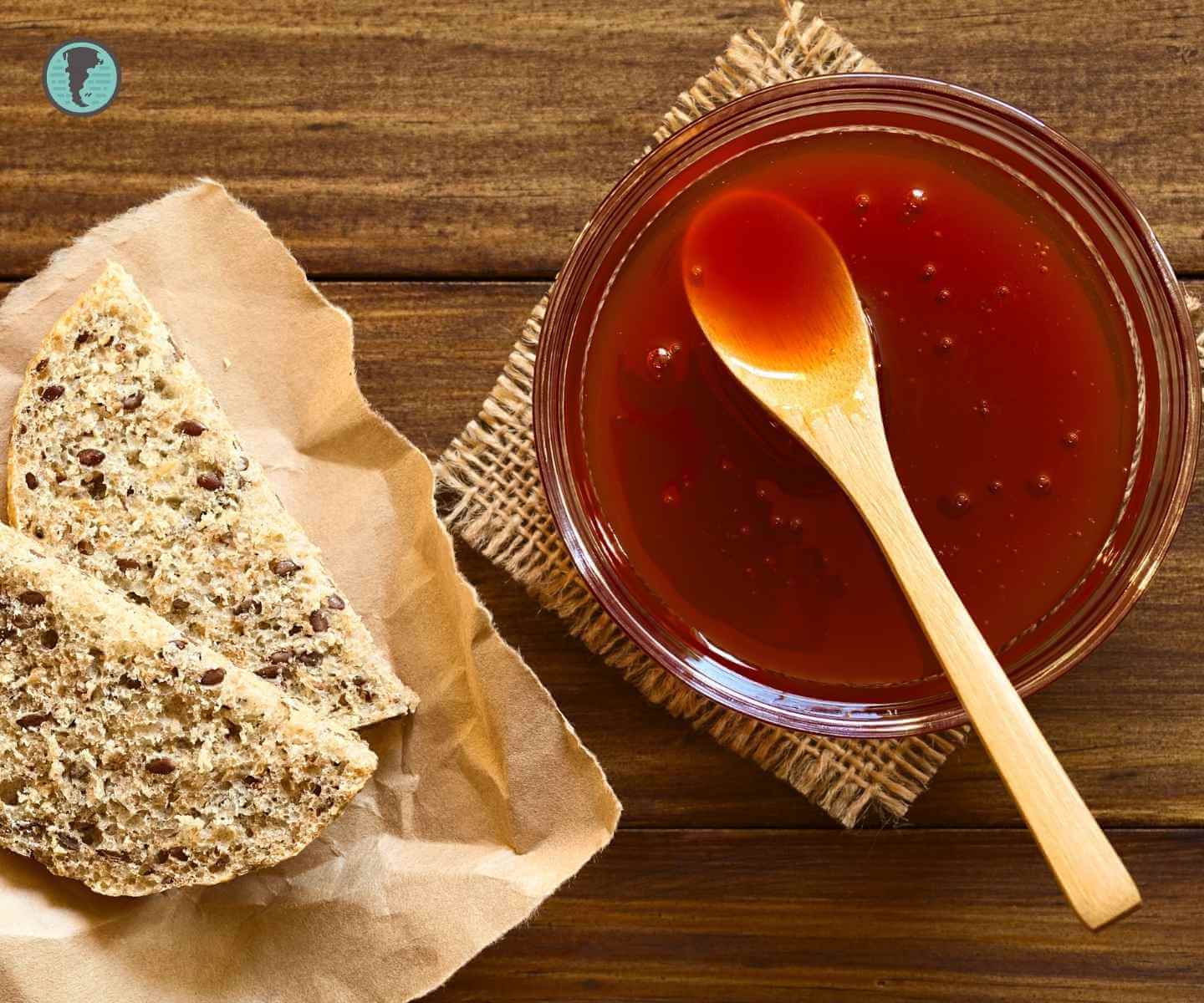
Rose hip jam is one of the most emblematic products of Patagonia. Its wild aroma and intense flavor have made it a classic of the southern Argentine table. Beyond its exquisite taste, this jam holds history, tradition, and the sustainable use of a fruit that grows naturally in the valleys and mountains of the Patagonian south. If you want to learn more about the plant and its origin, you can read all about the rose hip in Patagonia.
Origin and Cultural Value of the Rose Hip
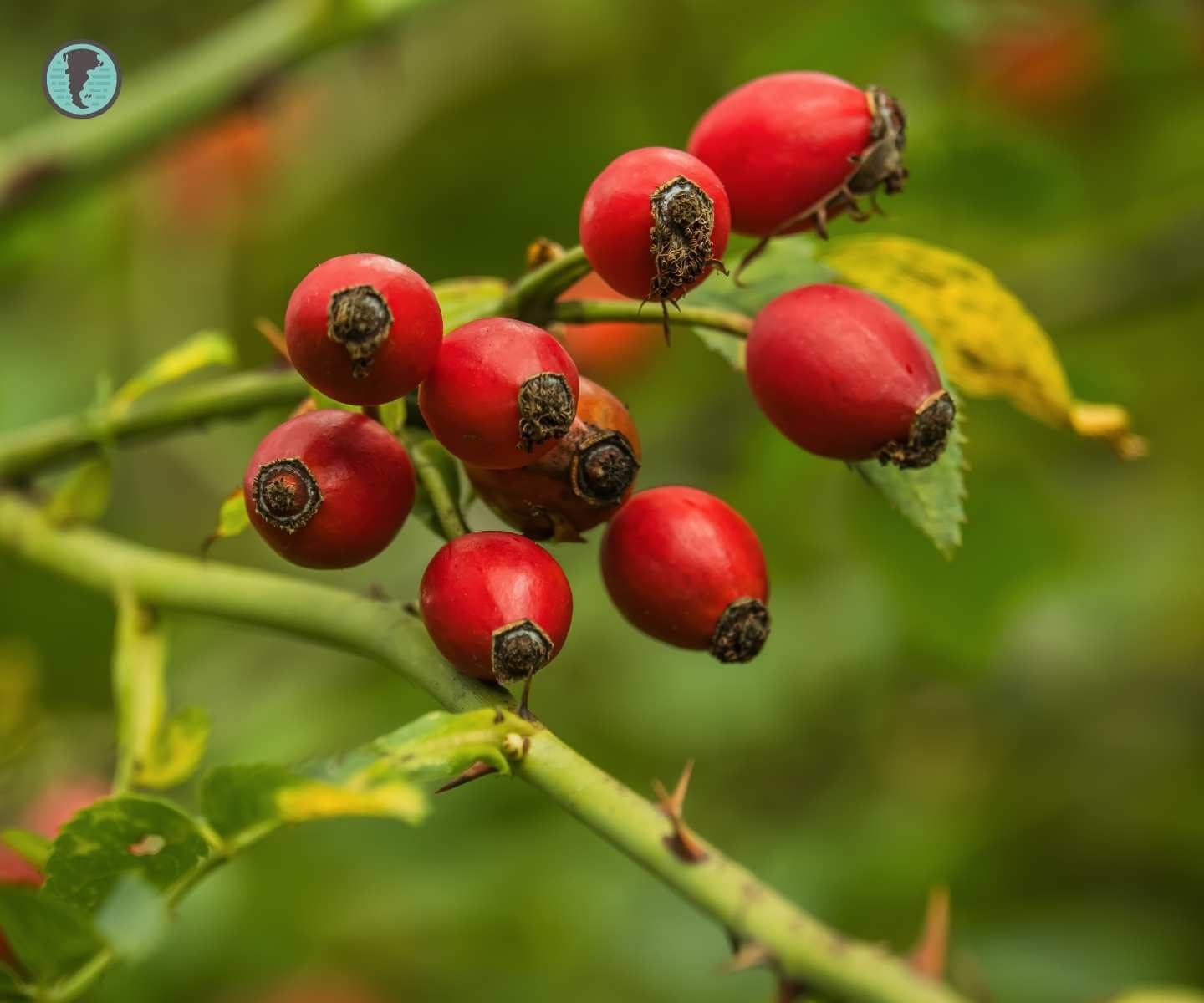
The rose hip (Rosa rubiginosa) arrived in Patagonia from Europe at the beginning of the 20th century. It adapted perfectly to the cold climate and Andean soils, spreading throughout the region, especially in Bariloche, El Bolsón, Esquel, Trevelin, and Villa La Angostura, and many nearby areas. To delve deeper into its botanical characteristics and environmental impact, check out this article about the rose hip in Patagonia.
Did you know that the rose hip was introduced as an ornamental plant and today is one of the most utilized wild species in Patagonia?
Properties and Benefits of the Fruit
The rose hip is recognized for its high vitamin C content, even higher than that of citrus fruits. It also provides natural antioxidants, flavonoids, and essential fatty acids that strengthen the immune system and improve skin health.
- Rich in natural antioxidants
- Contributes to cell regeneration
- Reinforces the body’s defenses
- Contains iron, calcium, and vitamin E
The culinary use of rose hip in jams, jellies, or infusions allows you to enjoy its benefits all year round.
Harvesting and Artisanal Processing
In Patagonia, the rose hip harvest takes place between March and May, when the fruits reach their intense reddish color. The harvest is done manually, taking care not to damage the bushes so they can bear fruit again the following year. Then, the fruits are cleaned, boiled, and strained to remove the internal seeds and fine hairs, which are irritating.
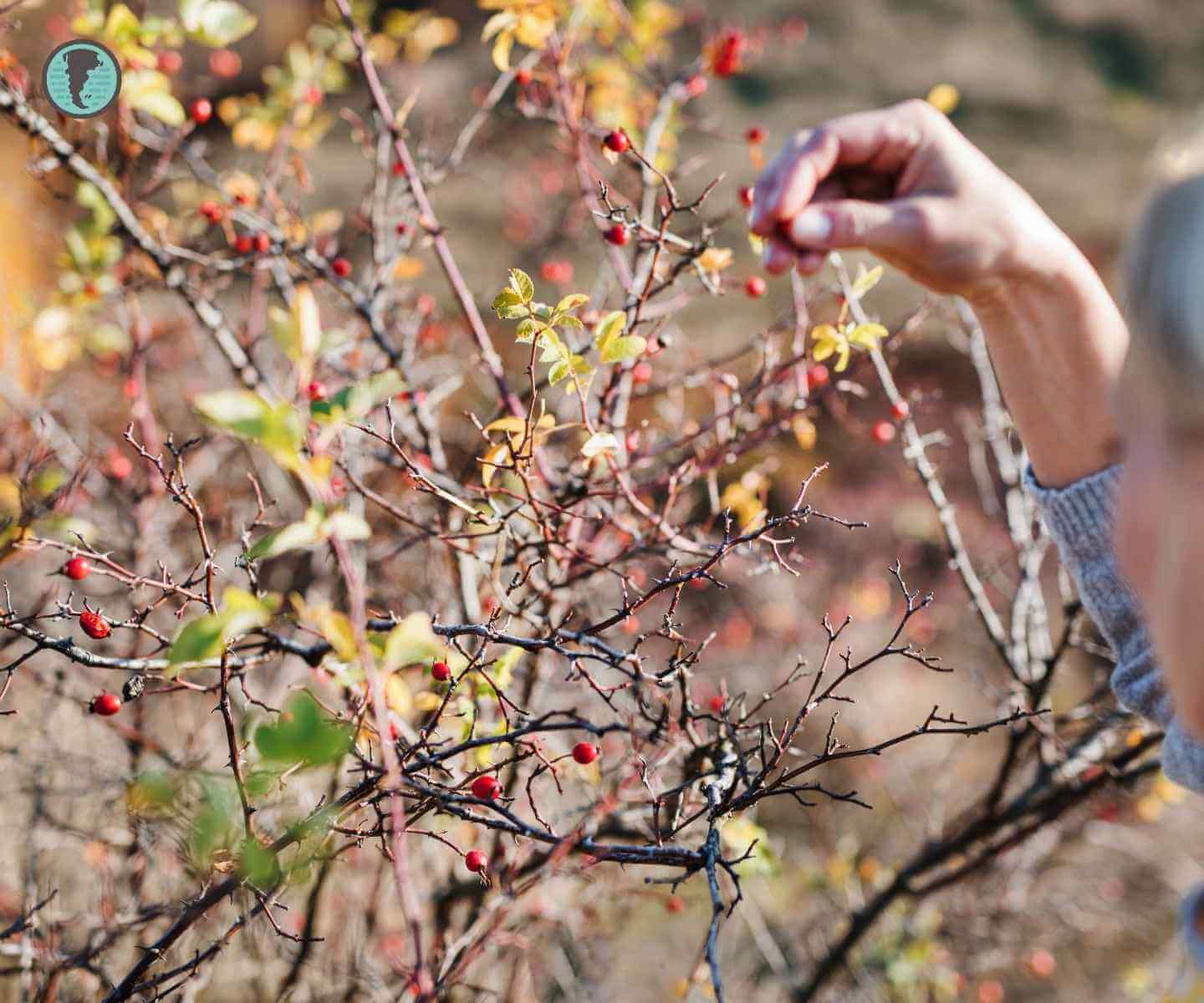
This process is slow but fundamental to preserving the fine texture and characteristic flavor of the Patagonian sweet.
Traditional Patagonian Rose Hip Jam Recipe
The classic recipe is passed down from generation to generation. It requires patience, but the result is an intense, shiny jam with a unique aroma.
🧺 Ingredients
- 1 kg of rose hip fruits
- 750 g of sugar
- Juice of 1 lemon
- Water (as needed)
👩🍳 Step-by-Step Preparation
- Wash the fruits well and remove any stems or impurities.
- Place in a pot with water and boil until softened (about 20 minutes).
- Pass through a fine sieve or strainer to obtain clean pulp, without seeds.
- Weigh the obtained pulp and add sugar in a proportion of 3/4 of the pulp’s weight.
- Cook over medium heat, stirring with a wooden spoon until it thickens.
- Add the lemon juice to enhance the flavor and improve preservation.
- Pour hot into sterilized jars and seal tightly.
Tip: The ideal texture is achieved when the jam forms a thick drop that doesn’t slide easily off a plate when cooled.
Healthy Sugar-Free Version
With the growing trend towards more conscious eating, many Patagonian producers offer sugar-free rose hip jams or ones sweetened with honey, stevia, or brown sugar.
🧺 Ingredients
- 1 kg of rose hip fruits
- 2 tablespoons of natural honey or 1 teaspoon of stevia (adjust to taste)
- Juice of 1 lemon
👩🍳 Preparation
- Cook the rose hip pulp over low heat to reduce some of the water.
- Add honey or sweetener, mixing gently.
- Continue cooking for a few more minutes until a thick consistency is obtained.
- Let it cool and pack into sterilized jars.
This type of jam preserves the original flavor of the fruit and is ideal for those looking for more natural options or ones with a low glycemic index.
Culinary Uses and Pairings
Rose hip jam is very versatile. In Patagonia, it is used both for breakfast and in gourmet preparations. It is common to see it accompanying homemade bread, scones, cakes, crepes, or goat cheese. It is also used as a filling for “alfajores” (traditional cookies) and as a topping for yogurts and fruit desserts.
- Ideal with whole wheat bread and butter
- Excellent complement to soft cheeses
- Perfect for cold desserts or tarts
- Can be used as a glaze for meats or poultry
History and Expansion in Patagonia
The use of rose hip began in the 1950s, when rural communities started making jams for self-consumption and local sale. Over time, production became more professional, and small family-run factories emerged, especially in the Andean Region of the 42nd Parallel.
Today, local brands export rose hip jam to different countries, making it a gastronomic symbol of the Argentine south.
Timeline: Evolution of Rose Hip Use
- 1900: Introduction of the plant from Europe.
- 1950: First homemade preparations in family farms.
- 1980: Growth of producer cooperatives.
- 2000: Commercial expansion and national recognition.
- Present: Export and certified organic production.

Conclusion
Patagonian rose hip jam encapsulates the essence of the south: pure nature, artisanal work, and an unmistakable flavor. Both in its traditional version and its sugar-free alternative, it represents a way to connect with the land and the customs of those who live among mountains, forests, and valleys. More than a sweet, it is a symbol of Patagonian identity that endures with every jar made.
Frequently Asked Questions
What are the benefits of rose hip jam?
It provides vitamin C, antioxidants, and helps strengthen the immune system.
Where can you find the best rose hip jam?
At artisan fairs in Patagonia and regional product stores, especially in Bariloche, Esquel, and El Bolsón.
How to store homemade jam?
In sterilized jars, in a cool, dark place. Once opened, keep refrigerated.
What is the difference between jam and jelly of rose hip?
Jelly is made only with the juice of the fruit, while jam retains some of the pulp.
Can it be made without sugar?
Yes, it can be made with honey or stevia while maintaining its characteristic flavor.