
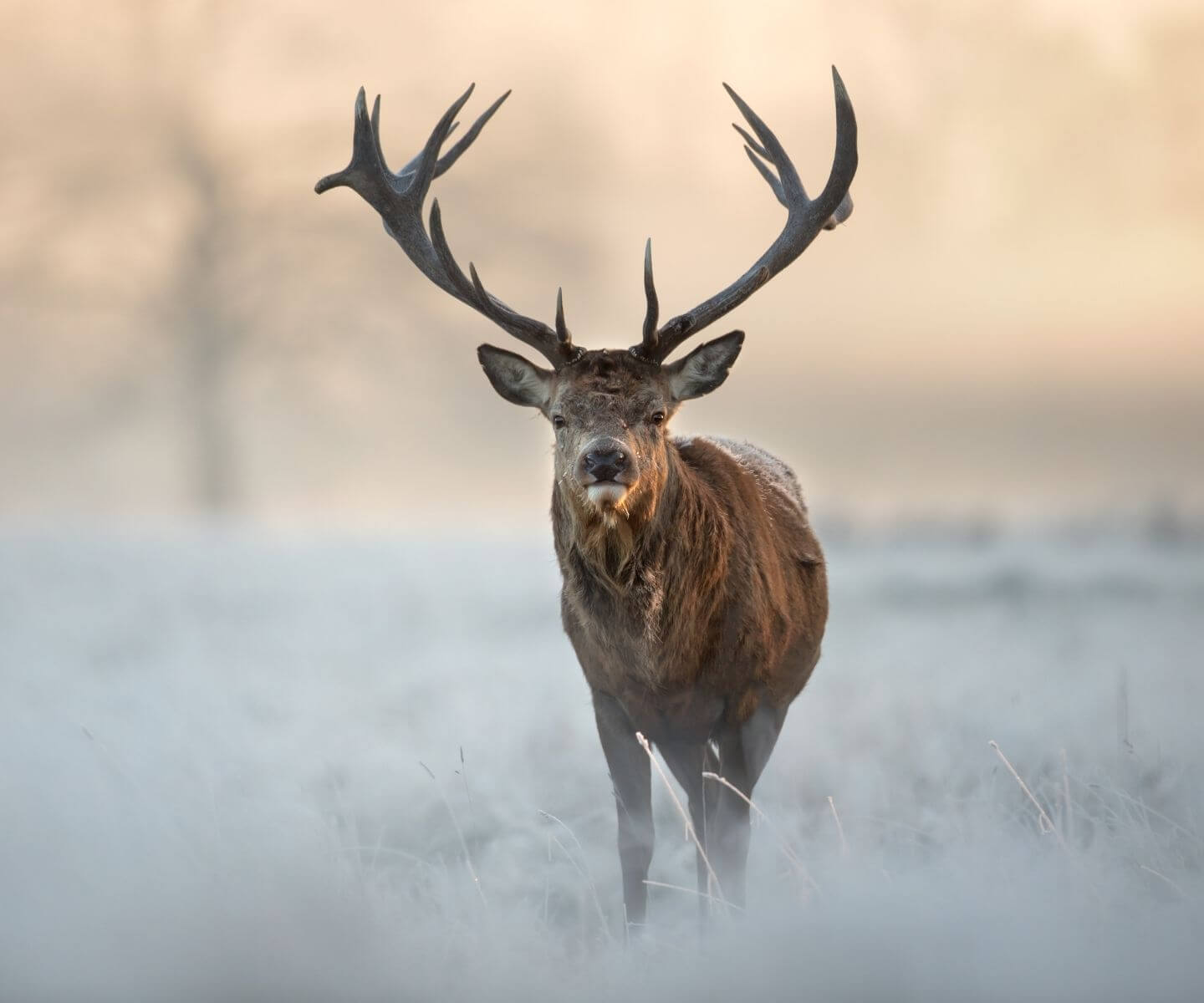
The red deer (Cervus elaphus), also known as European red deer, is an introduced species in Argentina that has successfully adapted to various environments, especially in the Patagonian region. It was introduced in 1906 in La Pampa province by Pedro Luro for hunting purposes, and following its release in the Patagonian mountains in 1924, its population has expanded considerably. This species, native to Eurasia, has generated admiration for its imposing presence but also concern for its ecological impacts on native ecosystems. This article covers its biology, distribution, behavior, and role in Patagonia, integrating recent research on its health and management.

Taxonomy and distribution
The red deer belongs to the Cervidae family and the genus Cervus. In Argentina, it was introduced as an exotic species from Europe, with the first documented introduction in 1906 in La Pampa province, followed by its release in the Patagonian Andes around 1924. Since then, the species has expanded across extensive areas from the Andes mountains to the Patagonian steppe.
Its distribution has been favored by limited competition with native herbivores and the absence of effective natural predators to control its population, with the puma being its main natural predator. In 2003, the estimated red deer population in Patagonia reached approximately 100,000 individuals, a number that has varied according to environmental conditions and management measures.
- Kingdom: Animalia
- Phylum: Chordata
- Class: Mammalia
- Order: Artiodactyla
- Family: Cervidae
- Genus: Cervus
- Species: C. elaphus
Today, its distribution extends from the Andes mountains to the Patagonian steppe, favored by limited competition from native herbivores and the absence of effective natural predators.

Physical description
Size and weight
Adult male red deer can exceed 200 kg in weight and reach up to 1.5 meters in height at the shoulders in the wild. However, in commercial farms, males are typically slaughtered younger, weighing approximately 110 to 130 kg at 15 months, seeking production efficiency. Females are smaller, generally measuring between 1.2 and 1.4 meters and weighing around 100 kg.
Coloration and antlers
The red deer’s coat changes with the seasons: it displays an intense red color during summer that darkens to brown tones in winter. Males exhibit branched, velvet-covered antlers that are renewed annually. The span of these antlers can reach up to 1 meter in width in mature specimens. Velvet production peaks between 4 and 5 years, generating 3 to 4 kg annually, with significant value in the Asian market where it’s used in traditional medicine.
Fun fact: during the growth season (spring and summer), antlers can grow up to 1 cm per day, thanks to intense blood flow under the velvet layer that covers them.

Habitat in Patagonia
In Patagonia, the red deer primarily inhabits lenga (Nothofagus pumilio), coihue (N. dombeyi), and ñire (N. antarctica) forests, as well as calafate and mata negra shrublands. It’s found between 500 and 1,800 m altitude, where it finds shelter, food, and breeding areas.
Additionally, its presence extends to various environments within Patagonia, including:
- Patagonian steppe: grasslands and low shrubs.
- Subantarctic forest: dense tree cover.
- River valleys: access to water and diverse forage.
Habitat fragmentation and competition with sheep livestock modify its movement patterns, encouraging coexistence in protected areas like Nahuel Huapi National Park and Lago Puelo Provincial Reserve.

Behavior and life cycle
The red deer is a social species that forms herds outside the breeding season (rut). These herds may be led by adult males or consist of females with their young. During the rut, which typically occurs between April and May, males defend territories and compete intensely for mating rights with females.
Diet
As a herbivore, the red deer primarily feeds on grasses, leaves, and tender shoots. In spring and summer, it selects high-quality forage, while in winter it resorts to bark and shrubs for survival. Its feeding is selective and depends on seasonal availability.
Reproduction
Gestation lasts approximately 234 days (about 8 months). The young, known as fawns, remain hidden in vegetation during their first weeks and are nursed by their mother until 6 months of age. Reproduction rates can be affected by environmental and health factors, as documented in recent studies on the influence of volcanic ash on dental health and fertility.

Environmental impact and conservation
The red deer has had a significant impact on Patagonian ecosystems. By browsing young trees and compacting soil, it affects natural regeneration of native species like lenga and coihue, favoring the proliferation of more resistant grasses and shrubs. In areas with high deer density, lenga cover can be reduced by up to 30% in less than a decade, altering habitat for birds and small mammals.
Key fact: Recent CONICET research reveals that ash expelled by the 2011 Puyehue volcano eruption had severe negative effects on red deer health. Fine ash adheres to vegetation consumed by deer, causing abrasive mechanical wear on teeth and a chemical effect of fluoride poisoning (fluorosis).
This double impact has caused tooth deformations, making proper feeding difficult for young and adult animals, resulting in reduced reproduction rates and life expectancy. For example, affected young females didn’t ovulate during the last mating season, significantly decreasing offspring production.
To mitigate these impacts, population censuses, exclusion fences, and sustainable management plans are implemented. Authorities and local organizations regulate sport hunting with quotas based on scientific studies, seeking to maintain a balance between this species’ presence and conservation of native forests and grasslands.

Key milestones timeline
- 1906: First documented introduction of red deer in La Pampa province by Pedro Luro.
- 1924: Release of specimens in the Patagonian mountain region, initiating natural expansion in the area.
- 1920-1970: Significant population expansion in Neuquén steppe and other Patagonian areas.
- 1973: Establishment of Los Alerces National Park, with established red deer presence.
- 1997: First official census in Nahuel Huapi National Park to monitor populations.
- 2003: Patagonian population estimate near 100,000 individuals.
- 2011: Puyehue volcano eruption and documented effects on deer health by CONICET research.
- 2020: Implementation of adaptive management plans in Northern Patagonia to balance conservation and hunting use.

Conclusion
The red deer is an emblematic species in Patagonian wildlife, playing both ecological and cultural roles. Its introduction in the early 20th century and subsequent expansion have generated significant ecosystem impacts, modifying native forest and grassland dynamics. Recent research, such as the effects of the Puyehue volcano eruption, shows that environmental factors can affect the species’ health and reproduction, directly influencing its population.
Sustainable management of red deer is essential to balance its conservation with hunting and livestock activities. This requires constant monitoring, adaptive management plans, and collaboration between scientific organizations, government agencies, and local communities. Understanding its biology, behavior, and impact in Patagonia will help design strategies that protect biodiversity and promote responsible use of this species.


Frequently asked questions (FAQs)
- What’s the difference between red deer and hog deer?
The red deer (Cervus elaphus) is considerably larger, with branched and velvety antlers, while the hog deer (Axis porcinus) is smaller with simple antlers. - Is red deer hunting allowed in Patagonia?
Yes, it’s permitted under quota control and official permits in certain protected areas. - How to determine a red deer’s age?
By antlers: mature males have more points and thicker antlers. Coat and dentition also help estimate age. - What native predators hunt red deer?
The puma (Puma concolor) is its main predator in Patagonia. - How does red deer impact forest regeneration?
By browsing seedlings and pruning shoots, it reduces growth rates of native species like lenga and coihue.