
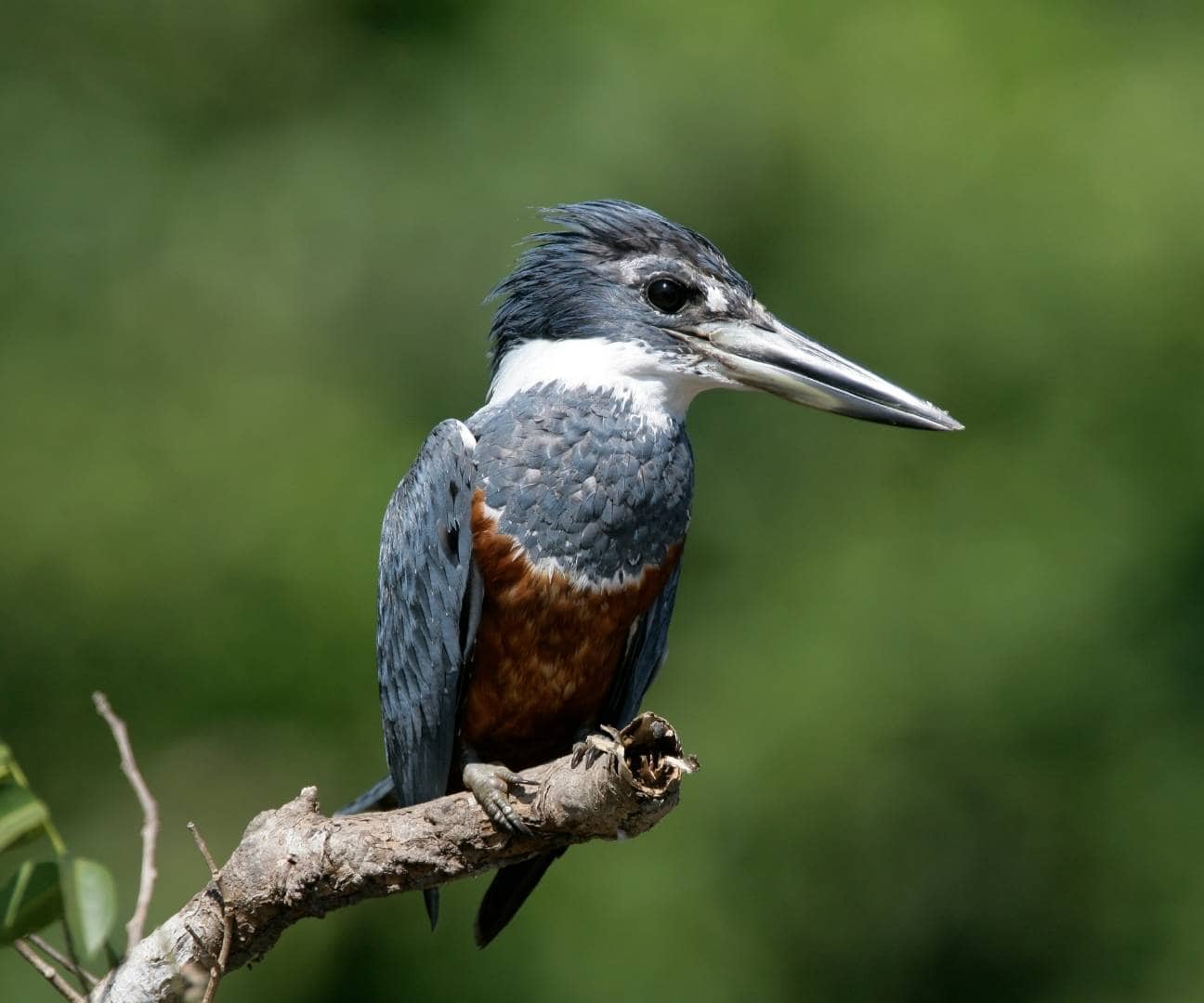
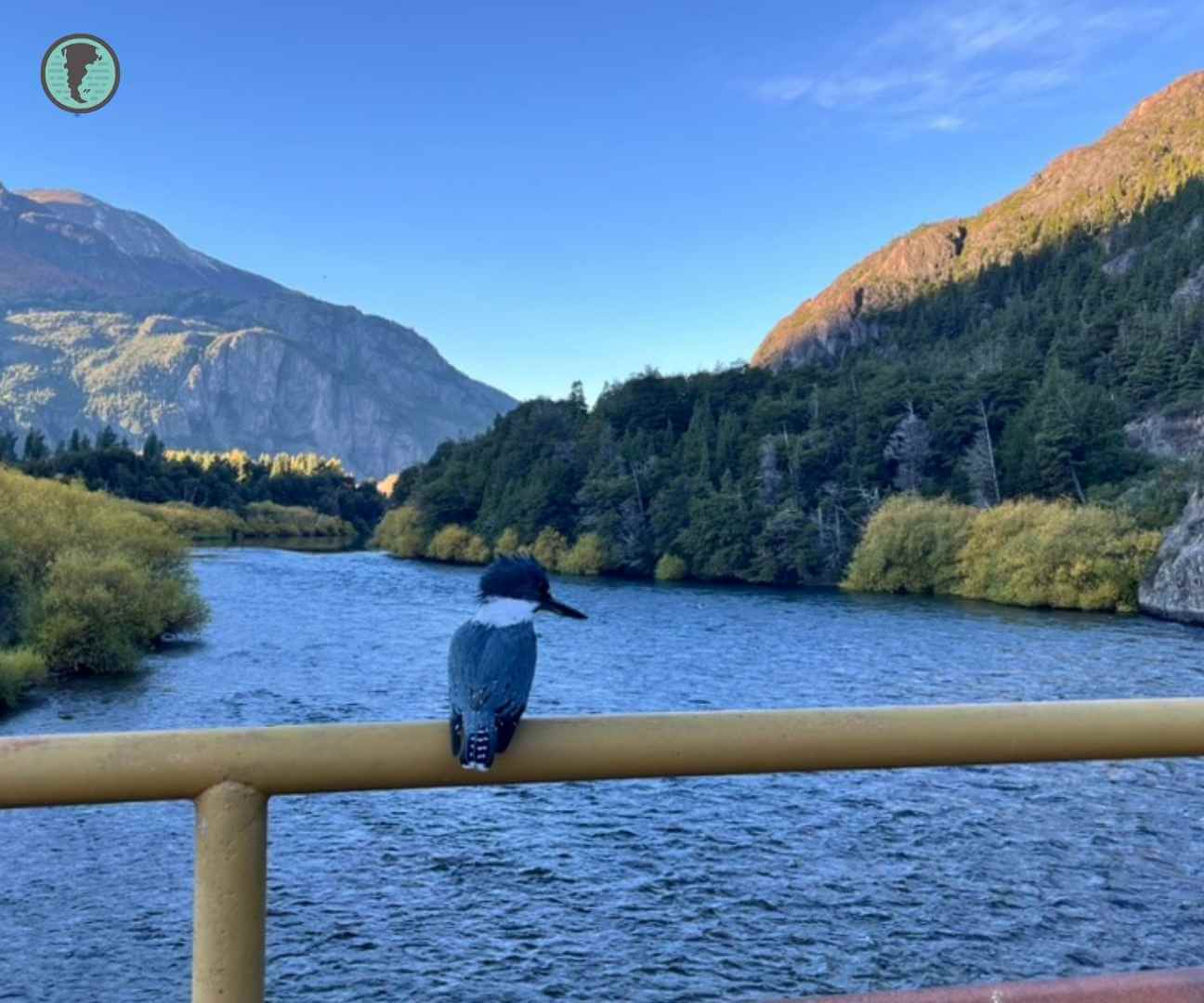
The Ringed Kingfisher (Megaceryle torquata), locally known as the Kingfisher or Kingfisher bird, is one of the most striking birds in Patagonian wildlife. Its unmistakable silhouette, diving skills, and vibrant colors make it a symbol of the region’s rivers and lakes. In Patagonia, this species is not only a highlight for birdwatchers and photographers but also plays a key ecological role as an indicator of aquatic ecosystem health.
Description and Characteristics
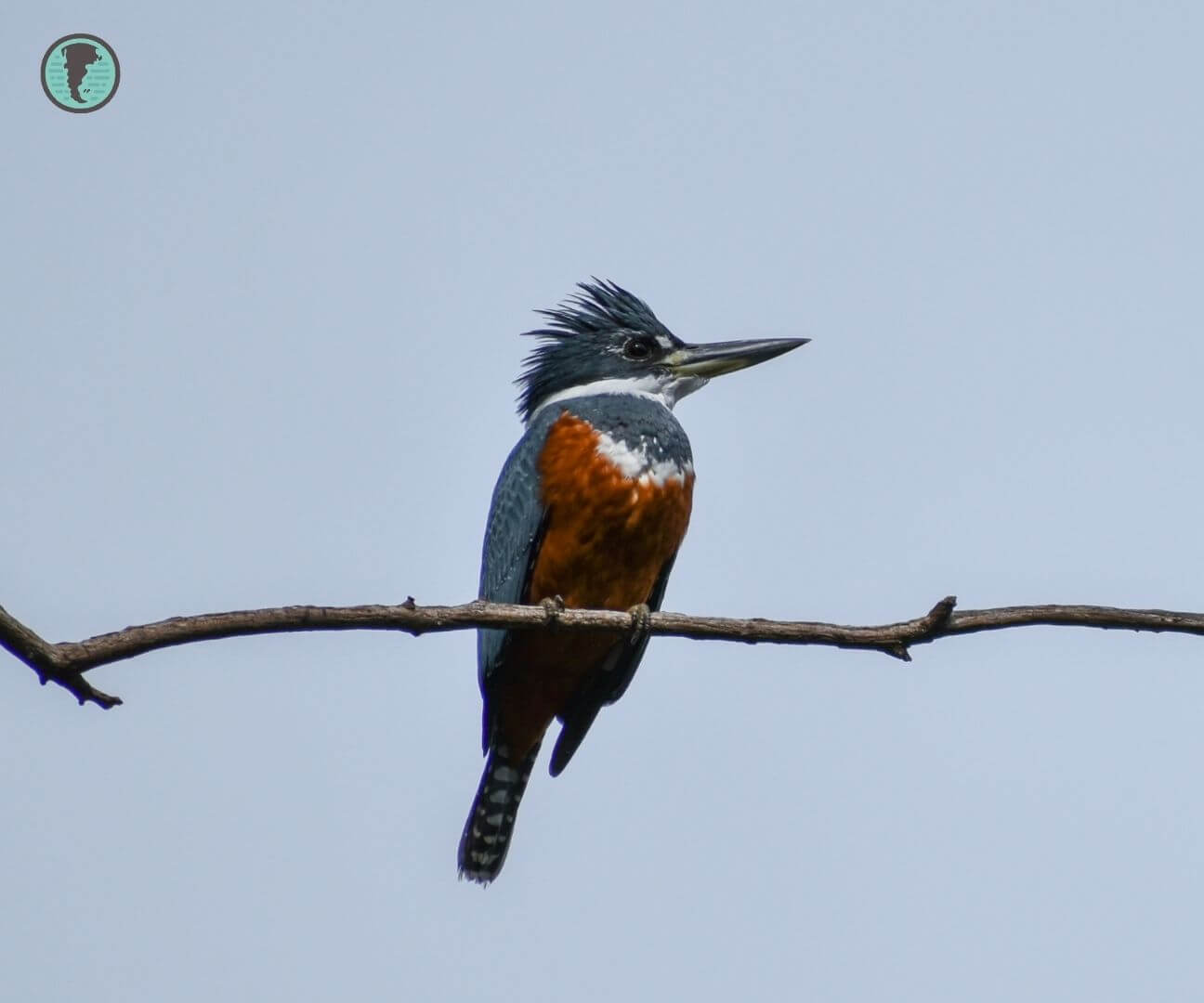
The Ringed Kingfisher, or Megaceryle torquata, is the most common kingfisher in Patagonia. It has a robust body, a large head with an erect crest, a long straight beak ideal for catching fish, and plumage in bluish-gray tones with a reddish chest. Males and females can be distinguished by their color patterns: males have a continuous reddish band on the chest, while females display a combination of bluish and reddish stripes.
Distribution and Habitat
In Argentine and Chilean Patagonia, the Ringed Kingfisher is found mainly along riverbanks, lakes, and lagoons with clear waters and abundant aquatic life. It prefers quiet areas with riparian vegetation that provides observation points and perches for fishing. Its presence is more frequent in areas with minimal human disturbance.
Spot the Ringed Kingfisher in the wild
Birdwatching tours in Patagonian lakes and rivers · Expert naturalist guides · Free cancellation
- Rivers such as the Futaleufú, Chubut, and Limay
- Patagonian lakes like Nahuel Huapi, Futalaufquen, and Lácar
- Wetlands and coastal estuaries
Diet and Fishing Techniques
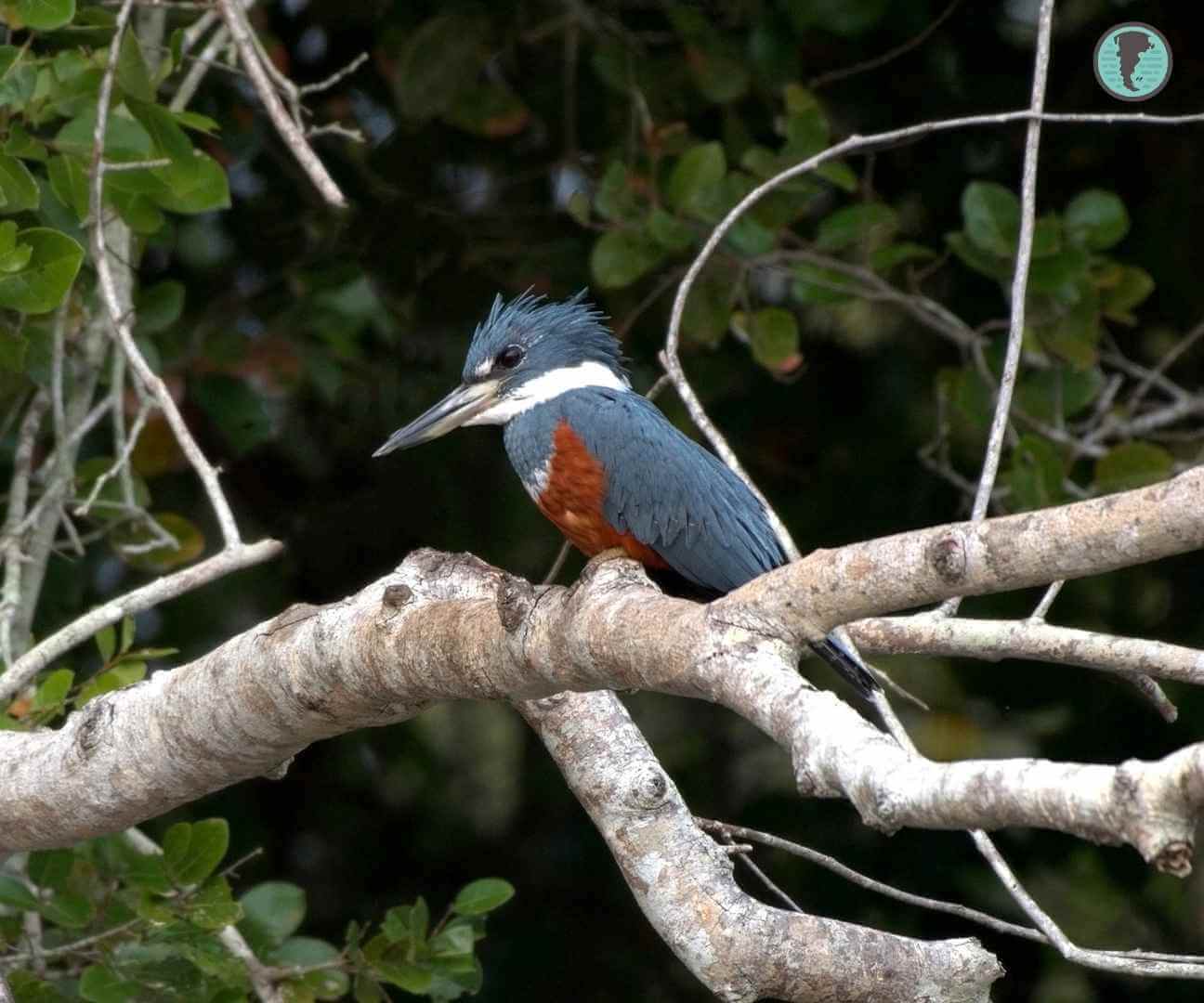
The Ringed Kingfisher feeds mainly on small fish but also consumes crustaceans, aquatic insects, and occasionally amphibians. Its hunting technique involves perching motionless on a branch or rock while observing the water. Once it spots prey, it dives directly and catches it with its sharp beak.
Fun fact: The kingfisher can calculate light refraction in water, adjusting its dive to catch prey with precision.
Reproduction and Life Cycle
In Patagonia, the breeding season occurs mainly between September and January. The pair digs a tunnel in earthen banks near water, which can reach up to 1.5 meters in length, ending in a chamber where they lay 3 to 6 white eggs. Both parents participate in incubation and feeding the chicks.
Behavior and Adaptations
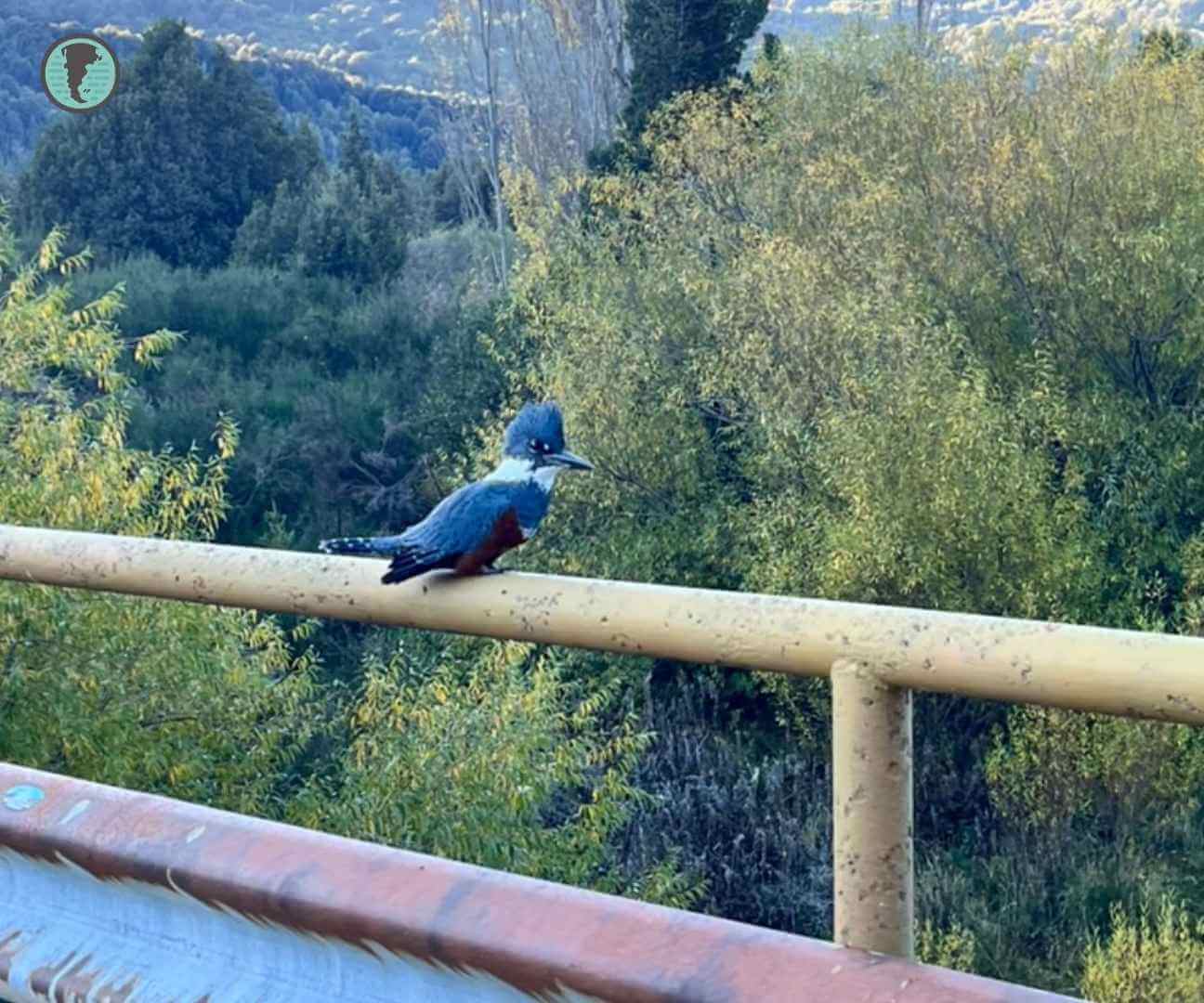
The Ringed Kingfisher is territorial, especially during breeding season. Its loud, repetitive call is used for communication and territory defense. Its flight is fast and direct, adapted for patrolling long stretches of river.
Conservation Status in Patagonia
Currently, the Ringed Kingfisher is not considered endangered according to the IUCN Red List. However, riverbank degradation, water pollution, and habitat loss can affect local populations. Preserving wetlands and protecting riparian forests are key conservation measures.
Fun Facts About the Kingfisher
- Its binocular vision allows it to judge distances with great accuracy.
- It can consume prey up to one-third of its body weight.
- It can remain motionless for long periods while hunting.
Timeline
- Spring: Start of breeding season and nest excavation.
- Summer: Intensive chick feeding and juvenile independence.
- Fall: Reduced activity and adaptation to changing water levels.
- Winter: Increased movement to ice-free areas.
Conclusion
The Ringed Kingfisher is a jewel of Patagonia, and its presence indicates healthy aquatic ecosystems. Its unique beauty and behavior make it an emblematic species for both science and ecotourism. Conserving its habitats and ensuring water quality is essential for this bird to continue gracing Patagonian riverbanks for generations.
Watch birds like a pro
Quality binoculars make all the difference in the field.
Frequently Asked Questions
What does the Ringed Kingfisher eat?
Mainly fish, but also crustaceans, insects, and small amphibians.
Where does the Ringed Kingfisher live in Patagonia?
Along riverbanks, lakes, and wetlands with clear waters and abundant aquatic life.
How can you tell males from females?
Males have a continuous reddish chest band, while females have bluish and reddish stripes.
Is it endangered?
Not currently, but it is vulnerable to habitat degradation and pollution.
When does it breed?
Between September and January, digging nests in earthen banks near water.