
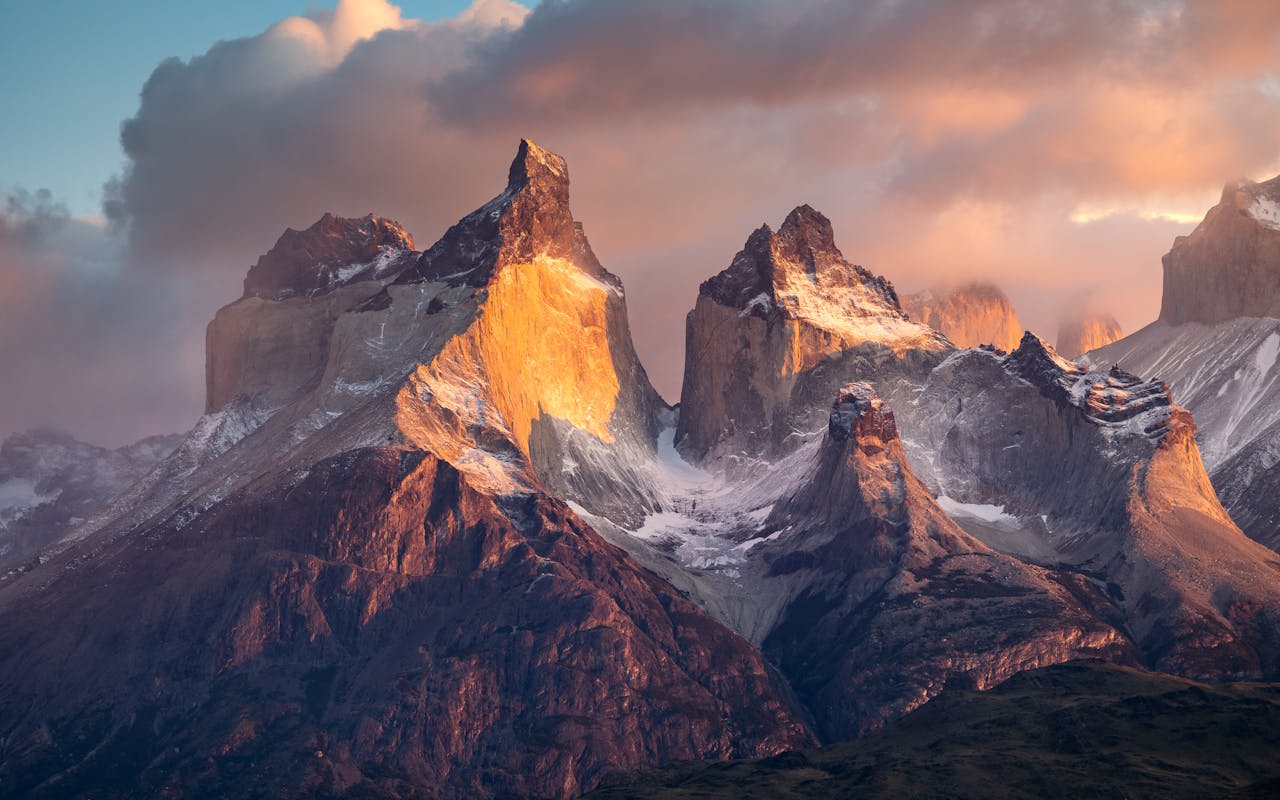
A Natural Icon of Patagonia
At the heart of southern Patagonia lies one of the most stunning and iconic destinations in the Southern Hemisphere: Torres del Paine National Park. Located in the Magallanes Region of Chile, this vast area has been a UNESCO Biosphere Reserve since 1978. As a result, it’s one of the most recognized landscapes in South America—and a dream spot for hikers, photographers, and nature lovers alike.
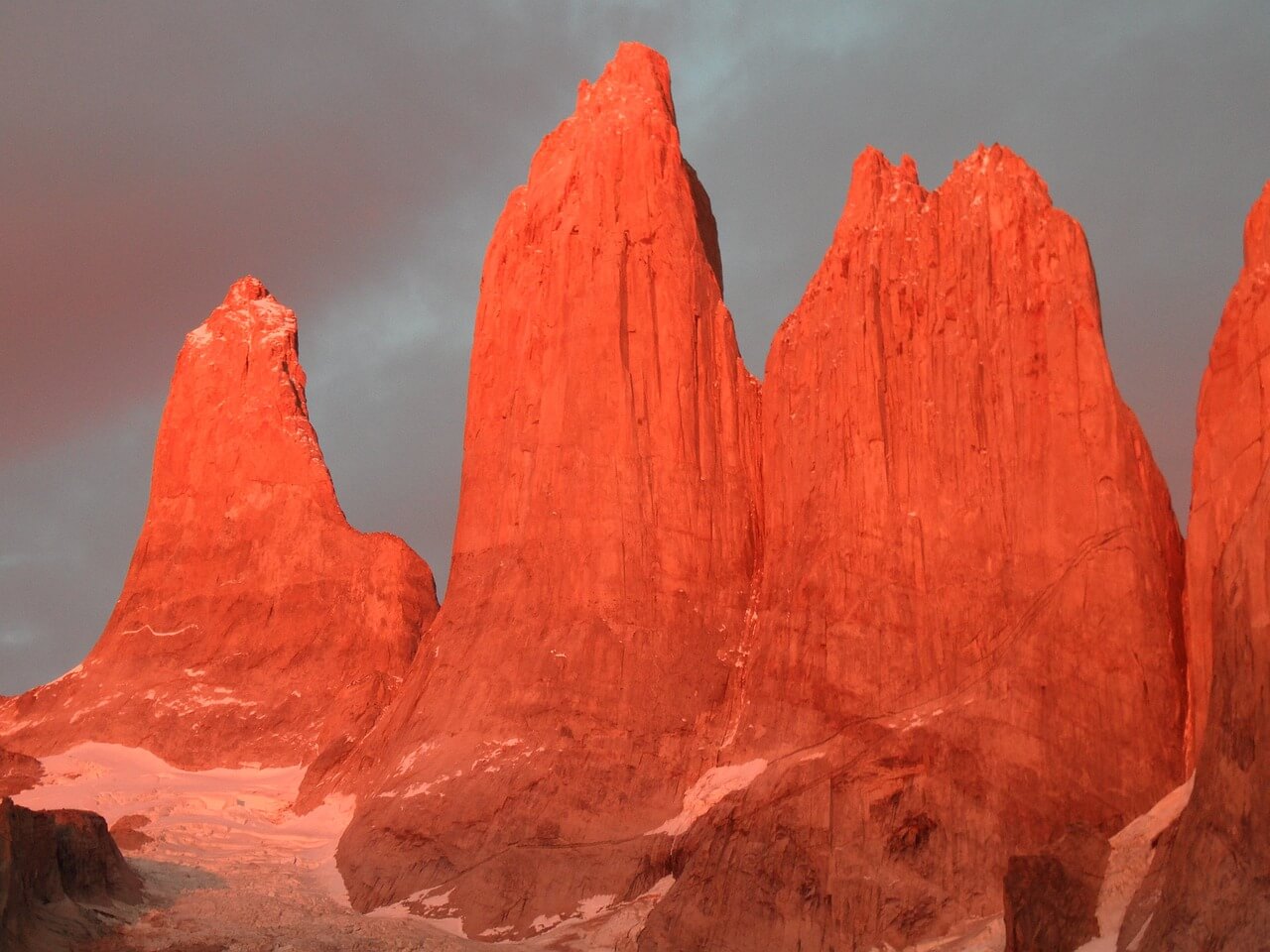
The park takes its name from the three massive granite spires known as the Torres del Paine. These towers rise over 2,500 meters and are now a must-visit for hikers and climbers, artists, and anyone chasing that raw, wild landscape.
A Gem in Chilean Patagonia
Although the park is located in Chile, it plays a key role in the shared imagination of Patagonia, stretching across Chile and Argentina. Many travelers coming via the Carretera Austral or from El Calafate or El Chaltén in Argentina add Torres del Paine to their itinerary as a natural extension of a Patagonia adventure.
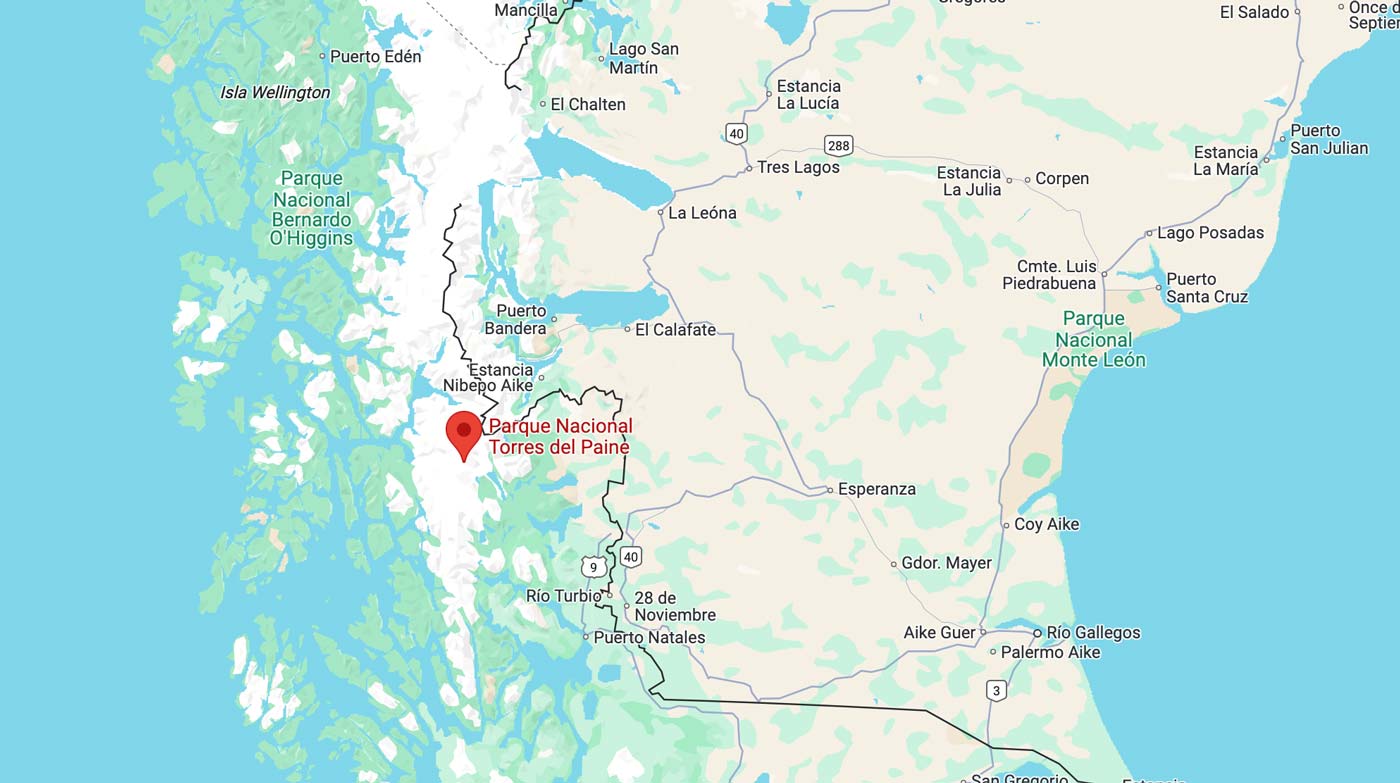
Covering over 227,000 hectares, the park offers turquoise lakes like Lake Pehoé and Lake Grey, massive glaciers, and some of the most epic hiking trails on Earth.
Guided tours in Torres del Paine
Departs from Puerto Natales · Free cancellation · Expert guides
Top Routes: O Circuit and W Trek
If trekking is your thing, the W Trek and the O Circuit are the most popular routes in Torres del Paine National Park, Chile:
- W Trek: About 70 km long and takes 4–5 days. You’ll see the famous Torres, Grey Glacier, and the French Valley. Fun fact: the name comes from the “W” shape the route forms on the map.
- O Circuit: A more immersive 7–10 day loop that covers the full park, including remote spots like the John Gardner Pass.
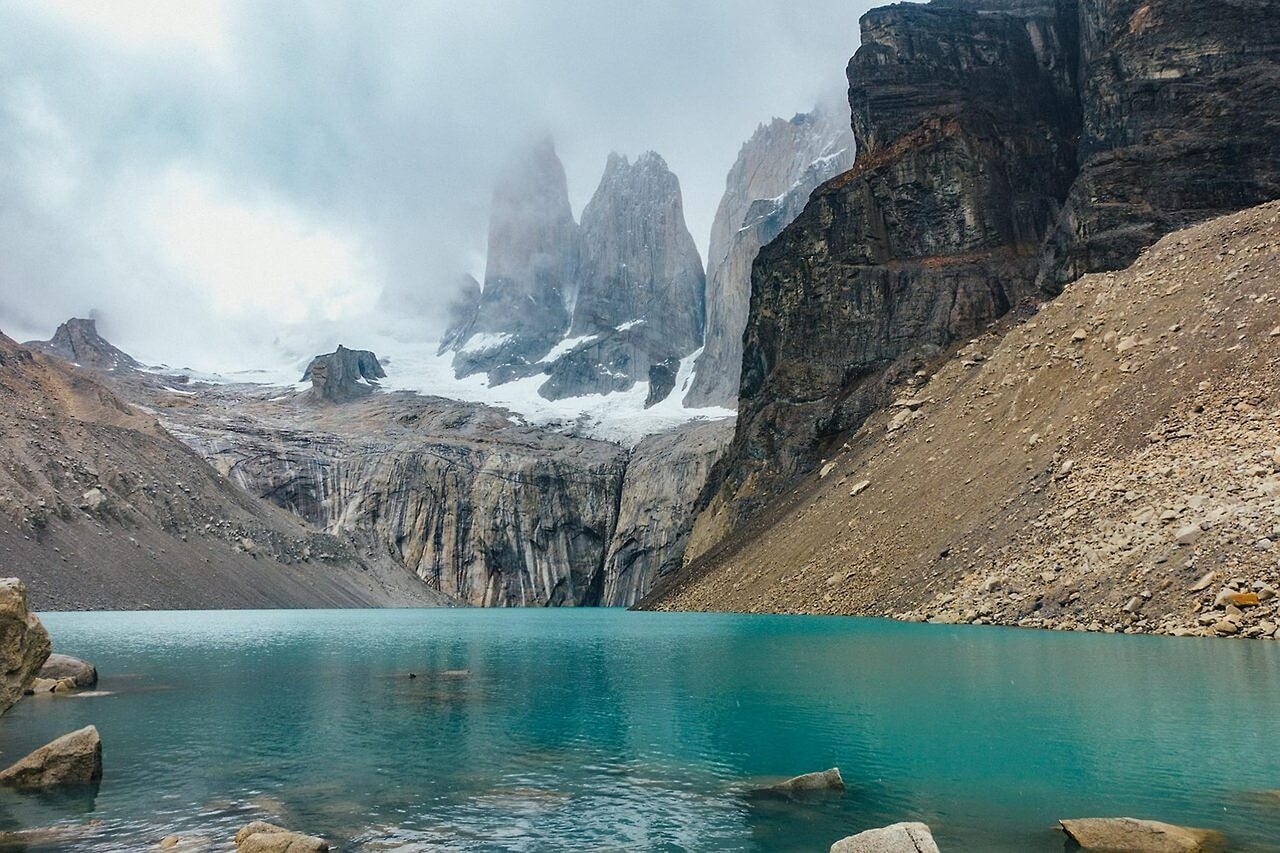
Both routes are internationally known and consistently rank among the best hikes in Torres del Paine and the world.
Wildlife, Sunrise, and Photography
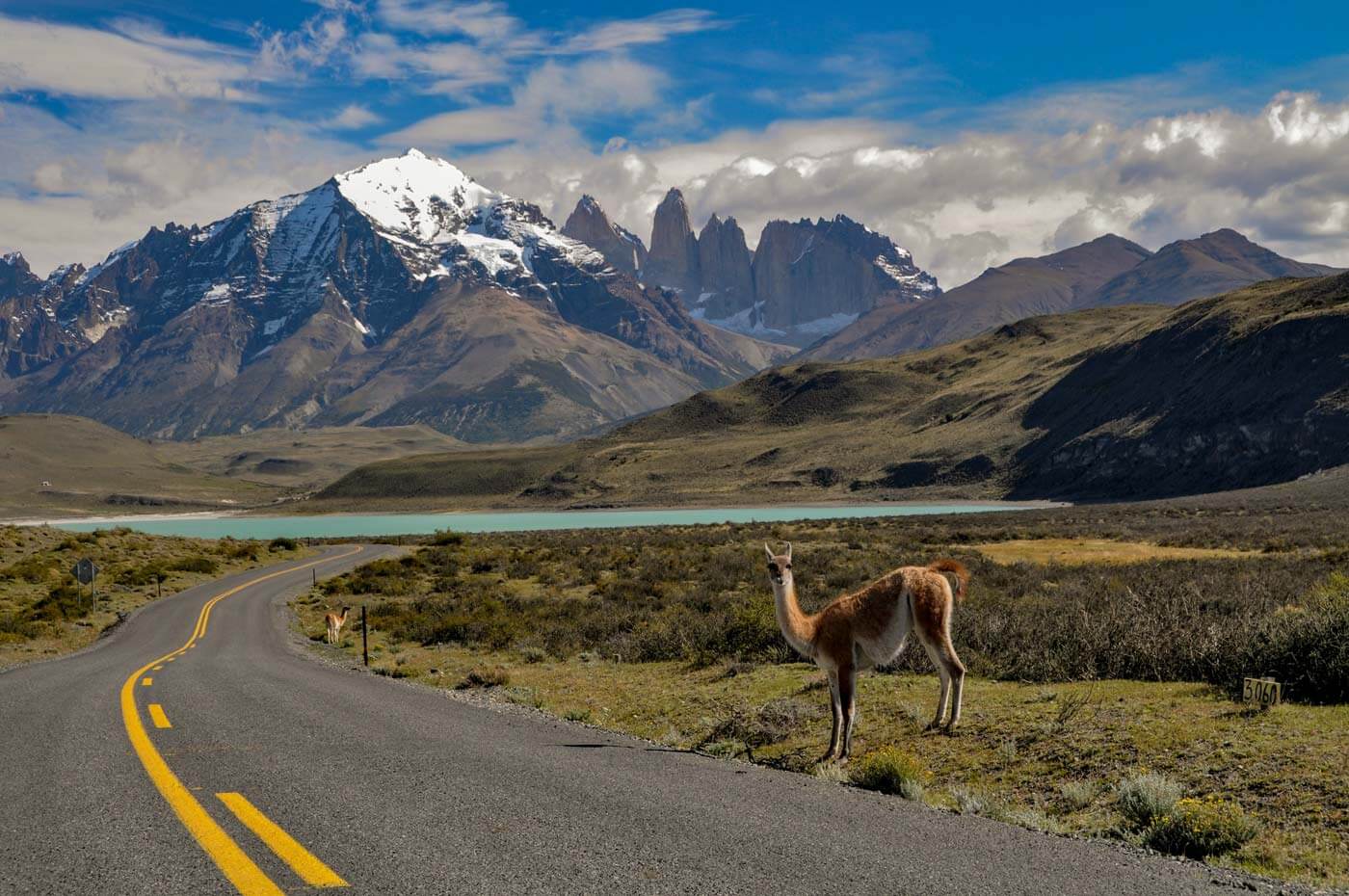
This protected area is home to a wide range of wildlife. Among the most iconic species are guanacos, pumas, foxes, and over 100 bird varieties, including the majestic Andean condor. With so many animals around, it’s a great spot for watching wildlife and taking amazing photos.
Moreover, the sunrises and sunsets here are truly breathtaking. Early morning light paints the towers in shades of red and orange, offering unique photo opportunities. Many visitors come specifically to capture this unforgettable Patagonia aesthetic.
What to Wear in Torres del Paine
One of the most common questions travelers have is what to pack. The weather in this part of Patagonia is unpredictable, even in summer. Therefore, choosing the right Torres del Paine outfit is essential. Here’s a recommended packing list:
- Base layer: Thermal shirt and technical leggings
- Mid layer: Fleece or synthetic wool pullover
- Outer layer: Waterproof windbreaker jacket and UV-protective trekking pants
- Accessories: Hat, gloves, buff, sunglasses, and a hydration-ready backpack
In winter, add thermal softshell pants, a padded jacket, and waterproof boots with good traction.
Choosing Clothing for Patagonia: Essential Tips for Every Season
Winter in Torres del Paine
Visiting in the off-season is quiet, cold, and unforgettable. With fewer crowds and snowy peaks, Torres del Paine in winter looks like a dream. It’s a great time for black-and-white photography or catching unique snowy scenes.
Torres del Paine vs Fitz Roy: What’s the Difference?
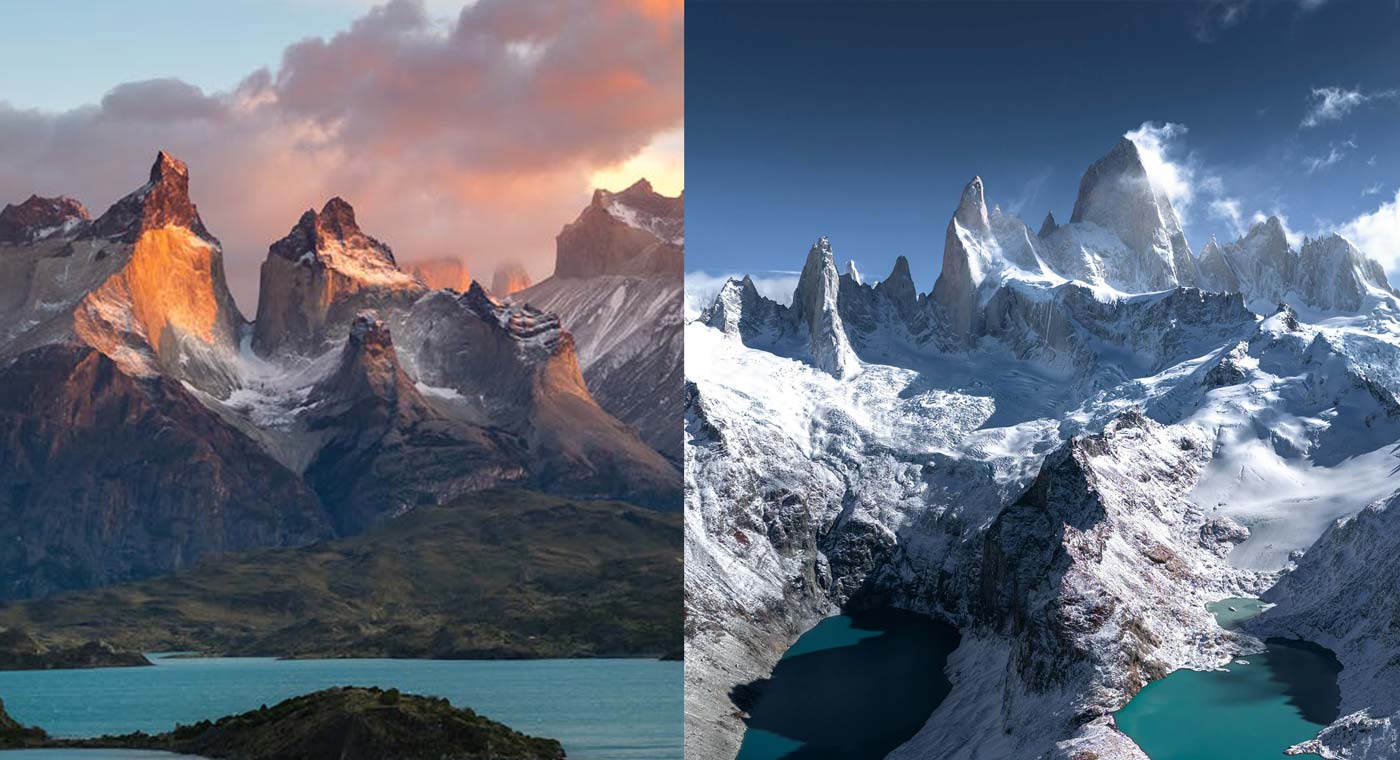
Often confused, Torres del Paine and Fitz Roy are among Patagonia’s most dramatic peaks. Both shaped by glaciers and made of granite, they dominate the skyline with breathtaking silhouettes.
A Santiago airport ad once mistakenly used an image of Fitz Roy to promote Torres del Paine—proof of how easily these two icons get mixed up.
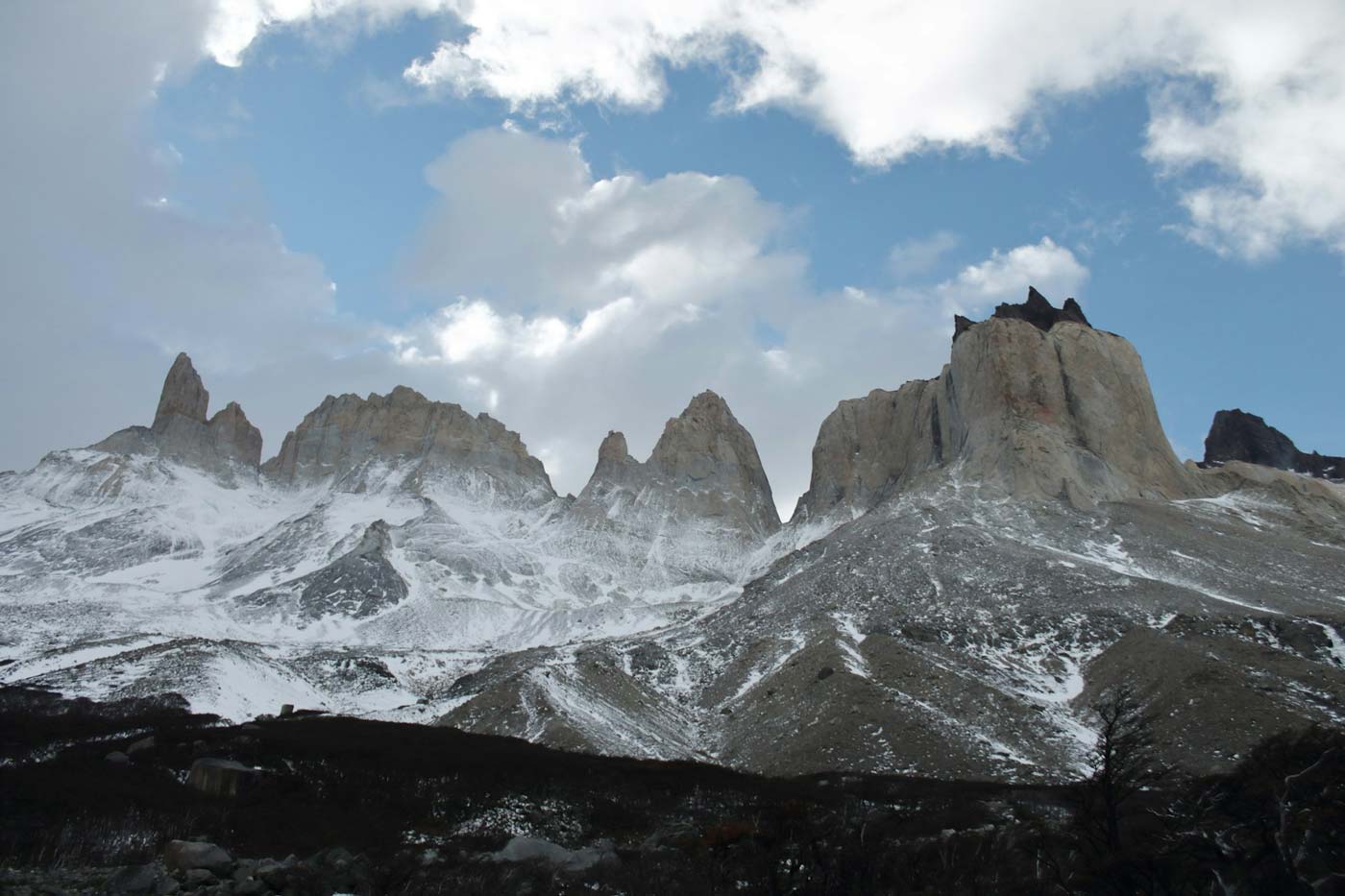
The Paine Massif—including the Torres, Cuernos, and Paine Grande—sits entirely within Torres del Paine National Park, Chile. “Paine” means “sky blue” in Mapudungun.
Fitz Roy, or Cerro Chaltén, straddles the Argentina-Chile border. It’s part of Los Glaciares National Park (Argentina) and Bernardo O’Higgins (Chile). “Chaltén” means “smoking mountain,” thanks to its cloud-covered summit.
What Sets Them Apart?
- Geological Age: Fitz Roy is about 16.8 million years old, while Torres del Paine is around 12.5 million.
- Rock Chemistry: Both are granitic, but Fitz Roy’s composition relates to volcanic arcs, while Torres del Paine has a more alkaline, transitional profile.
- Erosion: Fitz Roy’s host rock was fully eroded; Torres del Paine still preserves marine-origin rock (lacolith) that’s 90 million years old.
Art, Tattoos, and Torres del Paine at Home
Over time, Torres del Paine art has popped up everywhere: watercolor paintings, posters, embroidery, even Torres del Paine tattoos on hikers’ arms. Its shape has become a recognizable icon in Torres del Paine drawings, minimal line art, stickers, and home decor.
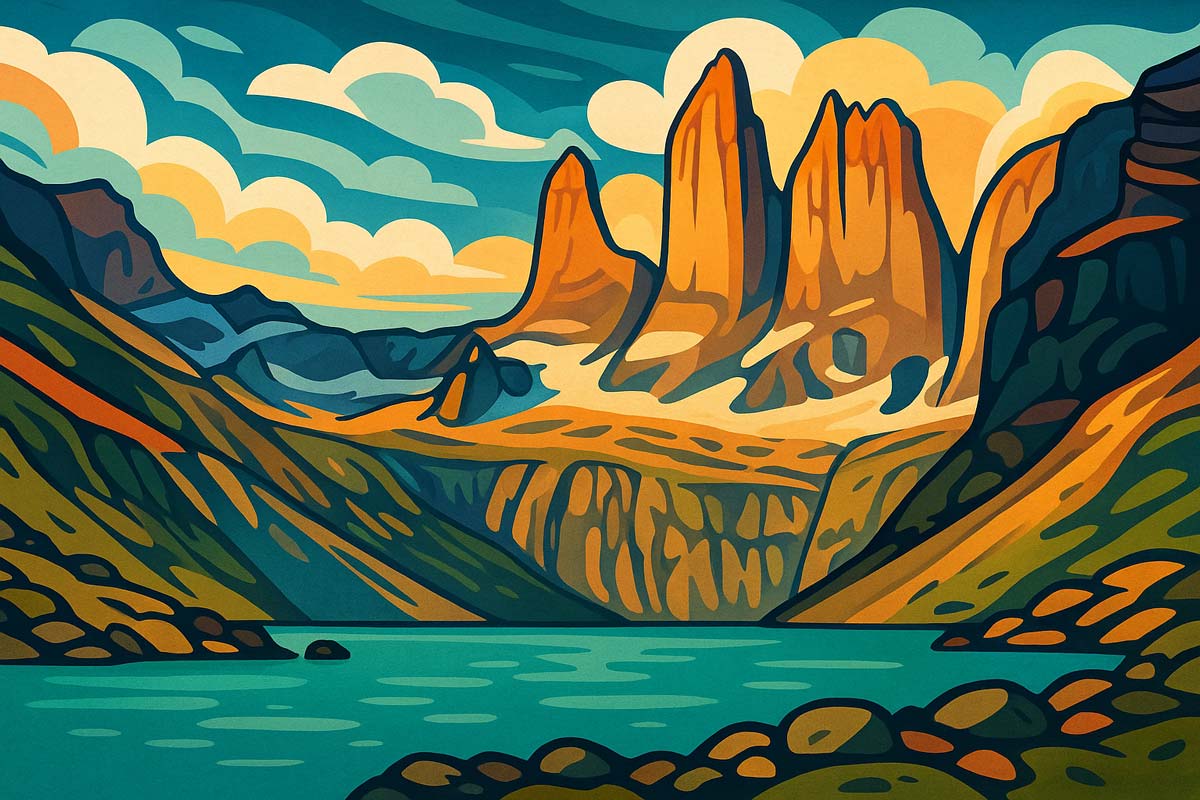
In a world increasingly disconnected from nature, Torres del Paine is a reminder of what truly matters—and an inspiration for anyone dreaming of Patagonia from behind a screen, on a t-shirt, or through a tattoo.
Which to Choose for Your Next Adventure?
Both ranges offer unforgettable experiences. Fitz Roy is for climbers and vertical thrills. Torres del Paine offers more variety: glaciers, lakes, wildlife, and classic hikes like the W Trek and O Circuit.
The best part? You don’t have to choose. Many adventurers link El Chaltén and Puerto Natales into one epic journey through the most spectacular parts of Patagonia.
Guided tours in Torres del Paine
Departs from Puerto Natales · Free cancellation · Expert guides
Frequently Asked Questions
1. What are the Torres del Paine and why are they famous?
The Torres del Paine are three massive granite spires that rise over 2,500 meters and serve as the iconic landmarks of Torres del Paine National Park. They are famous worldwide among hikers, climbers, and photographers because they represent some of the most dramatic and recognizable landscapes in South America.
2. Where is Torres del Paine National Park located and how do I get there?
The park is located in the Magallanes Region of Chilean Patagonia, though it’s often visited as part of a broader Patagonia adventure that includes destinations in Argentina like El Calafate and El Chaltén. Many travelers access the park via the Carretera Austral or use nearby Puerto Natales as a departure point for guided tours.
3. What is the difference between the W Trek and O Circuit?
The W Trek and O Circuit are the two most popular trekking routes in Torres del Paine, with the W Trek covering approximately 70 km. While the article mentions both routes as top options, hikers typically choose based on their fitness level and time available, with the O Circuit generally being more comprehensive.
4. What makes Torres del Paine a UNESCO Biosphere Reserve?
Torres del Paine has been recognized as a UNESCO Biosphere Reserve since 1978, designating it as a protected area of significant ecological and scientific importance. This status reflects the park’s exceptional biodiversity, stunning natural features, and role as one of the most recognized landscapes in South America.
5. What natural features can I expect to see in the park besides the Torres?
Beyond the granite spires, Torres del Paine features turquoise lakes like Lake Pehoé and Lake Grey, massive glaciers, and diverse ecosystems across its 227,000 hectares. These elements combine to create some of the most epic hiking trails and breathtaking scenery on Earth.
6. Is Torres del Paine suitable for all fitness levels?
While the article highlights Torres del Paine as a dream destination for hikers and nature lovers, the park offers multiple routes of varying difficulty, with the W Trek and O Circuit being the most popular options. Guided tours available from Puerto Natales can help match trekkers with routes appropriate to their fitness level and experience.