
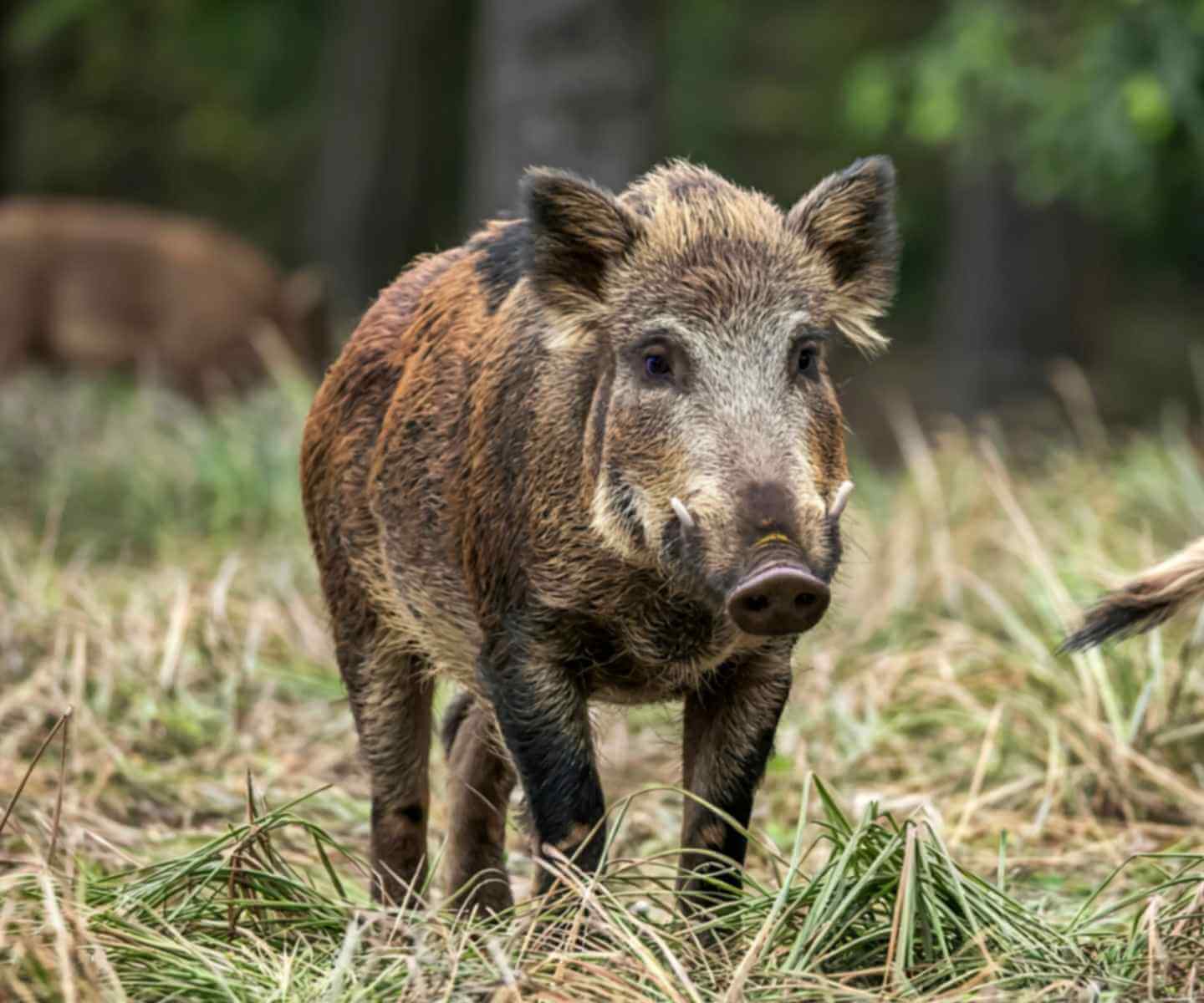
Across the vast and diverse landscapes of Patagonia, from the dense Andean-Patagonian forests to the arid steppes, a foreign presence has been gaining ground for over a century. The European wild boar (*Sus scrofa*), a robust and adaptable mammal, has become a fixture of the wildlife scene, not by natural design, but by the hand of man. Its history in the region is a prime example of how the introduction of exotic species can disrupt fragile ecosystems and generate complex conflicts between conservation, agriculture, and hunting. This article by **Outdoor Patagonia** provides an in-depth exploration of the biology, introduction history, environmental impact, and current management status of this species in southern Patagonia, offering an encyclopedic, evidence-based view grounded in scientific research and accredited data.
Biology and Identification of the Wild Boar (Sus scrofa)
The wild boar is an artiodactyl of the family Suidae, native to Europe, Asia, and North Africa. The specimens inhabiting Patagonia descend from those introduced from Europe. With a robust body and adaptable behavior, it is considered one of the world’s most successful invasive species. In Patagonia, it has gained relevance due to its expansive capabilities, its impact on native ecosystems, and its constant interaction with human activities.
Biological Characteristics
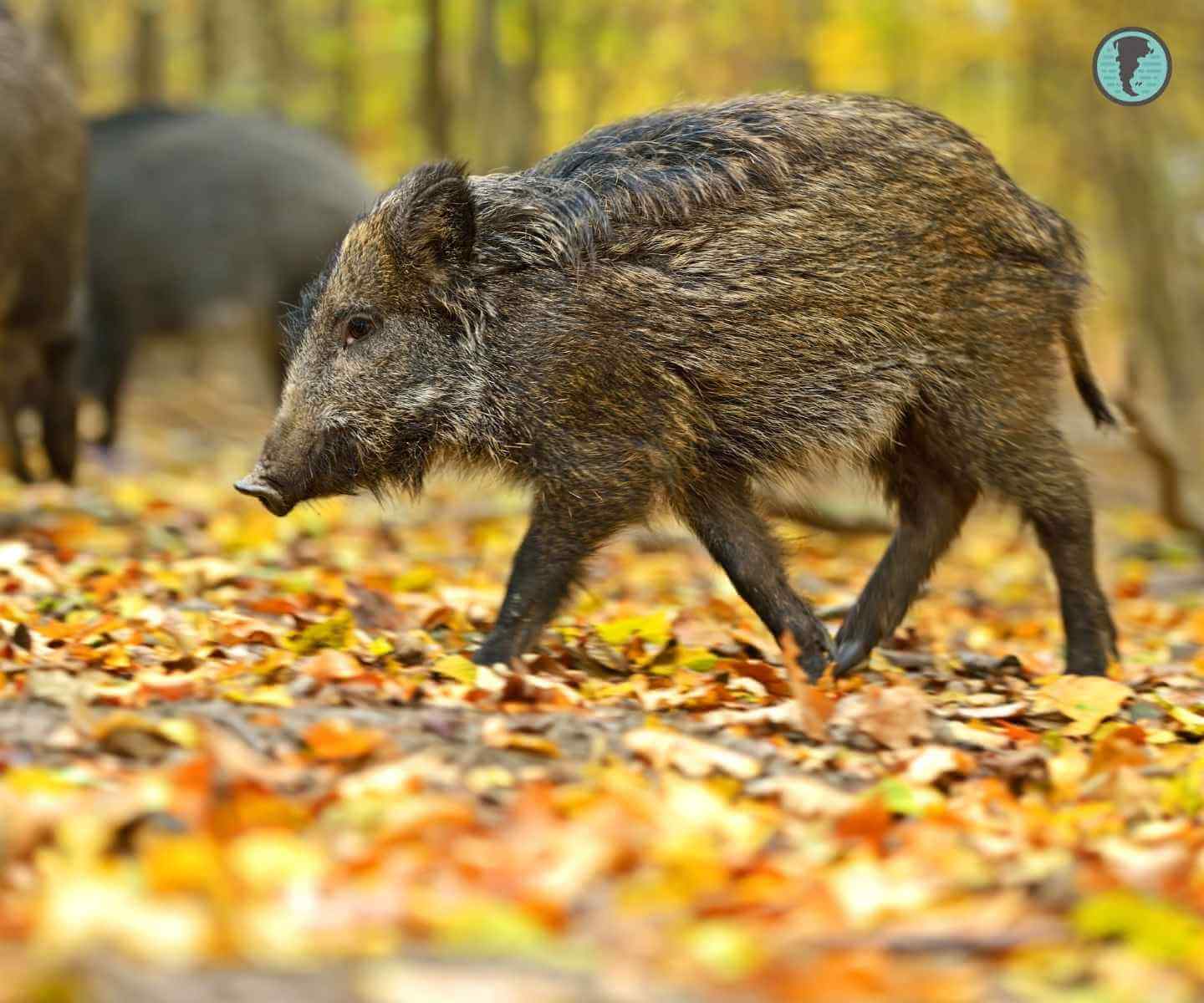
This animal has a strong, compact build. Males (boars) are notably larger than females (sows). Under Patagonian conditions, an adult male can weigh between 155 and 330 lbs (70-150 kg), while females range from 90 to 200 lbs (40-90 kg). Their coat is dense and thick, ideal for withstanding the cold southern winters, and varies in color from grey and black to reddish or brown tones.
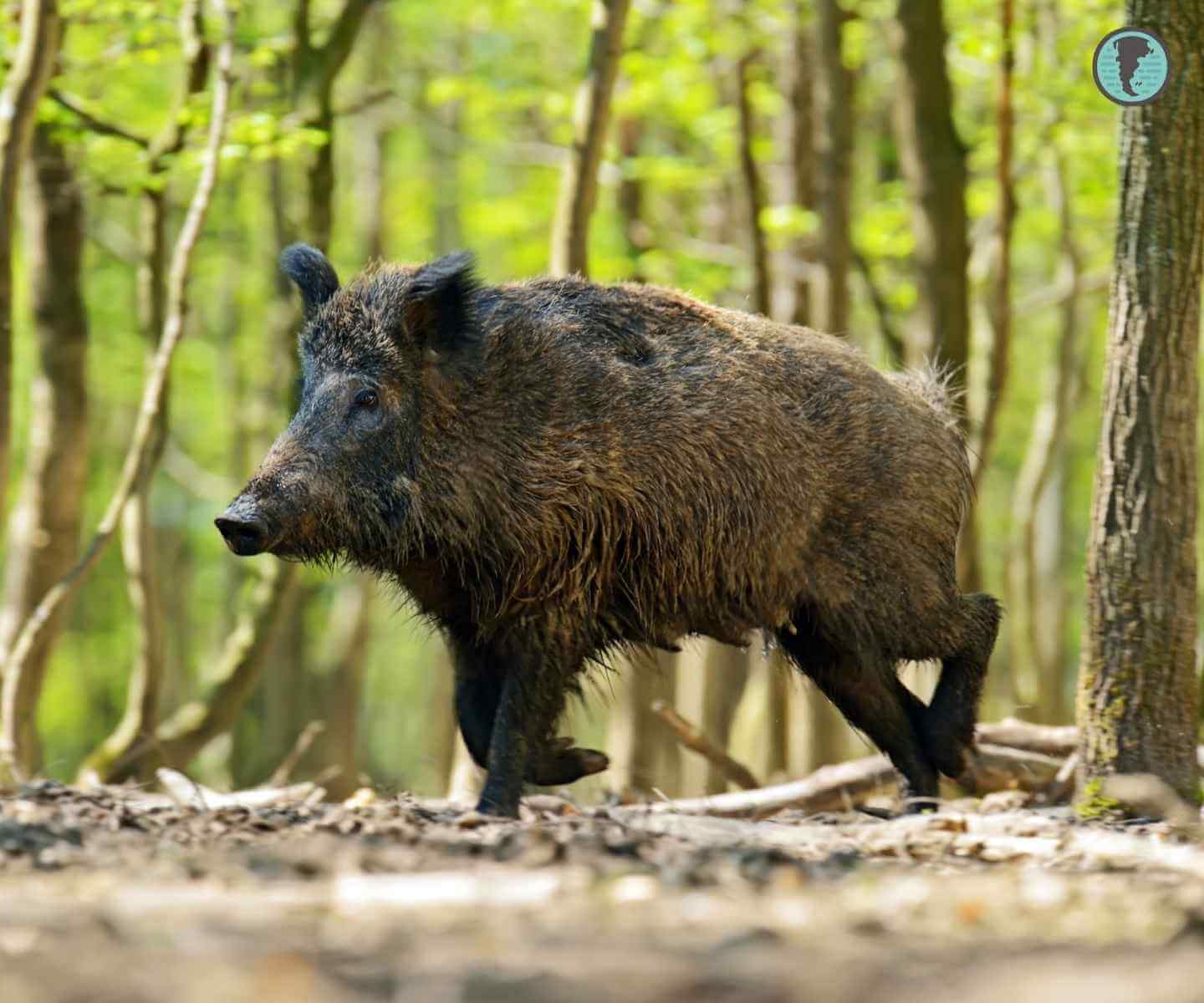
- Scientific name: Sus scrofa
- Average weight: 130 to 265 lbs (60-120 kg), potentially exceeding this in areas with abundant food.
- Lifespan: 10 to 14 years in natural environments.
- Reproduction: 2 to 12 piglets per litter; multiple litters per year under favorable conditions.
- Diet: Omnivorous; consumes roots, fungi, insects, carrion, eggs, small vertebrates, and crops.
Did you know? The upper tusks of males, called whetters, grow continuously throughout their life and are sharpened against the lower ones. They are tools for defense and dominance, and their size is an indicator of the animal’s age and status.
Behavior and Diet
The wild boar is an omnivorous and opportunistic animal, a characteristic key to its invasive success. Its diet in Patagonia includes:
- Plant matter: Roots, bulbs, fruits (such as those of the calafate bush or rose hip), fungi, and tender shoots, obtained by rooting the soil with their strong snout.
- Invertebrates: Earthworms, insects, and their larvae.
- Small vertebrates: Eggs and chicks of ground-nesting birds, amphibians, reptiles, and even carrion.
- Crops: Where the opportunity arises, they raid plantings of corn, potatoes, and vegetables.
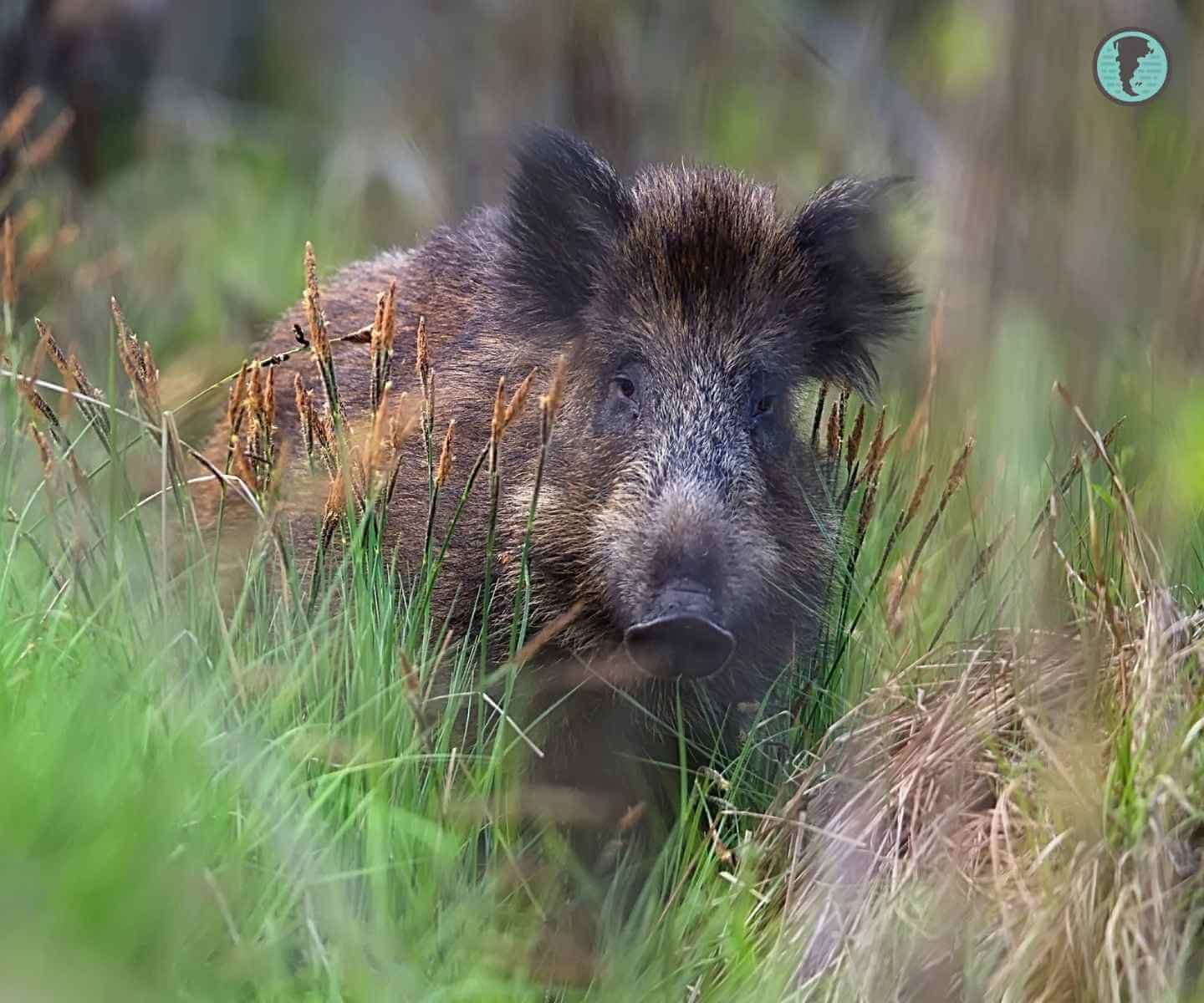
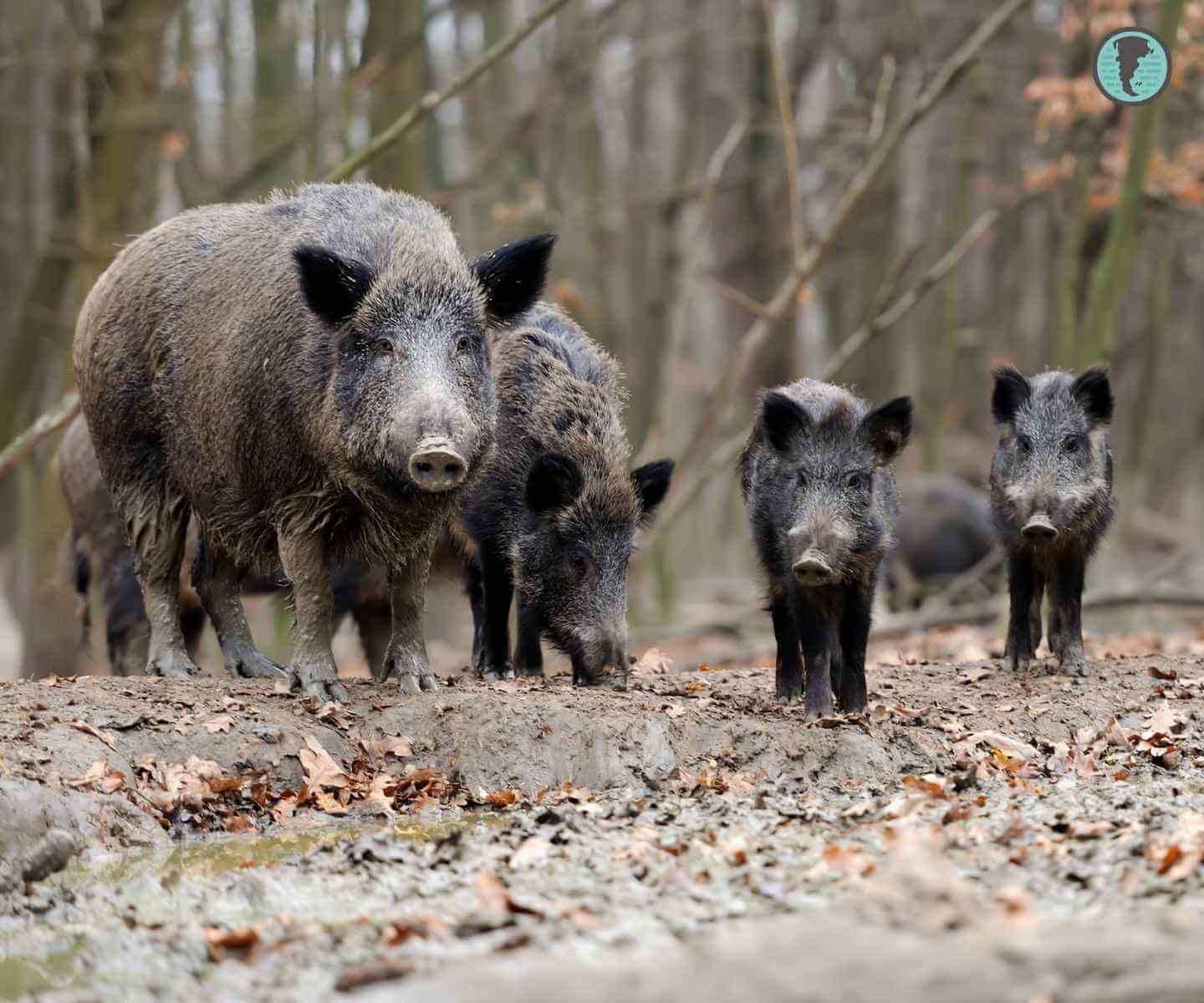
They are mainly crepuscular and nocturnal, although in areas with little disturbance they can be active during the day. They live in matriarchal groups called “sounders,” composed of females and their young. Adult males are more solitary, except during the breeding season.
History of its Introduction to Patagonia
The arrival of the wild boar in Argentina, and subsequently in Argentine and Chilean Patagonia, was not accidental. It responded to the hunting interests of high society and European settlers in the late 19th and early 20th centuries.
Timeline: The Arrival and Expansion of the Wild Boar
- 1900s-1910s: The first documented introductions take place in La Pampa province and on ranches in the Pampas region, with specimens brought primarily from Europe.
- 1910s-1920s: They begin to be released in fields near the Andes and in northern Patagonia, specifically in Neuquén and Río Negro provinces, by ranchers wishing to practice big game hunting, a sport associated with European nobility.
- 1930s-1950s: The species becomes firmly established and begins its natural expansion southward and westward, taking advantage of natural corridors and diverse habitats.
- Late 20th Century: The wild boar is present in almost all of Patagonia. Its population increases significantly as it finds few natural predators (the puma is the only native regulator of some relevance) and abundant food resources.
- 21st Century: It is formally recognized as an invasive alien species (IAS) by national and provincial environmental authorities, due to proven and growing ecological and economic damages.
This deliberate introduction contrasts with the natural process of forming Patagonia’s fauna, which evolved in relative isolation. The wild boar, lacking the ecological checks of its place of origin, found a vulnerable niche in Patagonia.
Key Fact: The wild boar is listed by the IUCN as one of the 100 most damaging invasive alien species on the planet.
Current Distribution and Habitat in the Region
Today, the wild boar has a broad and heterogeneous distribution in Patagonia. It is not uniformly present, but its range is extensive.
Areas of Greatest Presence
- Andean-Patagonian Forest: From southern Neuquén to Los Glaciares National Park. It finds shelter in dense thickets of ñire, lenga, and coihue, and food in forest fruits.
- Ecotones and Shrub Steppes: Transition zones between forest and steppe are particularly favorable, offering diverse resources.
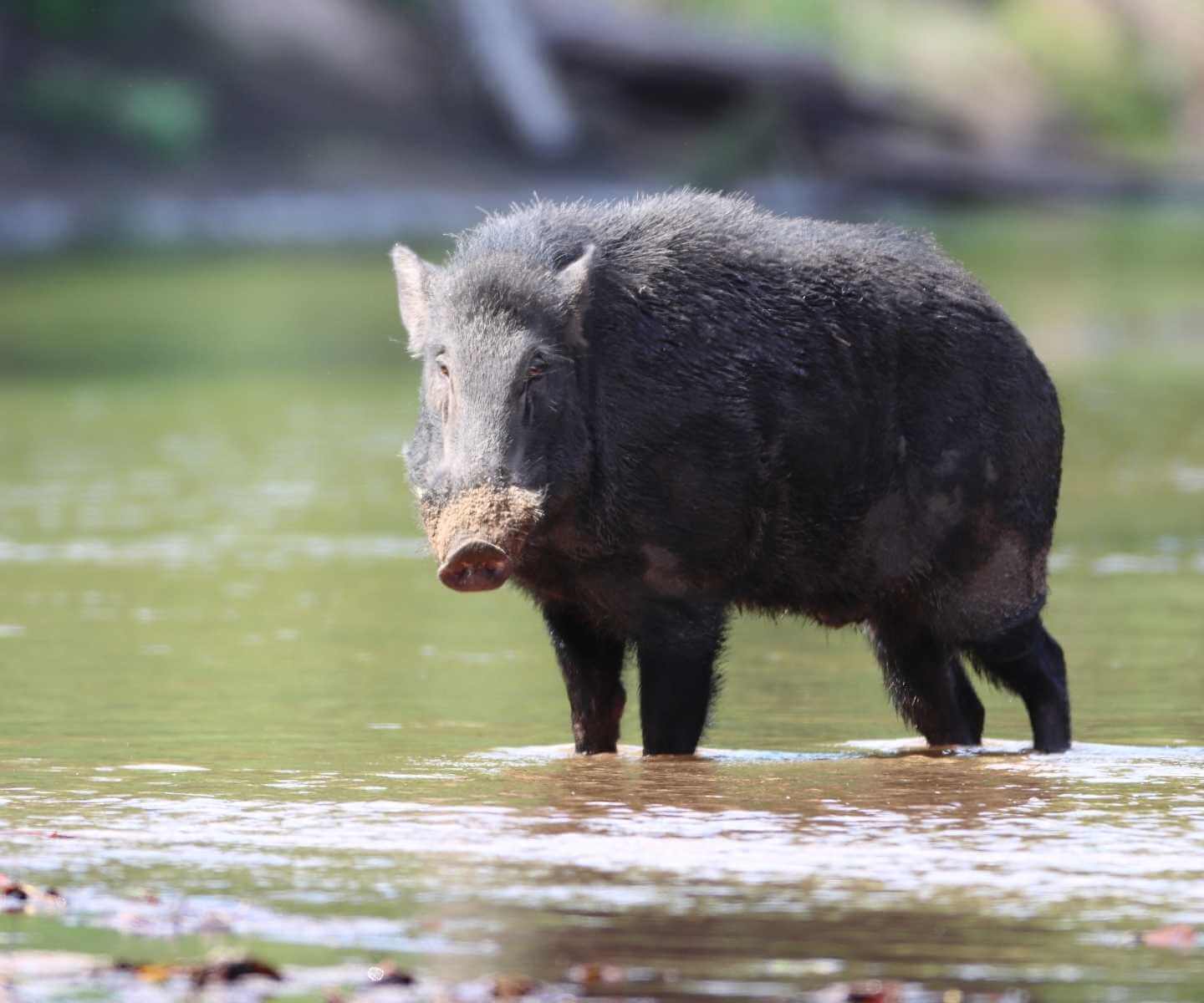
- Valleys and Riparian Areas: It follows waterways and establishes itself in valleys where it finds soft soil for rooting and greater food availability.
- Peri-urban and Agricultural Areas: On the outskirts of cities like San Carlos de Bariloche, San Martín de los Andes, or Esquel, they may approach in search of food, creating conflicts.
Factors Favoring its Expansion
Its success is due to its high reproductive rate (a female can have two litters of 4-6 piglets per year under favorable conditions), its flexible, omnivorous diet, and its intelligence. Furthermore, the absence of large, specialized predators (like wolves or big cats) and landscape modification by humans (which creates forest edges and feeding zones) have facilitated its dispersal.
Environmental Impact on Patagonian Ecosystems
As an invasive alien species, the wild boar generates significant, documented negative impacts on native biodiversity and the ecological processes of Patagonia. The National Secretariat for Environment and Sustainable Development includes it on its priority IAS lists.
Soil Alteration and Vegetation Regeneration
The act of rooting, which it does to feed, is one of its most visible impacts. It turns over extensive areas of soil, with multiple consequences:
- Loss of Ground Cover: Destroys understory, grasslands, and seedlings of native trees.
- Erosion: On slopes, the disturbed soil is more susceptible to water and wind erosion, a serious problem in the already fragile Patagonian soils.
- Competition: By consuming acorns, pine nuts, and other fruits, it directly competes with native species like the huemul, pudú, and rodents, affecting their food sources.
Predation and Competition with Native Fauna
Its opportunistic diet leads it to actively prey on vulnerable species:
- Ground-nesting Birds: Such as the hooded grebe (critically endangered), the lesser rhea (choique), and various species of ducks and plovers. It consumes their eggs and attacks chicks.
- Reptiles and Amphibians: Including endemic species of the region.
- Habitat Competition: It can displace more specialized and less aggressive native herbivores from feeding and watering areas.
Sanitary Risks and Diseases
The wild boar can act as a reservoir and vector for diseases affecting domestic livestock (such as classical swine fever or trichinosis) and potentially wildlife. It can also contaminate watercourses with its feces.
Relevant Data: Studies conducted in Nahuel Huapi National Park have quantified high rates of nest predation by wild boars, identifying them as a direct threat to the conservation of local avifauna.
Management and Control: Approaches and Challenges
The management of wild boar in Patagonia is a complex and often controversial issue, involving government agencies, scientists, producers, hunters, and conservationists.
Legal Framework and Strategies
In Argentina, the wild boar is categorized as a harmful and injurious species (National Wildlife Conservation Law 22.421). The National Parks Administration (APN) and Patagonian provinces have specific regulations. Control strategies include:
1. Controlled and Sport Hunting
This is the most widespread method outside protected areas. Many provinces allow year-round hunting, without quotas, to encourage reduction. However, its effectiveness at a population scale is debated, as sport hunting often removes only a few individuals and can disperse groups.
2. Control in Protected Areas
Within National Parks and reserves, the goal is eradication or intensive control to protect ecological integrity. Specialized personnel conduct monitoring and selective control, often using more systematic methods than sport hunting.
3. Exclusion and Deterrence Measures
On productive lands and areas critical for conservation, specialized electric fencing (taller and with multiple electrified wires) is used to prevent animal entry.
4. Research and Monitoring
Institutions like CONICET and Patagonian universities conduct studies to better understand its ecology, distribution, and impacts—crucial information for designing effective management strategies.
Ongoing Challenges
Management faces obstacles such as the vastness and ruggedness of the Patagonian terrain, lack of resources for large-scale coordinated control, and divergent viewpoints between those who see it solely as a hunting resource and those who prioritize its control due to environmental impact.
Conclusion
The wild boar in Patagonia represents a paradigmatic case of the lasting and complex effects of introducing exotic species. What began as an initiative to recreate European hunting practices evolved, over the decades, into a first-order conservation and environmental management problem. Its adaptable biology has allowed it to colonize diverse habitats, from the humid Andean forests to the steppes, generating soil alterations, preying on vulnerable native fauna, and competing for resources.
Today, the scientific and conservation agency consensus is clear: the wild boar (*Sus scrofa*) is an invasive alien species that requires active, evidence-based management to mitigate its impacts. The challenge for Patagonia lies in implementing effective control strategies, coordinated across jurisdictions and sectors, that prioritize the protection of the fragile southern ecosystems and their unique biodiversity. Understanding its history, biology, and impact, as detailed here, is the fundamental first step in addressing this challenge in an informed and responsible manner.
Frequently Asked Questions
1. Is the wild boar native to Patagonia?
No, it was introduced from Europe in the late 19th century for sporting and production purposes.
2. Why is the wild boar considered an invasive species?
Due to its rapid reproduction, broad diet, impact on flora and fauna, and ability to modify soil.
3. Where is it currently found in the region?
From Neuquén to Santa Cruz, in forested environments, steppes, and rural areas.
4. Does hunting help control its population?
It can reduce densities locally but does not eliminate the species; it is one tool within a broader management plan.
5. Does the wild boar pose health risks?
Yes, it can transmit diseases such as trichinosis and brucellosis.