
Introduction
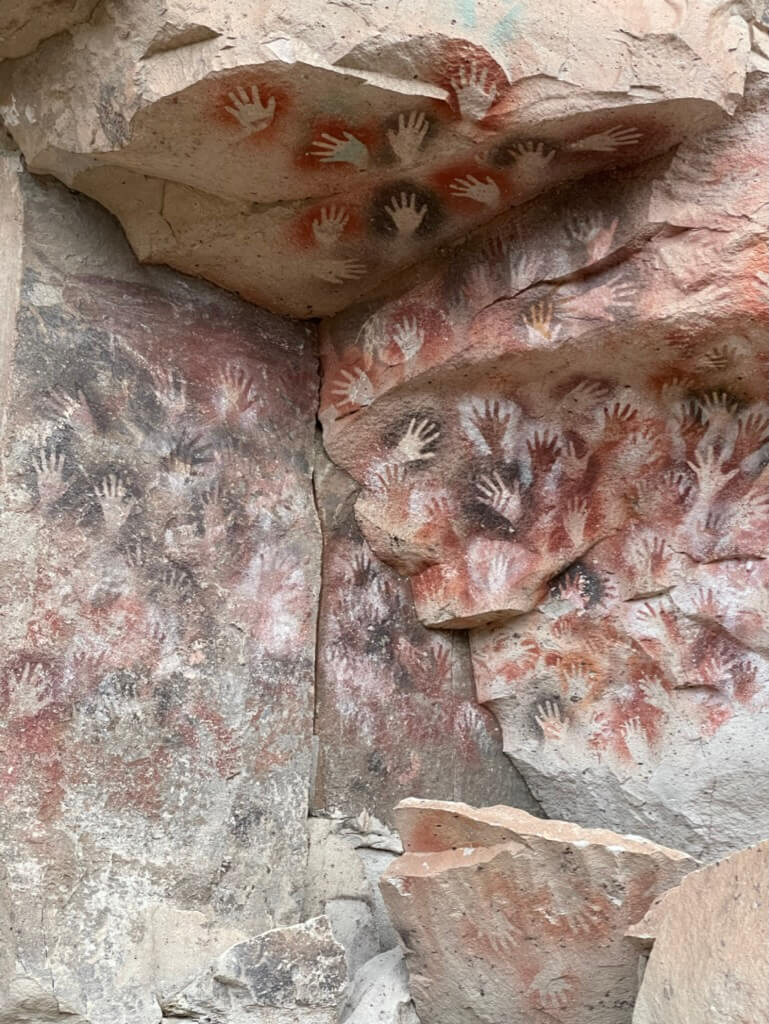
In the rugged heart of Argentine Patagonia, where wind sculpts the rocks and the Pinturas River winds through canyons, lies one of Earth’s most fascinating archaeological treasures: Cueva de las Manos (Cave of Hands). This archaeological site sits 88 meters above the river canyon within the Estancia Cueva de las Manos, between Perito Moreno and Bajo Caracoles. Declared a National Historic Monument in 1993 and a UNESCO World Heritage Site in 1999.
The cave measures 20m deep, 10m high, and 15m wide, with difficult access. Its significance lies in both the beauty and antiquity of its rock paintings, dating back 9,300 years. Among South America’s oldest artistic expressions, it parallels sites like Monte Verde (Chile), Pedra Furada (Brazil), and Piedra Museo (Argentina), supporting theories of early continental settlement.
Did You Know?
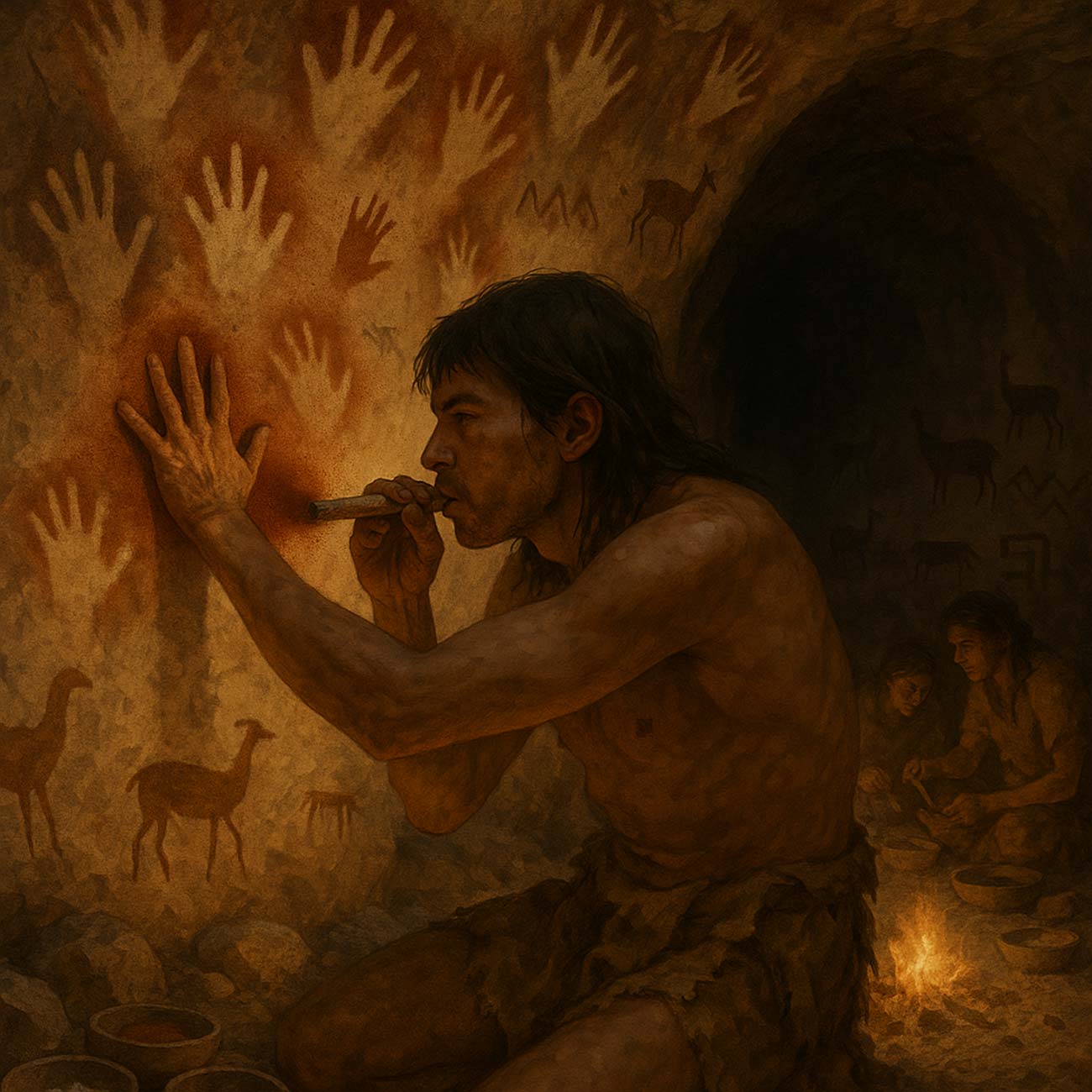
70% of stenciled hands are left-handed. Artists used bone tubes to blow pigments while keeping their left hands free for tracing.
History & Discovery
Early Inhabitants & Art Creation
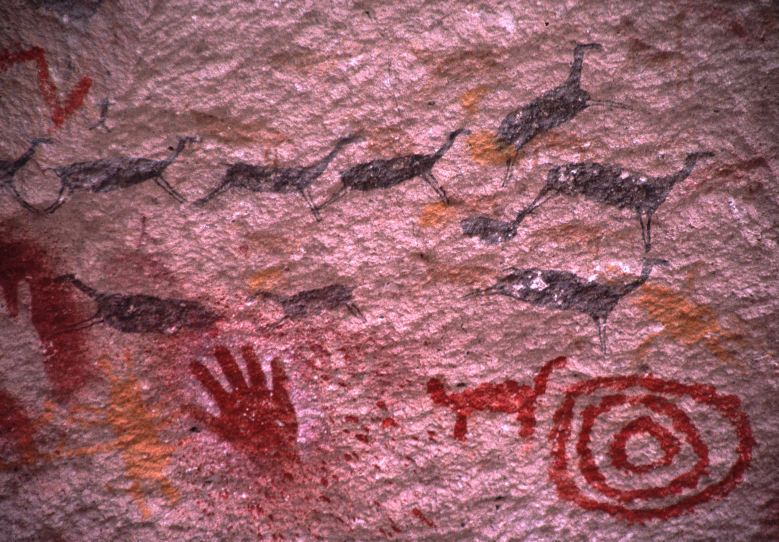
Between 7,300 BC and 700 AD, nomadic hunter-gatherers—ancestors of the Tehuelche people—seasonally occupied the site. The earliest paintings depict guanaco hunting scenes, human figures, rhea footprints, and ritual symbols. Layered figures suggest an 8,500-year cultural continuity.
Modern Rediscovery
Explorer Francisco Pascasio Moreno first described the cave in 1876. Italian missionary Alberto María de Agostini documented it in 1941, followed by archaeologist Carlos J. Gradin’s 30-year research (1964-1994) with Ana M. Aguerre and Carlos Aschero, supported by CONICET.
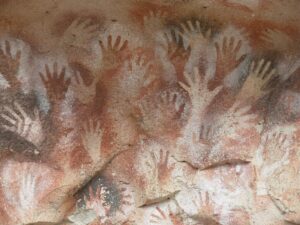
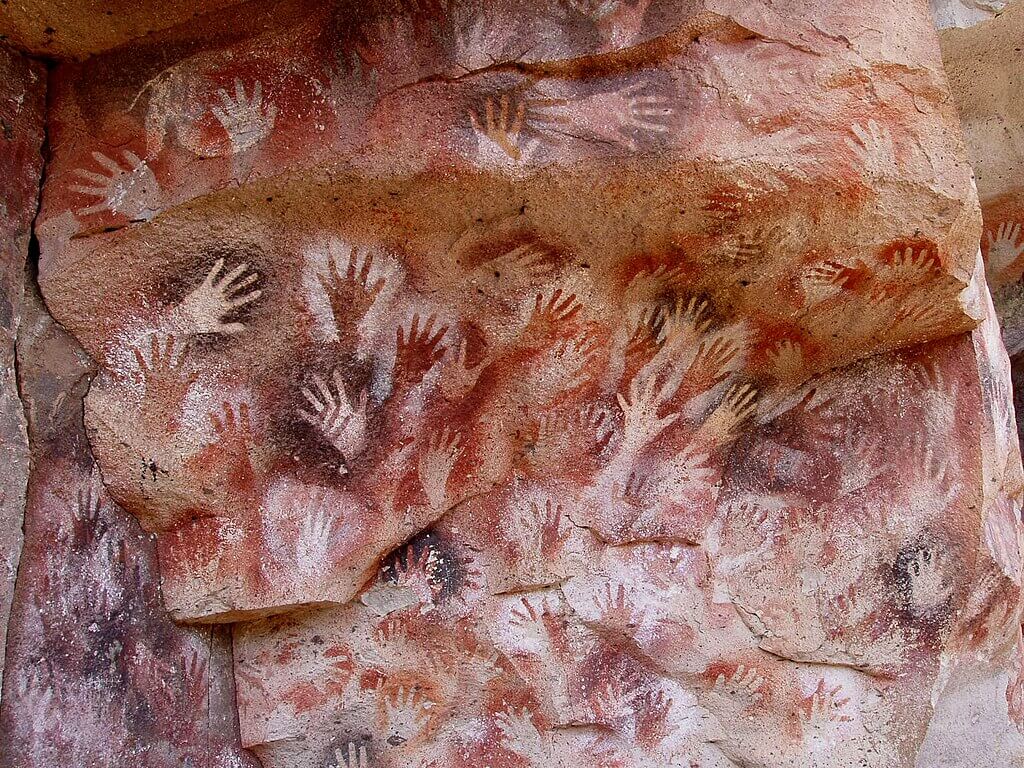
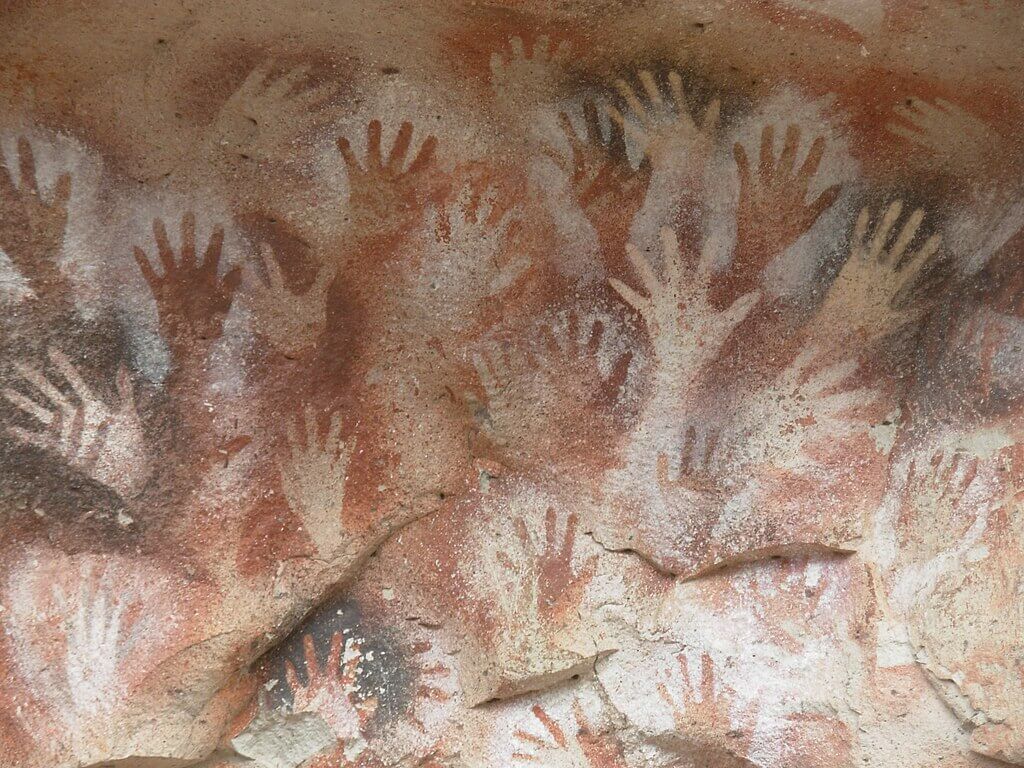
“Each hand is a cry across millennia: we were here, this is who we are.” — Carlos Aschero, archaeologist
Geographic & Artistic Description
Location & Geology
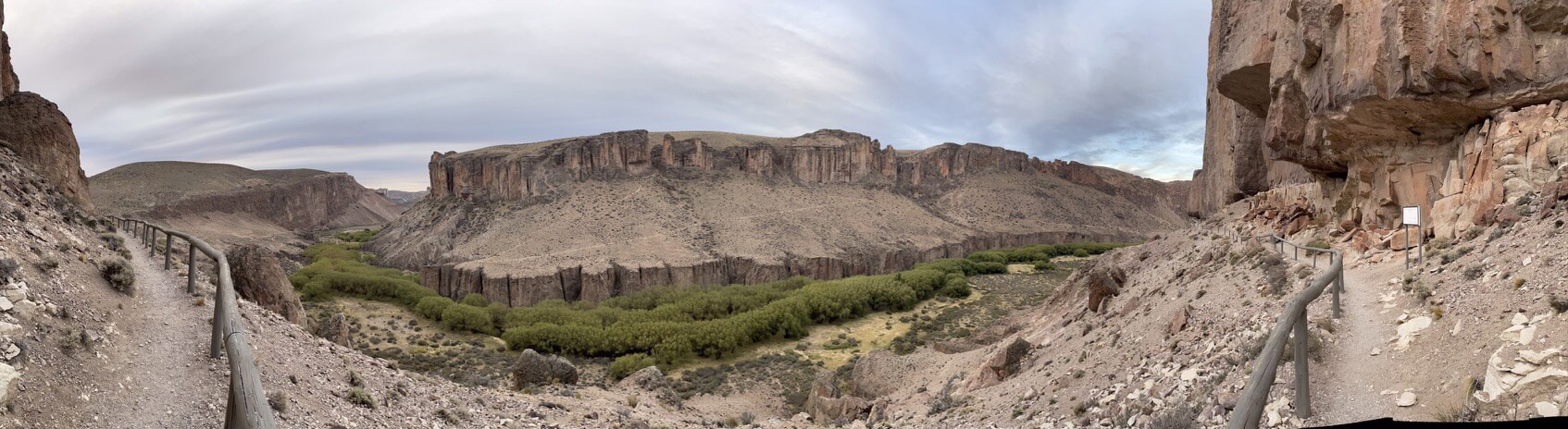
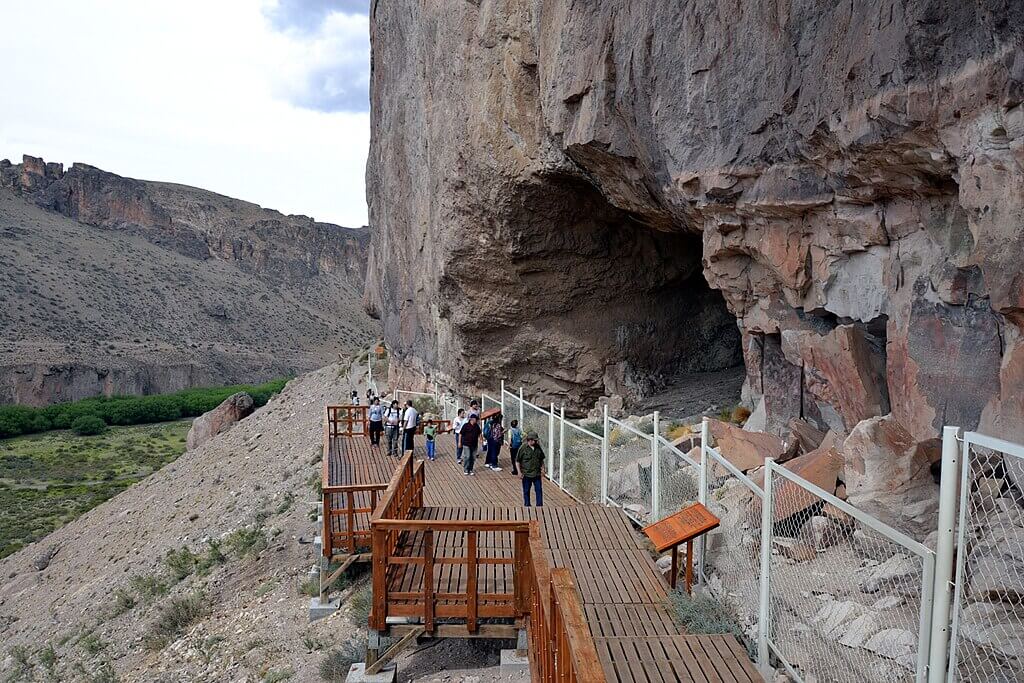
Located 163 km south of Perito Moreno, the cave is carved into a 150-million-year-old ignimbrite cliff overlooking Pinturas River Canyon. Its overhangs protected the art from Patagonia’s extreme weather.
Techniques, Pigments & Styles
- Red: Hematite
- Black: Manganese or charcoal
- White: Limestone
- Yellow: Limonite
Art is classified into three periods: hunting realism (7,300–5,300 BC), negative handprints (5,300–1,500 BC), and abstract figures (1,500 BC–550 AD). Techniques included bone-tube airbrushing, with animal blood/fat as binders.
Depictions feature hands, schematic humans, guanacos, rheas, armadillos, spirals, zigzags, concentric circles, and mythical human-reptile hybrids.
Conservation & Tourism
Protecting the Legacy
Since UNESCO designation:
- Protective barriers installed
- Metal walkways to prevent erosion
- Elsa Rosenvasser Interpretation Center (2024)
- Guided tours only
Threats include mass tourism, vandalism, and nearby mining (Lomada de Leiva, Cerro Negro, San José). Organizations like FADE warn of irreversible damage without management plans.
Visiting Information
- From Bajo Caracoles: Provincial Route 97 (47 km gravel)
- From Perito Moreno: Route 40 + 29 km marked detour
Hours: 9 AM–7 PM
Admission: USD 10 (foreigners) / USD 5 (Argentines)
Pro Tip
The Sendero Bajada de Los Toldos trail crosses the canyon, recreating ancient hunter routes. Picnicking by the river is allowed—pack out all trash.
Cultural Significance & Local Myths
For indigenous peoples, the hands were more than signatures—they marked rites of passage, territorial claims, herd fertility, and possibly shamanic beliefs. Quillangos (decorated hide blankets) share patterns with cave art.
“Each layer of paint respects prior ones, like a dialogue between generations.” — Merry Wiesner-Hanks, historian
Timeline
- 10,500 BC: Los Toldos settlement
- 7,300 BC: First cave paintings
- 1876: Documented by Francisco P. Moreno
- 1941: Rediscovered by De Agostini
- 1964–1994: Gradin’s research
- 1993: National Historic Monument
- 1999: UNESCO World Heritage
FAQ
| Question | Answer |
|---|---|
| How old are the paintings? | The oldest date to 7,300 BC, per carbon-14 dating of bone airbrush tubes. |
| How to get there from El Calafate? | Take Route 40 north to Perito Moreno (12-hour drive), then follow marked detour. |
| Why mostly left hands? | Artists held pigment tubes in their right hands, leaving left hands free for stenciling. |
Conclusion
Cueva de las Manos is more than a Paleolithic museum—it’s a millennial sanctuary connecting us to the continent’s first inhabitants. Each silhouette whispers: “we were here.” To visit is to encounter the origins of art, collective memory, and Patagonia’s soul.
Ready to explore further? Discover Perito Moreno Glacier or Mapuche heritage on our blog.